



China's aggressive agricultural imports expected to boost US exports









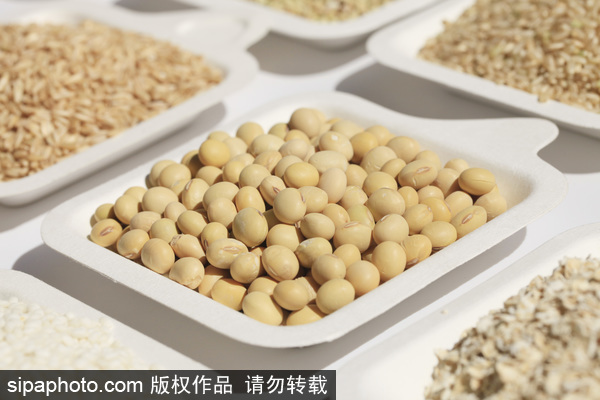
As America's new crop year of soybeans and corn begins to be harvested, experts are optimistic that China will step up its purchases of the two grains and other agricultural products, which will benefit US farmers.
China has been ramping up its corn and soybean purchases from the US in recent weeks for delivery in the new marketing year, which began Sept 1.
For the 2021 fiscal year that begins on Oct 1, the US Department of Agriculture (USDA) estimates agricultural exports at $140.5 billion, an increase of $5.5 billion over the previous fiscal year. Of that increase, $4.5 billion is projected to come from exports to China due to expected higher soybean and corn exports.
Driven by strong demand from China and reduced competition from Brazil, US soybean exports are expected to reach $20.4 billion, up $4.2 billion year on year, and corn exports are forecast at $9 billion, a rise of $700 million over the same period last year, according to USDA data.
But so far this year, China's imports of US agricultural goods are still behind its commitment under the phase one deal that went into effect in February. China agreed to expand purchases of certain US goods and services by a combined $200 billion over 2020 and 2021 from 2017 levels.
Through July, China's imports of covered agricultural products were $9.9 billion, compared with a year-to-date target of $21.3 billion, according to the Peterson Institute for International Economics, which tracks China's monthly purchases of US goods covered by the deal.
Despite the gap, agricultural experts said there are positive developments for a significant increase in China's imports of American farm goods.
"Even if the targets are not met, China is increasing its purchases of US products relative to the depressed levels of 2018 and 2019," wrote Pat Westhoff, director of the Food and Agricultural Policy Research Institute at the University of Missouri, in an article.
In the last marketing year, total imports by China of soybeans from all sources fell by more than 11 million tons, partly due to China's retaliatory tariffs on US soybeans, but more importantly because of the sharply reduced hog numbers in China due to African swine fever, which cut demand for soybean meal, according to Westhoff.
Soybeans typically account for more than half of US agricultural exports to China, and the main use of those imports is to make soybean meal for livestock feed.
This year, those imports are up by more than 15 million tons, the USDA estimates.
A "significant driver" for those imports is China's rebuilding its hog herd and rising domestic demand for pork, said Wendong Zhang, assistant professor of economics at Iowa State University, at a recent webinar.
Though China has bought a record number of soybeans from Brazil, it will soon transition to a more US-oriented purchase strategy as the peak season for US soybean exports is September to February, he said.
Another "bright sport" is corn, which China has bought at record levels from the US, said Zhang, adding that China will, for the first time in a long time, exceed the tariff rate quota for corn.
China already has committed to buying more corn this crop year from the US than it was expected to import from all global sources combined, wrote Sal Gilbertie, president and CEO of Teucrium Trading, in an article.
The USDA projected that China would import a record 7 million metric tons of corn in the 2020-21 crop year, but China already has committed to import more than 9 million metric tons from the US alone, said Gilbertie.
Zhang also noted that China's active buying of US agricultural goods is driven more by its own demand than its commitments made in the phase one deal.
China has roughly 20 percent of the world's population but only 7 percent of the world's arable land, while the US has less than 4 percent of the world's population and 15 percent of arable land, said Zhang.
"That's why China will be in significant need for global markets, especially for land-intensive feed grains and land-intensive proteins, such as soybean, sorghum and beef," he said.
In addition to soybeans and corn, Zhang said, the US can look into other potential growth areas for sales to China, such as vegetables, fruits, wine, beer and infant formula.
"This also means that China potentially has more economic ties with not only the Midwest agricultural communities but also with Southeast poultry farmers and fruits and vegetable growers in California and Florida," he said. "These are some of the mutually beneficial growth opportunities."
Another more optimistic view points to policy changes China has made that could be beneficial to US agriculture, said Westhoff.
"China is no longer collecting the retaliatory tariffs placed on many US farm goods because of the trade dispute. China now appears likely to meet a commitment to import at least 7 million metric tons of corn each year, and some barriers to US meat exports have been removed," he said.
His view was echoed by Gilbertie. "All of this will help farmers, particularly those in the United States," he said. "And China's aggressive buying of US agricultural goods will help them adhere to the phase one trade deal, which is a bright spot in the otherwise strained relations between the two largest economies on the planet."










