Pursuit of gold medals spurred by Chinese technology companies









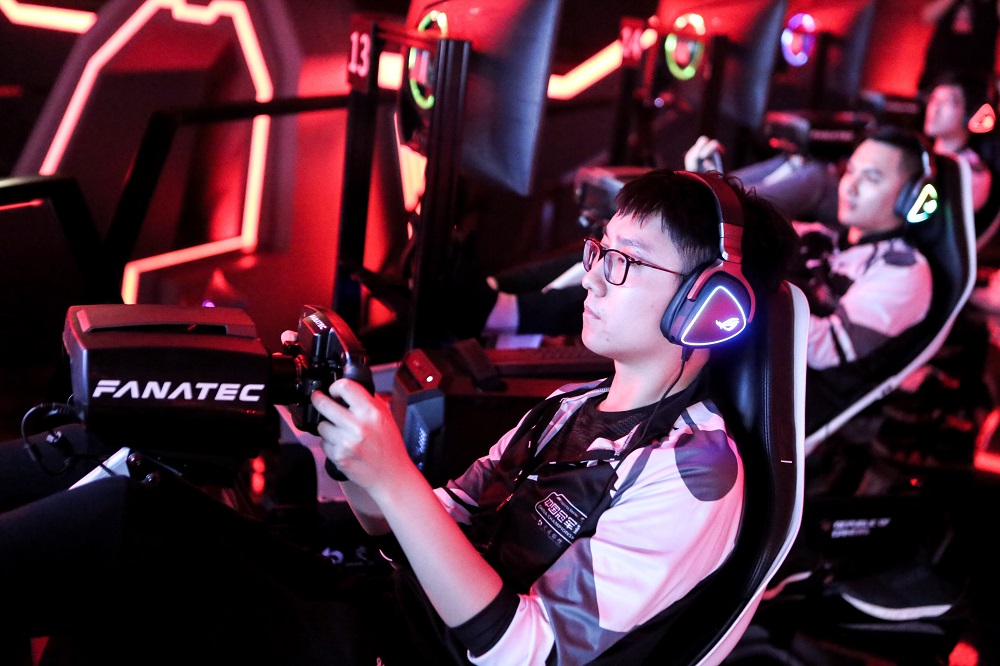
Chinese technology companies publishing and distributing some of the most popular games in Southeast Asia are emerging as the real champions in the region's quest for esports gold medals.
Years before esports was officially recognized as a medal event at the 2019 Southeast Asian Games, developers and publishers in China had been organizing tournaments, with prize pools reaching as high as $500,000.
Three of China's biggest technology companies-Tencent, NetEase and Moonton-dominate the gaming scene in Southeast Asia. Alibaba's Alisports has also joined the fray, bringing one of the world's biggest gaming tournaments, the World Electronic Sports Games, or WESG, to the region.
Market research company Newzoo, based in Amsterdam, the Netherlands, said in a report: "It's not just local players that are faring well in the (Southeast Asian) region. Chinese publishers have successfully entered the market."
Newzoo said that while technology company Garena, which is based in Singapore, is the region's top games publisher, its most popular titles, such as Arena of Valor and League of Legends, are jointly published with Tencent.
In 2018, Garena obtained a five-year right of first refusal to publish Tencent's mobile and personal computer games throughout Southeast Asia and China's Taiwan.
Darang Candra, head of esports research at global market research company Niko Partners, said companies in the United States usually develop games to be played on PCs or consoles, while Chinese-developed and published games are mostly mobile-based.
He said this is why China has made significant inroads into the Southeast Asian games market, compared with US companies.
"Considering that the smartphone penetration rate in Southeast Asia is way higher than those for PCs and consoles, it's natural that mobile games are more popular in the region," Candra said.
Al-Haadi Abu Bakar, co-founder of Geekturf, a technology news site based in Brunei, said, "More people (in Southeast Asia) are taking up mobile gaming because it's more accessible than buying an expensive gaming PC."
He said that in the past, only wealthy young people could afford to buy consoles and high-end PCs to take part in gaming. But the introduction of relatively cheap smartphones has changed the situation.
"Buying a gaming PC is expensive, but everyone now owns a mobile phone, so any kid can get a cheap mobile and start playing games," he said.
Abu Bakar said some of these young players will become e-athletes, competing in both national and international tournaments watched by thousands of spectators.
He said popular multiplayer online games published in China, such as PlayerUnknown's Battlegrounds Mobile (PUBG) and Mobile Legends: Bang Bang, are staples of regional esports tournaments. Chinese companies also organize some of the highest-profile esports competitions in Southeast Asia.
Since 2017, online games company Moonton, based in Shanghai, the developer of Mobile Legends: Bang Bang, has been organizing regional tournaments, while Alisports pioneered the WESG in Shanghai in 2016 and brought the Southeast Asian edition to Kuala Lumpur, Malaysia, two years later.
Last year alone, Tencent, Moonton and Alisports held large regional tournaments in Kuala Lumpur. Tencent staged the PUBG Mobile Fall Split Global Finals with a prize pool of $500,000, while Moonton organized the Mobile Legends M1 World Championship, with $250,000 at stake. E-athletes who joined the WESG competed for $105,000 in prize money.
Candra, from Niko Partners, said the growth of mobile gaming in Southeast Asia reflects the trend in China, where the affordability of smartphones has also boosted demand for mobile games compared with those played on PCs and consoles.
But Candra said Chinese companies also need to deal with major challenges in a region as diverse as Southeast Asia.
"Their main issues lie with the complexity and diversity of the countries in the region. Southeast Asia has multiple languages, different cultures and different regulations," he said.