



Renewable power to spur energy transition









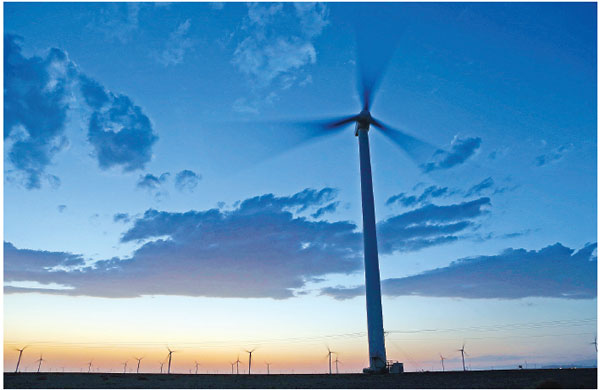
Strong growth of the renewable power sector will be a key driver of energy transition in China, according to BP Energy Outlook 2020, which was released recently.
The country is also expected to remain the world's largest primary energy consumer despite slowing demand growth.
BP forecast that energy demand growth in China will slow dramatically compared to past trends, and the growth of industrial energy demand will be concentrated in the emerging world outside of China as energy-and labor-intensive industrial activities are being increasingly relocated from the developed world and China to lower-cost economies.
Analysts said the slowdown and much of the increase in energy demand outside of China reflect that the Chinese economy is shifting from the energy-intensive industry to service industries with lower energy intensity.
"The manufacturing sector takes up a smaller percentage of the consumption mix, as the country is shifting toward the services (sector)-led economy," said Wei Hanyang, a power market analyst at Bloomberg New Energy.
BP said China's energy demand is back to the levels seen in 2018, helped by accelerating gains in energy efficiency and a continuing shift in the structure of the economy away from energy-intensive industries.
The era of oil is coming to an end and the future of the world's energy is likely to lie in greener alternatives, said the energy behemoth.
Li Li, energy research director at ICIS China, a firm that tracks China's energy market, echoed the view, adding that the COVID-19 pandemic has also led to a significant and permanent change in the industry.
The growth in the renewable sector, including bioenergy, is part of a broader trend toward a lower-carbon fuel mix, due to higher carbon prices and is supported by other policies.
This shift also reflects a move away from the use of coal, which has substantially reduced in China, said BP.
According to the report, the role played by renewable energy could grow from its current level of around 5 percent to anywhere between 20 percent and 60 percent by 2050.
Reduced air travel and plastics production are expected to play a part, as will the development of electric vehicles.
"The share of renewable energy will grow more quickly than any energy fuel ever seen in history," said Spencer Dale, chief economist of BP.
"In countries like China and India, which are the largest importers of energy, the new trend encourages greater growth of renewables, so that is a good news story for the environment."
The fall in coal demand is attributable to China as the country shifts to a more sustainable pattern of growth and a lower-carbon fuel mix, said BP.
Declines in Chinese coal consumption account for around half of the overall fall in global demand, followed by declines in the United States and the EU.
According to the outlook, renewables are expanding rapidly in China, with an average annual growth rate of more than 5.5 percent, while coal's share of the China power generation mix declines sharply.
These trends also help drive a convergence in the role of natural gas, with its share increasing in China, such that by 2050 it will account for between 15 percent and 25 percent of energy in the country, the report stated.
Growth in nuclear power is also on the back of China's efforts, according to BP, as strong growth in China offsets weak or falling nuclear power generation in the developed world.
The share of nuclear power in China's power generation is tipped to increase from around 4 percent in 2018 to more than 15 percent by 2050.
Driven primarily by economies like China, production of natural gas and liquefied natural gas will also greatly increase, as gas is used to aid the switch away from coal, and LNG imports are the main source of incremental supply.
zhengxin@chinadaily.com.cn




















