



Central companies marrying CSR with poverty alleviation









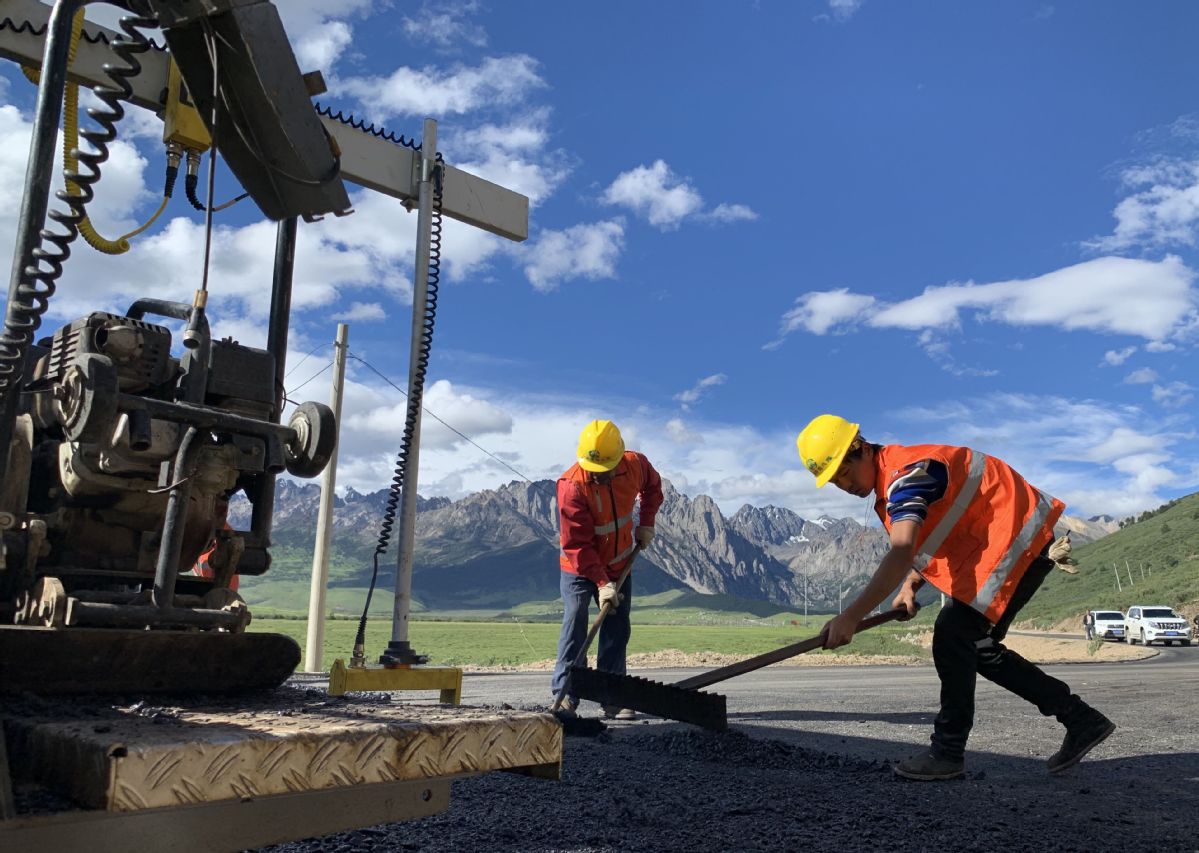
For a long time, the country's poverty-stricken areas produced various goods, but inadequate sales channels created problems in distribution that resulted in imbalances in growth.
Now, the China's top State asset regulator has said centrally administered State-owned enterprises will resolve the problem by boosting domestic demand and fostering coordinated regional development via discharge of their CSR-corporate social responsibility-obligations.
Central SOEs have already invested almost 100 billion yuan ($14.85 billion) to help lift 221 poor counties out of poverty since 2016, according to data from the State-owned Assets Supervision and Administration Commission of the State Council.
They have been increasing infrastructure investment in poverty-stricken areas to help solve livelihood problems, said Hao Peng, chairman of the commission.
"This demonstrates that central SOEs are taking a leading role in fulfilling their corporate social responsibilities," Hao said.
"The country's poverty-alleviation efforts are not just meant to improve living standards so as to lift people above the poverty line, but also to first help them shake off poverty and then help them find an approach so they can work their way up to a better life on their own."
China Railway First Group Co Ltd, a subsidiary of China Railway Group Ltd, a Beijing-based construction contractor, invested 12 million yuan to help build four intelligent greenhouses and a training center for farmers.
The project helped farmers to cultivate edible black fungus in Jinmi village of Zhashui county, Shaanxi province, in 2019.
Located in the Qinling Mountains, the intelligent fungus greenhouses helped boost production output. Farm work has become easier to manage and the quality of fungus is ensured by modern farming technologies, said Wang Li, chairman of the labor union of China Railway First Group.
Jinmi village's black fungus is sold via conventional outlets as well as e-commerce and livestreaming channels, he said.
Rather than giving villagers living in poverty simple handouts, central SOEs' poverty alleviation campaigns are meant to help them to find a practical way to work their own way out of poverty. The campaigns also provide safety nets so that an event such as a serious illness in a family does not push the entire household back into poverty, he said.
Xiao Qingsong, a local farmer, said he earned over 30,000 yuan after planting black fungus last year. He opened a restaurant in September as the village, which is complete with modern facilities, attracting an increasing number of visitors from neighboring cities.
"With this new business at home, I don't need to work in other cities as a migrant worker like before and I have more time to look after my children and parents while residing in the village," he said."This stable income source has also convinced a number of young people to stay at home and grow various agricultural products this year."
The village's online stores have sold more 25 million yuan worth of agricultural products. About 90 percent of them are different varieties of black fungus, said Jiang Baichuan, the village's Party secretary.
China Three Gorges Corp, or CTG, another central SOE, said it has conducted 48 poverty alleviation projects this year entailing 400 million yuan in financial assistance to four designated counties.
According to CTG, the projects cover supplies of food and clothes, and compulsory education, basic medical care and safe housing guarantees as well as sectors like tourism, e-commerce, planting and breeding.
Under its plan, about 97.4 million yuan will be spent on medical support, which includes repletion of four CTG medical poverty alleviation funds and renovation and expansion of two county hospitals.
Wang Lin, president of CTG, said the implementation of these projects will help regional economic growth to recover from the effects of COVID-19 pandemic and consolidate poverty alleviation gains, which will lay a solid foundation for rural revitalization.
CTG has run poverty alleviation projects in four counties-Wushan and Fengjie counties in Chongqing, Wan'an county in Jiangxi province and Baarin Left Banner in the Inner Mongolia autonomous region-since 2002.
Over the past 18 years, it deputed 38 employees for project work and invested 850 million yuan in 298 projects. These four counties are now poverty-free.
CTG said it has so far invested more than 8.35 billion yuan on poverty alleviation programs and initiated over 1,400 supportive projects, benefiting more than 1 million people.
China has set for itself the goal of ensuring no one remains below the poverty by the end this year. The number of impoverished people has been brought down from 98.99 million in 2012 to 5.51 million by the end of last year, according to the State Council Leading Group Office of Poverty Alleviation and Development.
In addition to deploying more resources to help poverty-stricken areas, central SOEs will promote the structural adjustment of sections of the economy that are State-owned, the SASAC said earlier this month.
Central SOEs will advance mixed-ownership reform, and enhance cooperation between SOEs and private companies during the 14th Five-Year Plan (2021-25) period, the commission said.
By partnering with private businesses, central SOEs have initiated 214 strategic alliances for industrial technology innovation and built 54 internet-connected industrial platforms.
Through industrial funds, equity purchases and other methods, central SOEs invested more than 400 billion yuan in over 6,000 private companies since 2013, according to SASAC data released last week.
Meanwhile, the government has guided central SOEs to reinforce management, become active shareholders after investing in private-sector entities, strictly regulate transactions and promote disclosure of information.



















