Resilience of agri-food systems must be improved









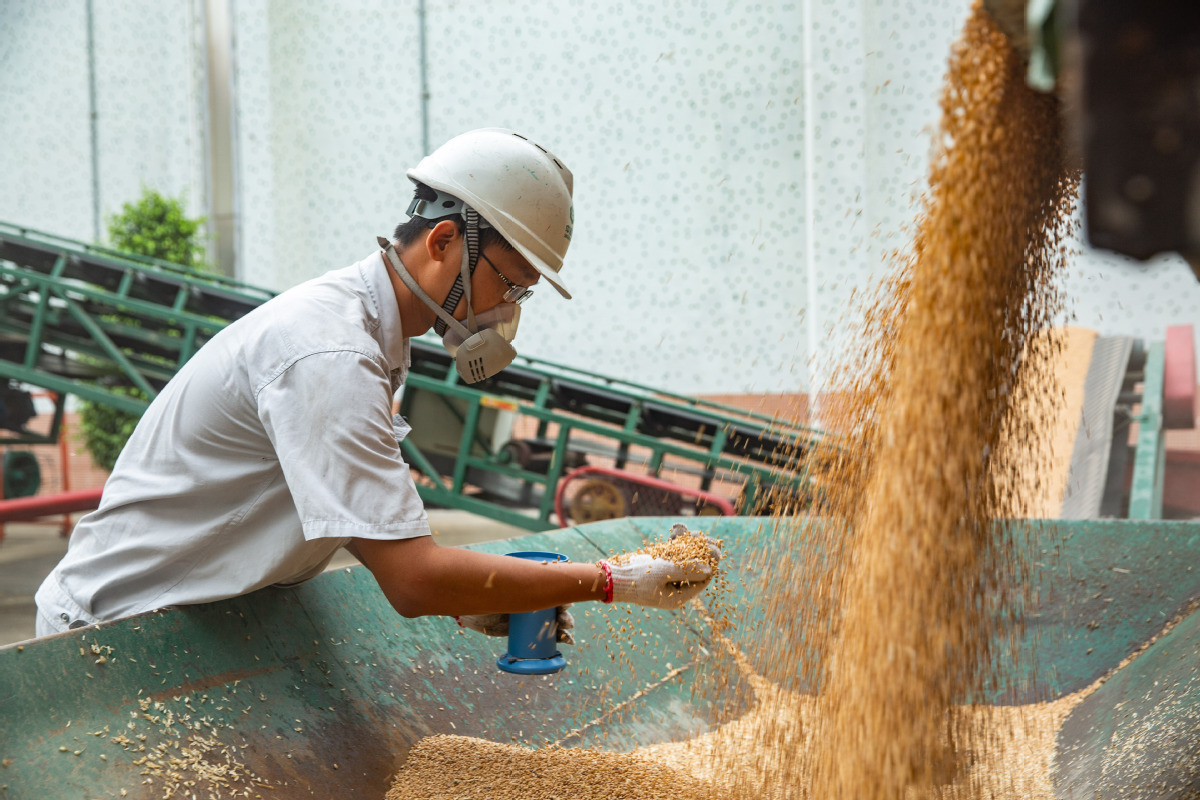
Global agri-food systems are facing multiple challenges and increasingly complex risks such as climate change, higher frequency of extreme weather events, natural resource degradation, trade friction, regional conflicts, and plant and animal diseases.
The COVID-19 pandemic has hit the fragile systems hard. More than 130 million people are set to face acute hunger in 2020, and an additional 88 million to 115 million people will fall into extreme poverty in 2020, with the number rising to as many as 150 million by 2021, according to global forecasts.
Overall, Chinese agri-food systems have stood the test of COVID-19 and have shown a certain resilience. Relatively sound infrastructure, "green channels" for fresh agri-food products initiated by the government, "point-to-point" sales between production and consumption areas, and timely financial support for food production and agri-food enterprises have all effectively guaranteed the smooth supply of agri-food products. But it is essential to further improve the resilience of China's agri-food systems in the face of many future uncertainties.
First, China should continue to increase its investment in agricultural research and rural infrastructure. Agricultural research investment as a percentage of agricultural GDP(0.8 percent) is still far less than that of developed countries (more than 3 percent). Equally important is to set new priorities for agricultural research to achieve goals beyond staple crop yield, to include those in nutrition and health, climate mitigation and environmental sustainability.
More efforts are needed to further improve rural roads, rural broadband links, irrigation, sanitation and the environment. Rural road investment can help to establish a smooth urban and rural road transportation network, which can increase efficiency in food marketing and reduce food losses.
Similarly, the government should continue to increase investment in broadband networks and support the development of information and communications technologies. During the COVID-19 outbreak, e-commerce platforms effectively reduced the risk of infection among consumers who may otherwise have been visiting malls and other physical marketplaces. Infrastructure related to fresh-food trading markets should also be strengthened by improving their hygienic conditions.
Second, agricultural insurance systems and agricultural risk management must be established and expanded. Agri-food systems inevitably face the impact of natural risks. During the past summer, the floods in southern China clearly highlighted the importance of establishing a major disaster insurance system. The agricultural natural disaster insurance program and reinsurance system implemented by the United States, United Kingdom, New Zealand and other developed countries have effectively reduced farmers' losses caused by natural disasters. China can learn from these countries to help agricultural production and operation entities, especially small farming operations, to manage risks and enhance their ability to recover quickly from shocks.
Third, the development and operation of agri-food systems should respect the laws of nature and protect the habitats of wild animals and plants. Historically, food and agricultural production destroyed the habitat of wild animals, and as a result the interaction between human and wild animals intensified. Incidences of diseases transmitted to humans by animals have increased exponentially over the past several decades. Sustainable intensification and halting the expansion of agricultural and other activities into forests and other wildlife habitats must be pursued and practiced.
Fourth, developing and diversifying international trade in agricultural and food products can reduce the risks of dependency on a few importers. China can work with countries along the Belt and Road Initiative routes and other agricultural trade partners to increase local food production and promote trade and cooperation for mutual benefit and win-win results, and make full use of international resources to ensure Chinese food security.
Finally, social safety nets must be further strengthened to protect those who are the most affected and vulnerable. These safety nets are also crucial in the post-pandemic period to drive reconstruction efforts.
With the continuous advancement of urbanization, people will increasingly live in cities and towns. Therefore, it is very important to expand social protection for low-income residents in cities, particularly rural migrants, and enhance their ability to recover from shocks.
In addition, strengthening farmers' associations can further increase both the efficiency and resilience of farmers.
Therefore, an integrated rural and urban social security system including unemployment insurance is a more sustainable solution for building resilience among migrants, small-holder farmers, the urban poor and other vulnerable groups. Safety nets should be accompanied by intervention in health and nutrition, while investments in the health and nutrition of vulnerable populations can lower the mortality rate of diseases such as COVID-19 and noncommunicable diseases.
Similarly, reducing gender inequality in agriculture and empowering women in agriculture are crucial to building resilient food systems. Improving the nutrition and health of mothers, increasing credit support for women, and providing cash subsidies and training in nutrition education programs can effectively expand the diversity of family diets and reduce the incidence of stunting in children.
The writer is a chair professor at China Agricultural University. The views do not necessarily reflect those of China Daily.