US urged to swap hostility for engagement









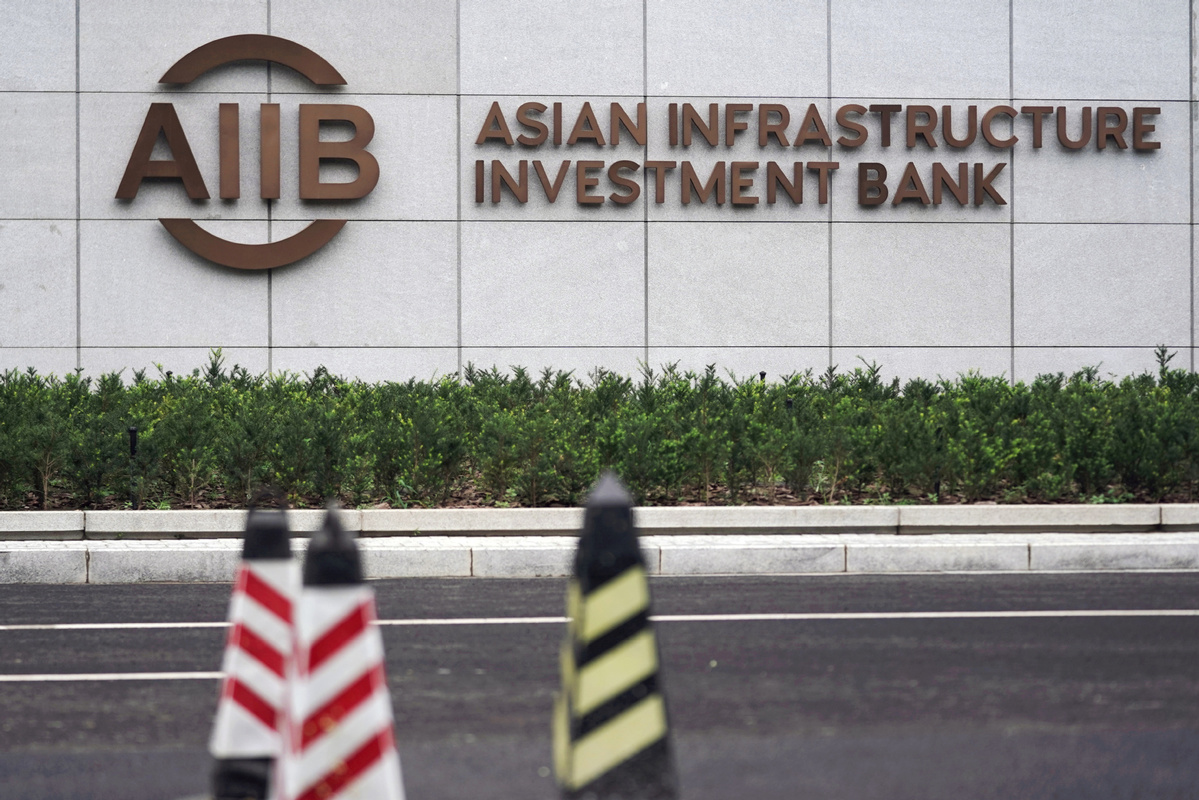
Cooperation with China via AIIB, BRI would expand business ties, expert says
As an avenue of "constructive cooperation" to help stabilize the rocky relationship between Washington and Beijing and to enhance the US economic presence in Asia, the United States should join the China-initiated Asian Infrastructure Investment Bank, or AIIB.
That suggestion is among a list of "specific, actionable" foreign policy ideas proposed for the next US president by the Brookings Institution this week in the run-up to Tuesday's election, a showdown that has seen both candidates looking to assert their tough-on-China credentials.
Despite the charged rhetoric, whether Republican President Donald Trump wins reelection or he loses to Democrat Joe Biden, the winner needs to understand that the China-US relationship is not one with "simply a single personality", and "isn't at all a zero-sum game", experts have said.
The Brookings Institution, an influential think tank, said that whoever wins next week's election will be challenged by a pandemic and the ensuing economic and social devastation, and will face opportunities too, including the chance to make "highly consequential and hopefully constructive" choices on China, international trade and a post-COVID-19 recovery.
Relations between the two largest economies have dropped to their lowest point since the two countries forged diplomatic relations in 1979, with some US politicians portraying China even as an enemy, culminating in the shuttering of a consulate in each country in July.
"The next president, whoever he is, will need smart, specific, actionable policy ideas at his fingertips to navigate a fraught international environment," Brookings said in an analysis.
Topping its foreign policy list is for the US to join, though belatedly, the AIIB, a multilateral development bank whose 103 members include US allies in Asia and Europe.
US administrations have given the AIIB the cold shoulder since it was founded in January 2016.
Ezra F. Vogel, professor of social sciences emeritus at Harvard University, noted in an op-ed article in late July that the lawyer the AIIB hired to write its rules was a US woman, a graduate of Harvard University and Harvard Law School.
"However, not only did American government officials refuse to join the AIIB, but they also urged our allies to do the same," Vogel wrote.
The AIIB has embraced global standards for governance, procurement and environmental practices and has co-financed World Bank and Asian Development Bank projects, Robert B. Zoellick, a former US trade representative, wrote in The National Interest in March.
Jamie P. Horsley, a visiting fellow in the John L. Thornton China Center at the Brookings Institution, said: "An overture by the US to cooperate with China through AIIB membership, and potential collaboration with an upgraded BRI (Belt and Road Initiative) on qualified projects, would help steady the US-China relationship and signal to Asian and other countries they need not choose between working with either the US or China on beneficial projects."
US cooperation with China on qualified projects financed under the AIIB or through the BRI would further expand US business opportunities, while helping to address the global infrastructure gap and improve global infrastructure governance, according to Horsley.
Cultural exchanges
Cheng Li, a senior fellow and director of the John L. Thornton China Center, and Associate Director Ryan McElveen proposed that the countries restore people-to-people exchanges, particularly by the US reinstating the Peace Corps and Fulbright programs in China, which were dropped early this year as part of the US administration's measures attempting to decouple the two countries.
"Amid a year of stormy seas in US-China relations, ... the Trump administration's efforts to eliminate educational and cultural exchanges have only worsened the standing of the United States in its most important bilateral relationship," they wrote in their proposal.
But in a year of strained relations, including provocative chatter about decoupling by some politicians, restrained voices from some former leading government officials also were heard, highlighting the complexity of the relationship, which they said calls for statecraft.
Richard N. Haass, president of the Council on Foreign Relations and former special assistant to US president George H. W. Bush, said the Sino-US relationship will prove critical to this century.
While competing with China, the US also should try to carve out areas where the countries can cooperate "when it's in our common interest", he said at a virtual Election 2020 US Foreign Policy Forum on Monday.
"It's probably not going to be a relationship with simply a single personality. And we're going to have to try to figure out again how we push back in some areas, compete in others, and still cooperate yet in others," he said.
Former US secretary of state Madeleine Albright said that dealing with the relationship is going to "require the practice of statecraft which is not being just one way deciding that we're going to yell and scream at them but in fact recognize that there are issues on which we have to cooperate, and one of them actually is climate change. You know, those kinds of issues that know no borders.
"It is the most complex relationship; it's going to require a number of very smart, dedicated officials and a president who understands that it isn't all a zero-sum game," the chair of Albright Stonebridge Group said at the forum.