


TV show again brings national treasures to light









"Under the premise of protecting heritage, we need to better explain the humanity and diverse values hidden there," Wang Xudong, director of the Palace Museum, says."We expect the young to strengthen their confidence in our own culture."
But the other eight are newcomers to the show.
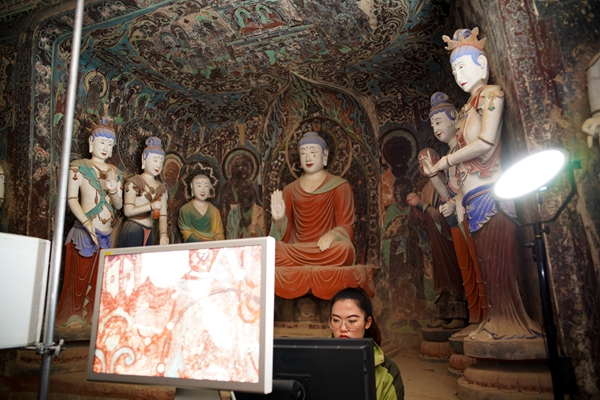
They include the 3,300-year-old Yinxu Ruins in Henan province, where the earliest-known Chinese written characters were excavated, Mogao Caves in Dunhuang, Gansu province, a group of splendid Buddhist grottoes ranging from the 4th to 14th centuries, and the 1,300-year-old Potala Palace in Lhasa in the Tibet autonomous region.
The list also involves the Classical Gardens of Suzhou, Jiangsu province, the Temple and Cemetery of Confucius and the Kong Family Mansion in Qufu, Shandong province, dating back 2,500 years. Also included are the Emperor Qinshihuang's Mausoleum in Xi'an, capital of Shaanxi province and home of the Terracotta Warriors from 2,200 years ago.
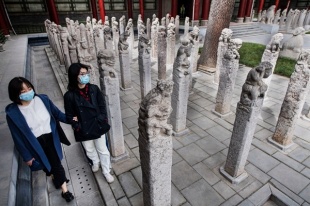
All the seven aforementioned are UNESCO World Heritage sites, while the other two sites are Sanxingdui Site in Guanghan, Sichuan province, which marks a mysterious bronze civilization from 3,200 years ago and Xi'an Beilin Museum, where over 10,000 precious stone carvings are housed, including steles, epigraphs and other calligraphy works that have been engraved on rocks throughout Chinese history.
Specific choices of cultural relics from these venues have not been publicly released yet.
Nevertheless, no matter which 27 national treasures finally enter the show, they'd better be prepared for overwhelming public interest.
"Many museum collections mentioned in the show soon become must-see tourist spots," Jia Jianwei, director of Gansu Museum, says. The museum was included in the second season of The Nation's Greatest Treasures.
"Everyone coming to our museum asks to see the three artifacts (in the show)," he says. "We have to move them out of the warehouse and put them on regular display. It raises a new challenge to better take care of the relics, but it also tells us how great an influence we can have among the public if new media resources are used for cultural relics."
Fang Qin, director of Hubei Provincial Museum, appearing in the first season of the show, praises the third season for switching to focus more on archaeological findings on heritage sites.
"The early-stage Chinese civilization is like a starry night and cultural hubs are scattered all over China, like Sanxingdui," he says. "We can show that diversity to the rest of the world through more vivid stories and help people to have a panorama of Chinese civilization."
Indeed, for serious scholars, it remains disputable as to whether it is commendable to explain cultural relics with an entertaining approach. Luo Xiangjun, director of Hebei Museum, which participated in the second season, admits the controversy, but he also welcomes it.
"If the show failed to stir controversy, it wouldn't bring creativity and change to the industry," Luo says. "The Nation's Greatest Treasures has reshaped the industry and inspired us to think what is really needed in museum operations."
Jin Ruiguo, deputy director of museum department under the National Cultural Heritage Administration, also hails the attempt made by the program to better introduce professional research results to the public.
For example, he cites that the production team refers to over 60 academic papers preparing for contents on one cultural relic.
"That is even more rigid than organizing an exhibition," the official says."When the academic foundation is there, the path spreading knowledge with creative formats is right."