Time for three neighbors to advance trade ties









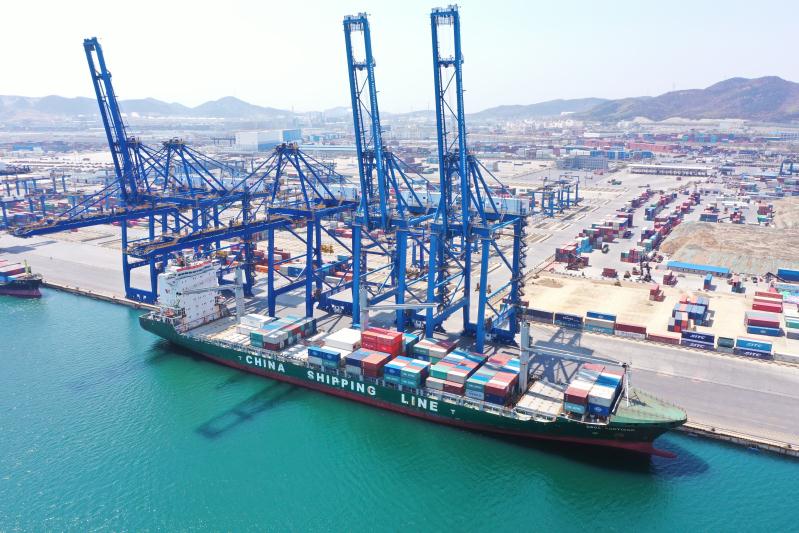
The Regional Comprehensive Economic Partnership, signed by 15 Asia-Pacific countries on Nov 15, has not only created the world's largest free trade area but also given the strongest shot in the arm of multilateral trade since the US imposed sanctions on other countries, especially China.
The RCEP has also helped turned into reality the potential of a free trade zone among China, Japan and the Republic of Korea, and could even lead to an advanced China-Japan-ROK free trade agreement after eight long years of negotiations. Before the RCEP agreement was signed, partnership deals had been reached on a smaller scale such as the Comprehensive and Progressive Trans-Pacific Partnership, or between developed economies like the Japan-European Union Economic Partnership Agreement. The RCEP is a partnership agreement among developed as well as big and small developing economies accounting for the world's largest share of GDP.
Also, the RCEP has facilitated significant tax concessions between China and Japan overcoming the differences over political and security. As for Japan and the ROK, they have signed a huge regional economic cooperation agreement after two years of political disputes over historical issues, which have had a huge impact on their economic and trade ties.
In short, East Asian countries have taken a big step toward regional economic cooperation, moving away from disintegration and ignoring some countries' attempts to sow the seeds of discord among Asia-Pacific countries.
East Asian countries realized the importance of regional integration after the COVID-19 pandemic broke out. Beijing, Tokyo and Seoul continued the tradition of mutual help and inclusive communication. When China was battling the worst phase of the outbreak at home early this year, Japan and the ROK donated medical supplies to China. Poems written on some of the boxes sent by Japan to help China fight the outbreak-such as Fear not the want of armor, for mine is also yours to wear and Mountains and rivers apart, we share the same winds and moon under the same sky-h(huán)elped improve Sino-Japanese relations. In turn, the Chinese government and NGOs provided aid for Japan and the ROK when those two countries were struggling to control pandemic.
As the three largest economies in the East Asia, China, Japan and the ROK are expected to further ease tariffs on each other's exports, open up their economies wider to the outside world, and reduce investment barriers in terms of policies and laws on the basis of the RCEP. The upgraded economic cooperation among the three sides will not only promote their respective development, but also optimize the economic structure of East Asia and help stabilize the global supply chains. Upgrading trilateral cooperation will also strengthen the three countries' ability to overcome the impacts of external factors.
In a way, the United States' unilateral moves and trade protectionist policies in the past nearly four years prompted the 15 Asia-Pacific economies to promote closer cooperation and therefore expedite the RCEP's negotiations. In fact, Japan and the ROK were forced to grant major concessions to the US-Japan was compelled to open up its agriculture animal husbandry sectors wider to US companies without getting similar treatment for its auto-manufacturing enterprises in the US. In the ROK's case, the US forced it to revise the bilateral free trade agreement so the US could increase its exports to the ROK while limiting ROK exports to the US. Therefore, Tokyo and Seoul turned to the RCEP to promote free trade.
But given the different development levels and ground realities of the RCEP member countries, it is difficult to upgrade the agreement to a more comprehensive and open multilateral economic mechanism in the short term.
China, Japan and the ROK are strong economies with the ability to deal with the impacts of further opening-up, and cooperate as well as compete in the regional and global markets. And by deepening cooperation, they can promote the optimization of capital, technology, labor force and production, which can accelerate the high-quality of their economic development.
Because of the interference of non-regional countries, and the disputes over politics, security, history and territory, Beijing, Tokyo and Seoul have missed many opportunities to deepen cooperation despite being close neighbors with a long history of cultural exchanges.
Now, since they have inked the RCEP, China, Japan and the ROK should grasp the chance to establish an advanced trilateral free trade mechanism and promote high-level economic partnership. Talks on this issue may be held during Chinese State Councilor and Foreign Minister Wang Yi's visits to Japan and the Republic of Korea from Tuesday to Friday.
As for non-regional countries, they are welcome to help deepen regional cooperation, but will not be allowed to dictate terms or dominate the narrative. Given the incumbent US administration's "America first" policy, Washington will always put US interests first in all strategies and policies, including those applicable to the Asia-Pacific. And since Japan and the ROK cannot expect their ally, the US, to promote regional cooperation and prosperity, it is up to the countries in the region to decide how to safeguard national and regional security and promote common development-and closer regional cooperation is best suited for that.
The author is a professor and deputy director of the Japanese Studies Center, China Foreign Affairs University. The views don't necessarily represent those of China Daily.
If you have a specific expertise and would like to contribute to China Daily, please contact us at opinion@chinadaily.com.cn, and comment@chinadaily.com.cn.