



New policies on financial discipline in pipeline









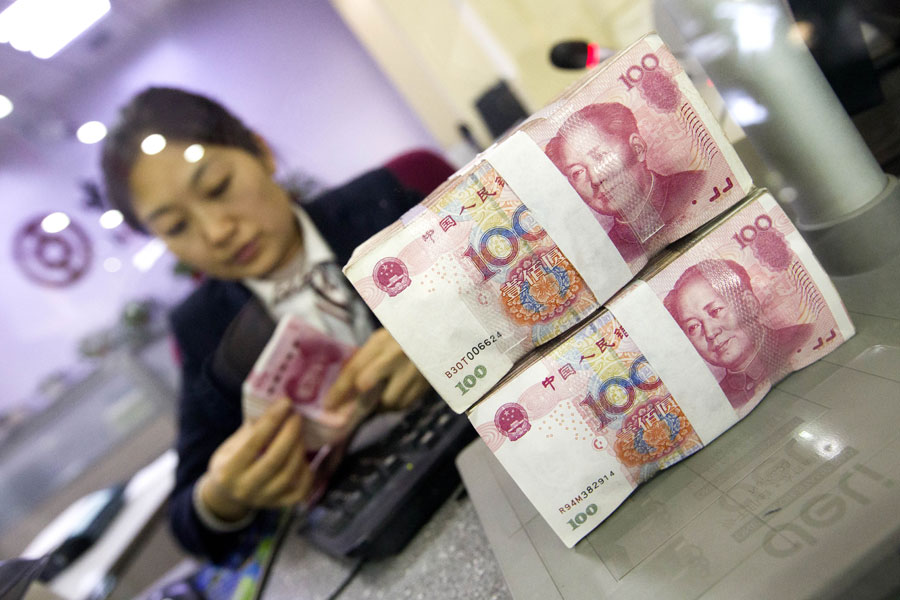
China plans to impose new measures to tighten financial discipline, prevent major risks and improve its financial structure in support of steady economic development, according to the central bank governor and financial regulators.
Their articles, included in a recently published book, highlight key tasks for the next five years, such as the government's increased scrutiny of the financial sector to tackle credit defaults, curbing misconduct and encouraging financing through the equity market, experts said.
The country is building a broad regulatory framework that covers all financing activities, from traditional bank lending to off-budget debt financing, including the Internet giants that provide financial services. Fintech businesses should follow some new and special regulatory rules, Guo Shuqing, Party secretary of the People's Bank of China, the central bank, wrote in an article.
Guo, who is also chairman of the China Banking and Insurance Regulatory Commission, stressed the importance of an adequate capital base and an appropriate leverage ratio when undertaking financial innovation.
He warned that real estate is the major threat for the country's financial sector since real estate-related loans account for 39 percent of all banking loans.
Policy watchers noticed that the authorities are concerned about the country's financial health, following some cases of corporate bond defaults amid COVID-19 shocks. The total debt-to-GDP ratio also increased after policymakers introduced monetary and fiscal stimulus in the first two quarters to stabilize economic growth.
Li Yang, chairman of the Chinese Academy of Social Sciences' National Institution for Finance and Development, said that tackling bond default risks will rely on rebalancing the nation's financial structure, and the equity market should play a bigger role in financing. In the next stage, new regulations will focus on the biggest high-tech companies, whose services may relate to monopoly issues.
In November, a meeting of the nation's top financial regulatory body emphasized "zero tolerance" of misconduct in financing deals or attempts by enterprises to evade debts.
Yi Gang, governor of the central bank, mentioned in a separate article that it will tighten scrutiny of large financial institutions. Financial infrastructure, such as the electronic payment system and the cross-border settlement system, will be included in supervision.
Yi highlighted in the article the need to prevent "monetization of the fiscal deficit", a situation in which the central bank pays for the government's debt.
This issue sparked intense debate among policy advisers earlier this year, and many opposed it on the grounds that it may fuel inflation.
The PBOC must have an independent financing and budgeting system, and there should be a "firewall" between balance sheets of the central bank and the government. Also, corporate debt defaults should not be write-downs of the PBOC's assets, according to the governor.
On Monday, the central bank injected 200 billion yuan ($30.44 billion) of liquidity through its medium-term lending facility, a policy tool to increase lending in the interbank system, aiming to rein in the soaring bond yields due to some credit defaults of State-owned enterprises.
The central bank may be under pressure to offer liquidity support via open-market operations in December, especially given the rising market interest rates amid the recent and potential market vulnerability, analysts said.
In Yi's article, he also mentioned steady progress in the research and development work of the central bank digital currency, which is called "digital currency and electronic payment" in China, and the need to launch controllable pilot programs in an orderly manner and improve the legal framework.



















