China No 1 in open courses on internet









Education minister says MOOCs allow everyone to learn whenever, wherever
Countries and regions should promote open educational resources and develop quality massive online open courses as digital public goods to offer opportunities for learning to new audiences, education officials and experts said.
China is committed to further opening up its MOOC resources and sharing its quality education resources with other countries and regions, Education Minister Chen Baosheng said on Friday at the first Global MOOC Conference, held online and offline at Tsinghua University in Beijing.
The country now ranks first globally in the number of MOOCs and viewers, he said.
The conference was co-hosted by Tsinghua and the UNESCO Institute for Information Technologies in Education, with the theme of "learning revolution and higher education transformation".
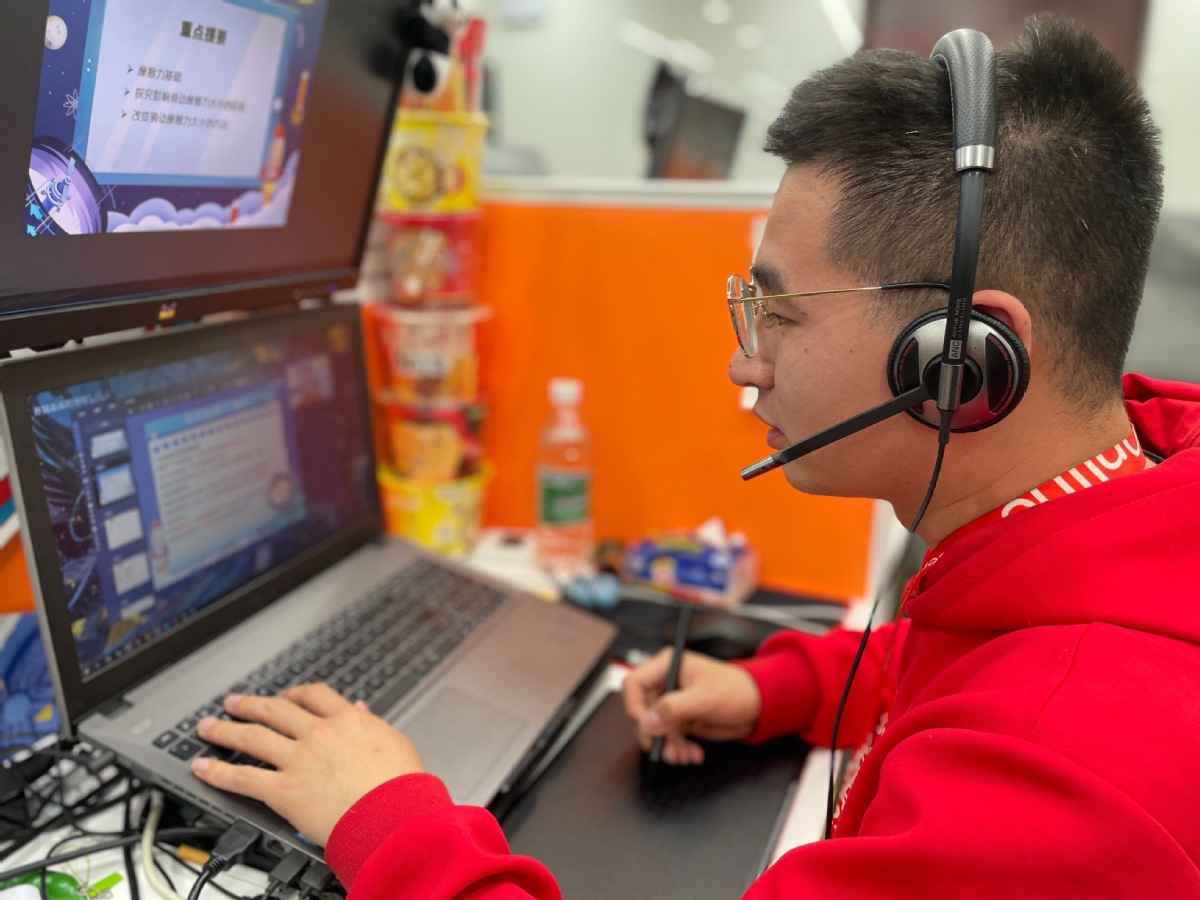
China started to build MOOC platforms in 2013, allowing people from all over the country to take lessons simultaneously from anywhere, Chen said.
By October, the country had more than 30 MOOC platforms and 34,000 such courses. A total of 540 million people had participated in massive online open courses, and 150 million university students had received credits through them, he said.
To cope with the COVID-19 pandemic, all Chinese universities moved teaching online during the spring semester, with 1.08 million teachers producing 1.1 million online courses, he said, adding that had laid a solid foundation for promoting the innovative development of online education and MOOCs.
The unique advantages of MOOCs and online education have been leveraged to promote educational equity and greater sharing of quality educational resources so that everyone can learn whenever and wherever they want, Chen said.
"We should continue to improve the quality of MOOCs through innovation and new technologies while also protecting privacy and intellectual property through law and regulation," he said, adding that MOOCs should be student-centered, with active participation encouraged to ensure deep learning.
Stefania Giannini, UNESCO's assistant director-general for education, said the disruption brought by the pandemic forced educational institutions in some 30 countries to close early this month, affecting some 300 million students.
Although MOOCs had already opened wide the gates to lifelong learning before the COVID-19 crisis, at least one-third of students could not access online platforms, and more than 7 million are at risk of not pursuing their university studies for economic reasons, she said.
If there is one lesson to take away from the pandemic, it is that learners need their teachers, she said, adding that human interaction, human touch and collaboration must remain at the core of the educational process, including at the tertiary level.
Countries should work together to ensure all learners are covered by broadband connectivity, Giannini said, with better teacher training and professional development key to the adoption of online environments and the assessment of students.
Andreas Schleicher, the Organization for Economic Cooperation and Development's director for education and skills, said the crisis had exposed the many inadequacies and inequities in education systems.
The pandemic had accelerated the application of educational technology and transformation in teaching methods, and MOOCs could enable teachers and students to access specialized material beyond textbooks in multiple formats and in ways that bridge time and space, he said.
Qiu Yong, president of Tsinghua, said the pandemic had caused serious damage to the education system and traditional education models, but it had also empowered the first large-scale, well-organized and all-around application of MOOCs as a new form of education.
"The golden opportunity is right before us, so we should join hands to face challenges, tap into potential opportunities and create new journeys, striving to build universities with more openness, integration and resilience," he said.



- China moves to set national standards for pre-made dishes
- Chinese company unveils plans for commercial space flights
- Latest addition to Shiziyang Bridge constructions brings main tower above 300 meters
- Hebei's 'ancient pressure cooker' setting internet ablaze
- Major urban renovation restores Xi'an's ancient moat
- China launches nationwide employment assistance program