Responding to challenges requires a firm footing and an open mind









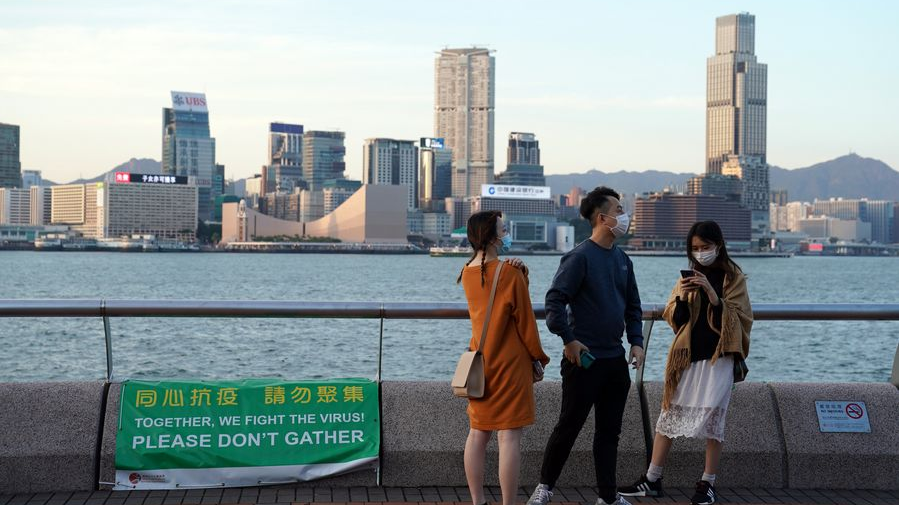
On January 27, Chinese President Xi Jinping heard the work reports from both chief executives of the Hong Kong and Macao Special Administrative Regions (SAR) via video link. Unsurprisingly, one of the key subjects for discussion was the ongoing challenges faced by the HKSAR in its efforts against COVID-19 and its ongoing economic problems.
Hong Kong's struggle with COVID-19 has been badly affected by anti-government sentiments. With the SAR now facing a fourth wave of the virus, Hong Kong residents are now wondering whether they could have avoided this problem. When the HKSAR government developed its universal testing policy and aimed to eradicate COVID-19, the opposition response was to promote conspiracy theories, thus weakening the universal testing initiative and promoting the ongoing spread of COVID-19.
The overall impact of the opposition voices, as well as the Hong Kong riots of 2019, was to create a political atmosphere that weakened trust in public institutions. Hong Kong is now suffering as a result. As noted by the Organization for Economic Cooperation and Development, "During all stages of the COVID-19 pandemic, including containment, mitigation, and recovery, trust in public institutions is vital for governments' ability to respond rapidly and to secure citizen support." Residents of Hong Kong can now only look at Macao and the Chinese mainland with envy.
This envy goes beyond the beleaguered experience of COVID-19 into the economic domain as well. In 2020, China was the only major economy to maintain positive GDP growth at 2.3 percent, and the International Monetary Fund projects around 8-percent growth in 2021.
While some may argue that the pandemic disproportionately impacted highly open cities, the Macao case shows that there is a much better way to handle a crisis. Macao will rebound in 2021 with an estimated 35-percent recovery by Fitch Ratings and an exemplary control of COVID-19.
Meanwhile, Hong Kong recorded a 6.1-percent contraction in 2020, with recovery nowhere in sight as yet. A large part of Hong Kong's economy remains focused on unproductive and sluggish sectors like real estate, finance, insurance, and hospitality. These sectors of the economy are neither highly innovative nor good at generating employment or high-quality jobs.
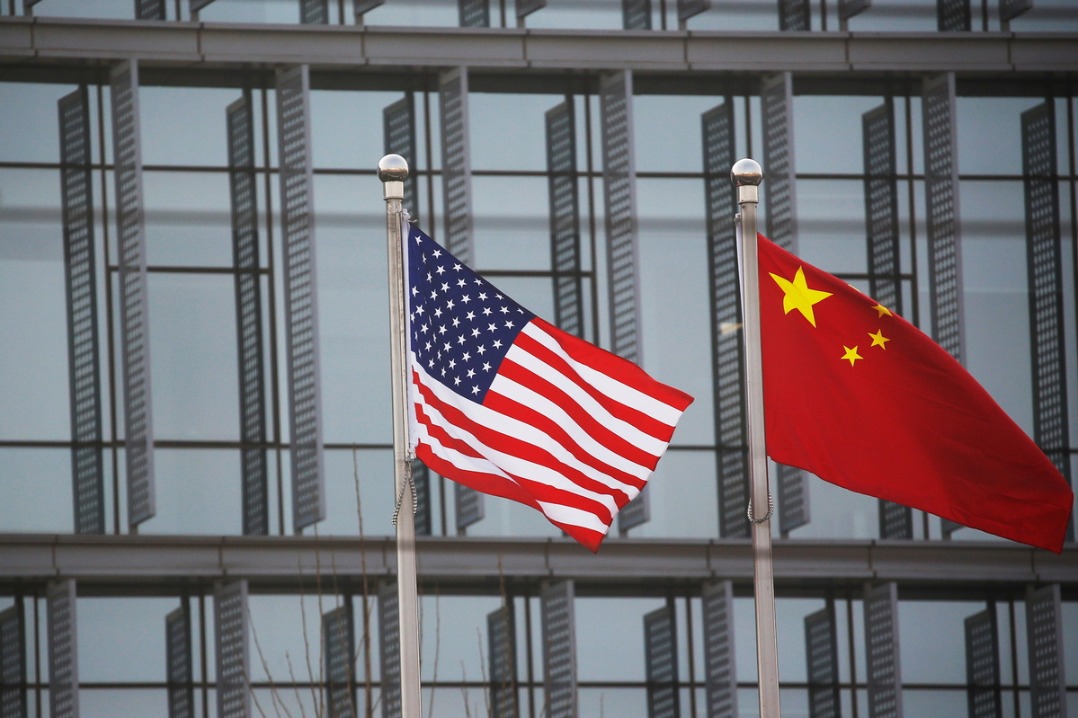
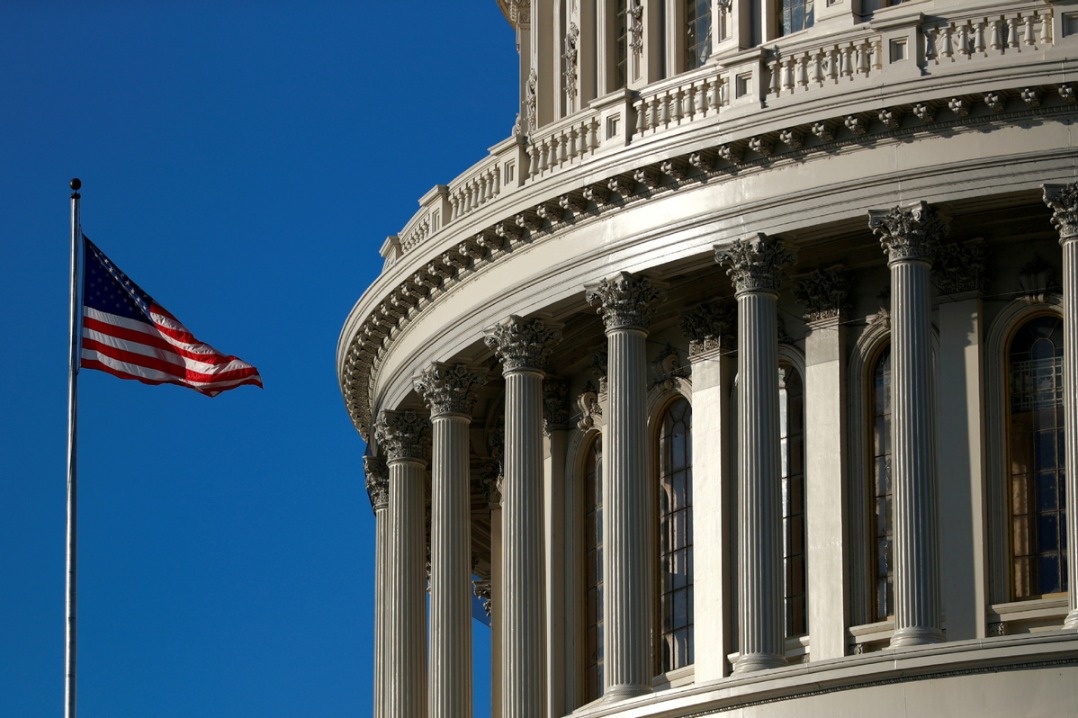
Hong Kong has also dealt with significant hostility from Western governments. From the U.S. decision to end Hong Kong's special trading status to its blatant interference in Hong Kong affairs through the sanctioning of various officials, Hong Kong's recovery will need to navigate this antagonistic climate.
Instead of looking to the West for solutions, whether political or economic, Hong Kong's best bet is to orient its economic and political future toward greater integration with the Chinese mainland. The city is extremely fortunate that after all of the recent political turmoil, it still features prominently in China's plans to develop the Greater Bay Area (GBA).
It is clear that the emerging areas of the global economy include the digital economy. In this respect, Hong Kong is in a prominent position next to Shenzhen, one of the global digital innovation centers. By 2050, a significant part of the global economy will center around countries involved with the Belt and Road Initiative (BRI) that is reshaping Asia. Hong Kong must seize the opportunity to be part of this century's development story. With its status as an international financial center intact despite its recent challenges, Hong Kong needs to build on its strengths to gain a foothold in the emerging digital economy.
Currently, Hong Kong is significantly below both the global and the Asia-Pacific average automation in the workplace, according to an article by Matty Kaffeman published in Hong Kong Business. Residents are also less willing on average to try out new technologies and work styles to improve productivity. This signals the need for a significant change in outlook, with the society needing to orient itself toward the GBA and the prosperity of the BRI and to open up to new ways of doing work.
In the end, all economic questions are always political ones, and it is in this respect that the government of the Hong Kong SAR has shown a way forward. A tremendous success in Hong Kong's 2020 was the implementation of the national security law. While there is a long and hard road ahead for Hong Kong to eliminate the roots of foreign interference that have long compromised its sovereignty, many of the poisonous weeds that plagued 2019 and 2020 have now been addressed.
Based on the firm footing of the national security law, Hong Kong now has the platform to complete the restoration of its sovereignty as an inalienable part of China and to repudiate its dark colonial past.
The first step to recovery, whether political or economic, is the transition from chaos to stable governance. In 2021, there will be an ongoing struggle to ensure that Hong Kong's destiny is entirely in the hands of Chinese patriots whose commitment to Hong Kong's development is viewed as in line with China's central government. Hong Kong's recovery depends on the government and the broader society pushing those self-destructive elements to the margins where they belong.
Timothy Kerswell is a research fellow at the Chinese University of Hong Kong (Shenzhen). He lived in Macao for seven years, working as an assistant professor at the University of Macao.