Rescue center a haven for injured migratory birds









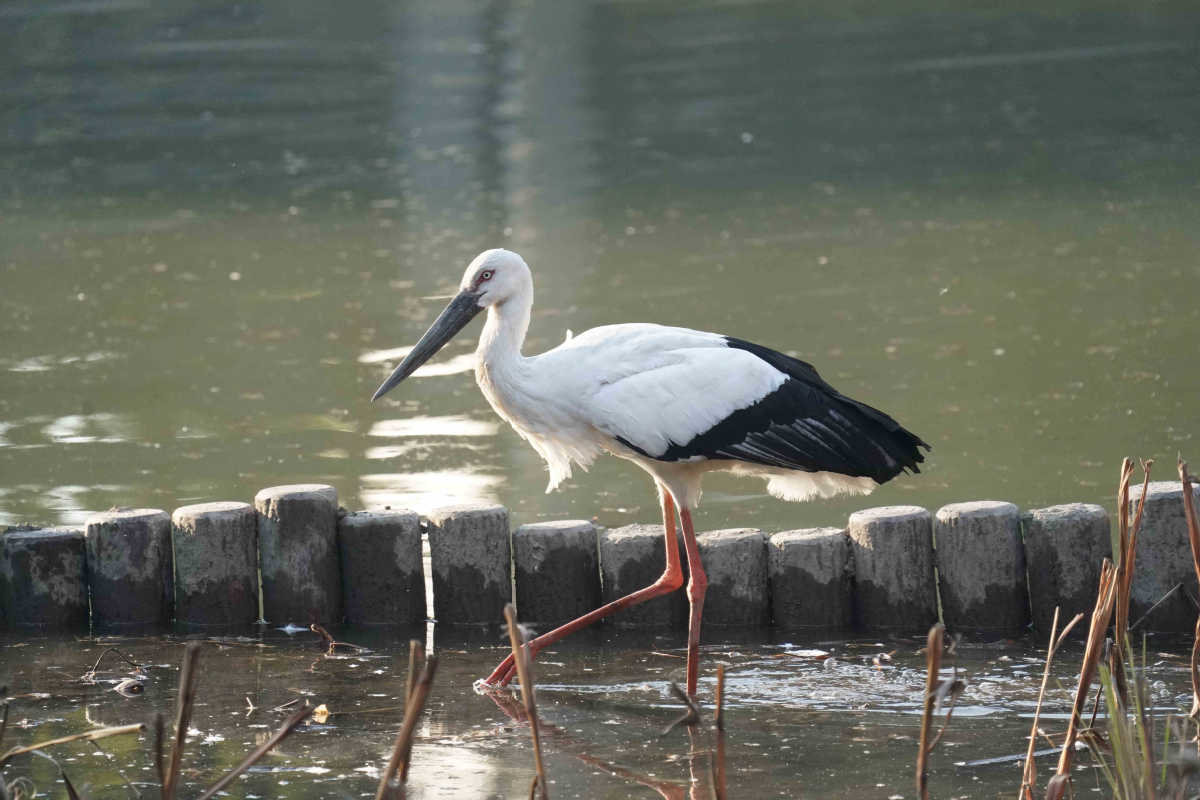
NANCHANG-Equipped with a consulting room, an intensive care unit and a rehabilitation center, the Wucheng wildlife rescue center near Poyang Lake has become a place for sick and injured wintering birds to recover.
"We have treated 76 birds over the past two years. People send sick and injured birds to us whenever they find one," said Shu Guolei, director of the rescue center in Yongxiu county, Jiangxi province.
The rescue center is part of the Wucheng station, under the administration of the Poyang Lake Wetland Nature Reserve.
With a surface area of over 3,200 square kilometers, Poyang Lake hosts up to 700,000 wintering birds every year. The lake is an important wetland ecosystem and the largest habitat for wintering migratory birds in Asia.
Shu said meals are provided for the sick birds according to their species and eating habits. "For example, a corn and rice combo is given to ducks, geese and swans, and a fish and shrimp combo is for the oriental storks."
After a full recovery, the birds are released into the wild, Shu added.
Nearly 98 percent of the world's white cranes, over 80 percent of the oriental storks and more than 70 percent of the white-naped cranes spend their winter months at the lake before flying to warmer regions.
To explore a more effective mechanism to protect the flocks of birds, Jiangxi province coordinates the work of the nature reserve, local public security bureaus and health departments. More and more local residents are also joining in efforts to rescue injured birds as their awareness of environmental protection grows.
Li Chunru, 75, has cared for injured birds for nearly four decades. Previously a doctor at a hospital in Jiangxi's Duchang county, Li founded a clinic for birds in 2013 that is capable of taking care of 200 at a time. The clinic is fitted with consulting rooms, an intensive care unit, inpatient wards, recovery rooms and outdoor sheds.
Bird rescue centers across China also work together to ensure safe trips for migratory birds after their treatment and recovery.
On Jan 2, migratory bird protection centers in Jiangxi and Tianjin released nine recovered birds in Duchang, including oriental storks, gray cranes, swans and geese. Seven of the birds had been brought from Tianjin for treatment.
The birds were released in Poyang Lake so they could more easily rejoin their flock, said Li Zhenzhuo, director of a wildlife conservation center in Tianjin.
Apart from improving the habitat and beefing up rescue efforts, local governments in the province have also increased forage supplies for the birds.
Hu Wei, the Party secretary of Yugan county, Jiangxi, said since November nearly 3,000 white cranes had gathered in a paddy area covering 60 hectares to look for food. "Last summer, a major flood in the Yangtze River endangered the natural food supply for the birds, so we urgently secured dozens of hectares of unharvested rice for the flocks," he said.
Liu Xinxi, an official with the Poyang Lake Wetland Park, said the birds are becoming less timid. "They used to only forage in the remote lake area, but now they can be seen in the fields and pools that are close to people," he said.
Dai Nianhua, a researcher with the Institute of Bioresources at the Jiangxi Academy of Sciences, said the implementation of a 10-year fishing ban in Poyang Lake has better protected aquatic organisms and created favorable conditions for birds to breed.
"With people's increasing awareness of environmental protection, the ecological environment of Poyang Lake has been improving," Dai said.
Xinhua




- Fujian deepens cross-Strait integration with Taiwan through infrastructure and cultural initiatives
- Winter sports push tourism in NE China's Jilin
- 'Beijing Rocket Street': A launchpad for accelerated development
- Capital city targets 5% GDP growth for 2026
- 17 rescued Filipino sailors handed over
- Tech used to increase farm yields in Gansu province