



A new coronavirus variant found in New York City









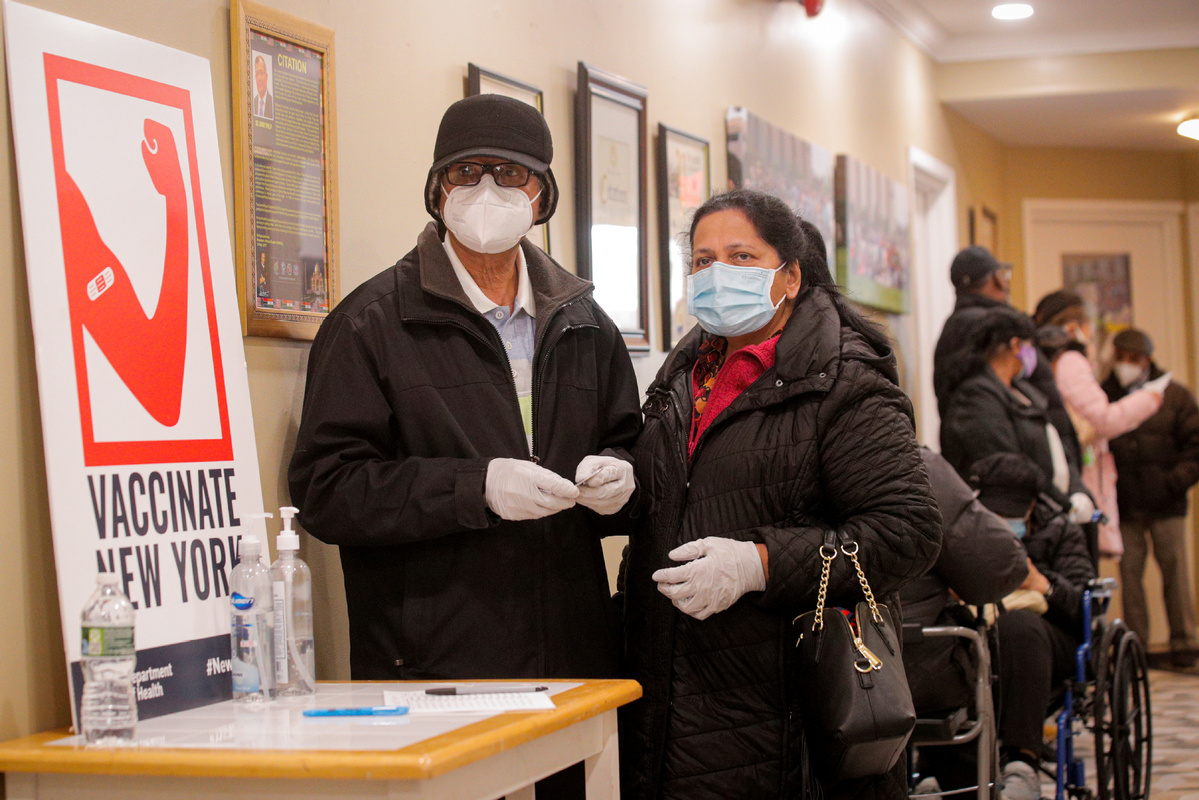
A new coronavirus variant is spreading rapidly in New York City and in the Northeast and could dampen the effectiveness of some current vaccine candidates, according to researchers.
The new variant, called B.1.526, carries mutations that help the virus dodge the body's natural immune response and the effects of monoclonal antibody treatment. It was identified by teams at the University of California (Caltech) and Columbia.
In connection with new variant strains, Pfizer and BioNTech said Thursday they have begun a study to test whether a third dose of their authorized vaccine would fight new strains, such as the one first identified in South Africa.
Earlier studies found that both the Pfizer-BioNTech and Moderna Covid-19 vaccines offer less protection against the South African strain. Moderna said Wednesday it had made a new version of its vaccine targeting the South Africa strain.
The research group at Caltech scanned for mutations among hundreds of thousands of COVID-19 genetic sequences in GISAID, a database shared by scientists. It discovered that the new variant first appeared in samples collected in New York City in November. By the middle of this month, the Caltech team found that the number of B.1.526 cases had risen to about 27 percent of viral sequences appearing in the database.
In the other study, researchers at Columbia University analyzed 1,142 samples from patients at the school's hospital and found that more than 12 percent of people with coronavirus had been infected with the variant.
"We observed a steady increase in the detection rate from late December to mid-February, with an alarming rise to 12.3 percent in the past two weeks," wrote one team at the Columbia University Medical Center in a report published Thursday at MedRxiv, a website that allows new research to be shared before its formal publication.
"Patients with this novel variant came from diverse neighborhoods in the metropolitan area, and they were on average older and more frequently hospitalized," the team said in the report.
Dr David Ho, one of the researchers on the Columbia team, noted cases in Westchester, in the Bronx and Queens, the lower part of Manhattan and in Brooklyn and that there is some level of community spread involving the new variant. "It seems to be widespread. It's not a single outbreak," he told The New York Times.
"It's not particularly happy news," Michel Nussenzweig, an immunologist at New York's Rockefeller University, told the Times, adding that people who have recovered from the coronavirus or who have been vaccinated are "very likely to be able to fight this variant off, there's no doubt about that".
The research from the teams at Caltech and Columbia hasn't been peer-reviewed or published in a scientific journal.
New research suggests that a variant identified in California in December, known to scientists as B.1.427/B.1.429, is more contagious than earlier forms of the coronavirus.
California passed the 50,000-death mark from COVID-19 on Wednesday, the most of any state. The new study helped explain the state's dramatic surge in cases and deaths, according to health experts.
The new coronavirus strain now dominant in California is associated with more severe illness and death and also can evade antibodies generated by vaccines or prior infections, researchers said.
California's strain — B.1.427/B.1.429 — currently makes up 50 percent of all cases in the state.
By the end of next month, the strain will probably account for 90 percent of the state's coronavirus infections, Dr Charles Chiu, a researcher on the study and a virologist at the University of California, San Francisco, told the Los Angeles Times.
However, just like most states in the US, California continues to see big declines in COVID-19 after the recent holiday surge. The state is now recording about 6,000 new coronavirus cases a day, down from 45,000 a day from six weeks ago.
"Even when we're seeing a surge of cases due to this variant, overall, the cases have been going down since the holidays," Chiu told The Washington Post. "We're not seeing the surge we might be worried about."
Many concerns have focused on whether variants could reduce the effectiveness of vaccines. The new study found that the California strain partially impedes the effectiveness of antibodies. But the reduction was modest. Current vaccines still afford protection, particularly against severe disease.
The B.1.1.7 variant, which was first identified in the UK, currently accounts for about 2,000 cases in 45 states. As of Wednesday, officials said the UK variant made up about 6.2 percent of cases in the second week of February.
The UK variant is doubling in the US every 10 days and is expected to become the most prevalent form of coronavirus in the US by the end of March.
Preliminary evidence suggests that B.1.1.7, the UK variant, is about 35 percent more deadly than other variants. But testing suggests that the vaccines still work well against this variant.










