



Proposal sets path to green growth









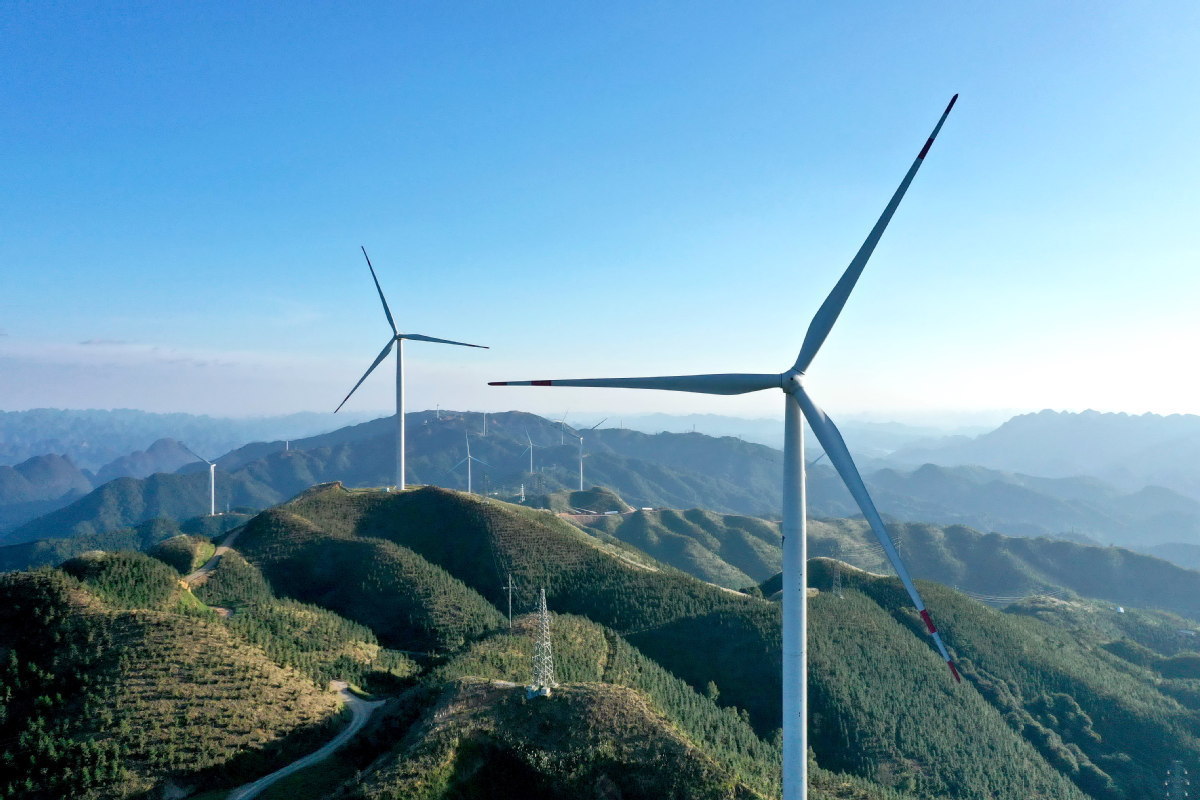
Valuation system would help discourage local govts from high-carbon projects
China should consider a valuation system that makes reliance on heavy carbon use costlier in order to encourage green development, according to a senior national political adviser and senior economist.
Such a system would make clear local governments' responsibilities and the economic benefits of further adopting low-carbon energy, said Liu Shijin, deputy director of the Economic Affairs Committee of the National Committee of the Chinese People's Political Consultative Conference.
Liu also called on the government to devise exit plans for high-carbon projects, a move he believes will address the concerns of stakeholders and smooth the way for the transformation to green energy.
A valuation system would help discourage local governments from involvement in high-carbon development projects, Liu said at the Stories to Watch in 2021 conference, organized by the World Resources Institute in Beijing on Feb 26.
When calculating the costs of China's economic development, environmental concerns such as pollution and carbon emissions are not considered, he said. A valuation system would switch the focus away from industrialization to green development.
Under such a system, high-carbon emissions and projects that are heavily reliant on carbon would incur greater tariffs, Liu said. "If such a constraint mechanism could be established, I think local governments will be clearheaded and make the right choice."
Despite regional differences-where some areas are major fossil energy producers and others are big consumers of coal and oil-a method could be devised to calculate the cost-efficiency of a development, Liu said. "With a new conclusion, they (governments) will act differently," he said.
However, a clear decarbonization road map won't be possible without a thorough exit plan for stakeholders in high-carbon industries, especially the coal sector, he said.
"Let's imagine how many companies and job opportunities will be affected if we reduce the growth in coal consumption in Shanxi province to zero and even negative," he said, referring to the region with the nation's highest coal reserves.
"If you want to see coal consumption plummet suddenly without an exit plan, that's not responsible and also hard to bring into reality," he noted, adding that the exit plan should be systematic.
Liu also called for greater efforts to develop efficient, cost-friendly low-carbon technologies, considering the imbalance in China between per capita GDP and average carbon emissions.
Per capita carbon emissions in China are 7 to 8 metric tons, more than those in the United Kingdom, France and other European countries.
However, the country's per capita GDP stands at about $10,000. China needs to increase its per capita GDP to almost $40,000 to reach the level of a moderately developed country, a goal the country has set for 2035, he said.
'Grim, realistic challenge'
"We need to realize the target, but there cannot be growth in carbon emissions anymore, considering that goal of having carbon emissions peak in 2030. For China, this is a very grim and realistic challenge," he said, adding that the current industrial and technological structures will not solely be able to lead China to the target.
"The technologies we need must be highly efficient and sophisticated. A prominent feature for the world's transition from an agricultural civilization to an industrial civilization is upgraded productivity," he said, adding that this is also a prerequisite for the country's green transition.
He said the rapid decrease in the cost of photovoltaic power generation is a good example of how it's possible to make low-carbon technologies cost-friendly.
"Recently, the cost has paralleled that of coal power. The analysis of some industrial experts shows that it's very possible that it will decrease to half of that for coal power in the next few years," he said.





- China's Global Governance Initiative receives positive feedback at forum
- China's Xizang sees steady tourism growth in 2025
- First-of-its-kind pearl auction held utilizing Hainan FTP
- Agarwood exhibition steeps Shanghai museum in fragrance
- The Fujian Coast Guard conducts regular law enforcement patrol in the waters near Jinmen
- IP protection for new fields to improve














