



5-year blueprint paves way for 2060 carbon neutrality









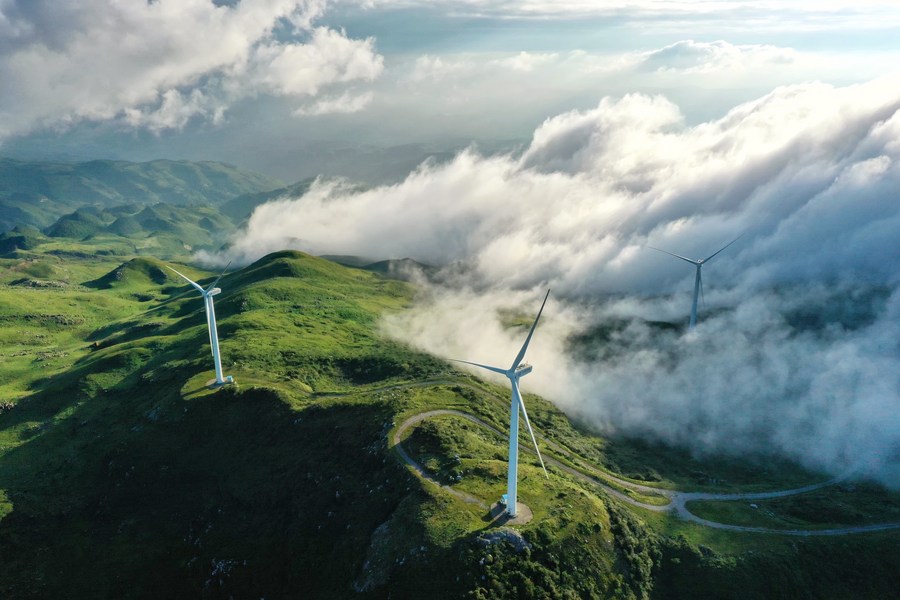
BEIJING-Over the next five years and beyond, China will take more measures to restructure its industry and energy mix in a greener way, and this will lay a solid foundation for peaking carbon dioxide emissions by 2030 and achieving carbon neutrality by 2060.
China will control the aggregate amount and intensity of energy consumption, reduce the use of fossil energy and advance the low-carbon transition of sectors like industry, construction and transportation, according to the draft outline of the 14th Five-Year Plan (2021-25) for national economic and social development and the long-range objectives through the year 2035.
"The government will support related regions where conditions permit to take the lead in peaking carbon emissions ahead of schedule," said the outline unveiled during the two sessions, the annual sittings of the country's top legislature and the top political advisory body that concluded last week.
Last year, China announced it will strive to bring its carbon emissions to a peak before 2030 and become carbon-neutral before 2060.
"As the world's largest developing nation, China needs to make greater efforts than what developed countries did to achieve the goal," said Ding Kuiling, executive vice-president of Shanghai Jiao Tong University and an academician of the Chinese Academy of Sciences.
Facing a tight timetable and arduous tasks, China should focus on the promotion of renewable energy, advance the research and development of energy conservation technologies and cut carbon emissions, said Ding, who is also a national political advisor.
The country's current energy consumption and carbon emissions remain huge as it is still in a stage of industrialization, he said.
The outline noted that China will further transform its energy consumption structure by promoting the wider use of clean and renewable energy during the 2021-25 period.
Over the last five years, the share of clean energy consumption in the country has risen from 19.1 percent to 24.3 percent, data from the National Energy Administration showed.
"The development of sectors with high energy consumption and heavy carbon emissions will be strictly curbed, and the green transformation of steel, oil and construction industries will be promoted," the outline said.
By 2030, China aims to lower carbon dioxide emissions per unit of GDP by over 65 percent from the 2005 level, raise the share of non-fossil energy in primary energy use to around 25 percent, and bring the total installed capacity of wind and solar electricity to more than 1.2 billion kilowatts.
An action plan for peaking carbon emissions by 2030 is expected to be unveiled within the year, according to this year's Government Work Report.
Apart from the clean energy campaign, China signals more efforts to promote comprehensive green transformation in its economic and social development.
To facilitate the green upgrade of various sectors, more green finance stimulus packages are expected.
In 2016, the People's Bank of China, the country's central bank, issued and implemented a policy framework on green finance. Since then, green financing took root and spread across China.
By the end of last year, China's outstanding green loans reached nearly 12 trillion yuan ($1.84 trillion), official data showed.
The central bank will give full play to financing for green development in resource allocation, risk management and market pricing, said Chen Yulu, vice-governor of the PBOC and a national political advisor.
Chen said the country would guide and leverage more financial resources to low-carbon and green transformation projects through its macro policies, including monetary and credit policies and mandatory disclosure of green finance-related information.
China will also improve the system of green financing standards, focusing on three major areas-climate change, pollution control, and energy conservation and emission reduction, he said.
He called for international cooperation to fully tap the potential of green financing in supporting China and other countries to achieve their respective carbon-neutrality targets.



















