



US hews to outdated zero-sum mindset in a win-win world









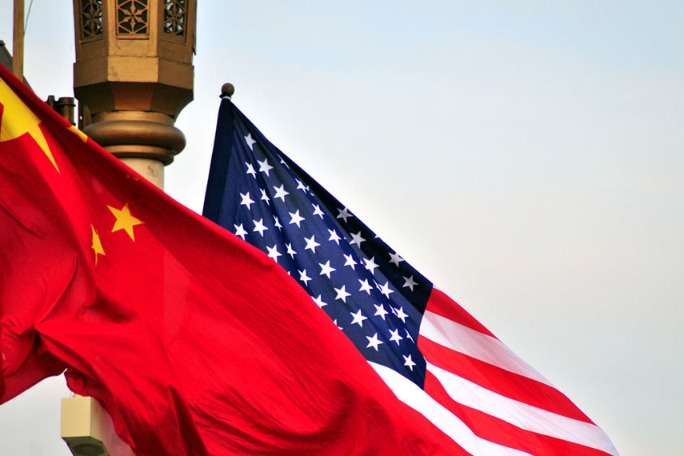
When China's Foreign Minister Yang Jiechi met senior US diplomats in Alaska on March 18, he told them they must replace their "zero-sum mindset" with a "win/win mindset". The days of one superpower dominating the world, he said, were over, and all major powers, including the US and China, must develop a cooperative relationship that worked best for the mutual benefit of all. In saying this, Yang went straight to the heart of the thinking that sets America firmly in opposition to China's rise.
Zero-sum thinking has been central to Western culture for thousands of years. The West has always been a culture of One Truth, One Way, One God. Moses declared this on Sinai when he set Western monotheism on its path, Aristotelian philosophy embedded it with either/or logic, and in the 17th century, Newtonian physics declared "one best path from A to B" as absolute scientific truth. This mindset finds its most extreme expression in America's simplistic, black and white, with us or against us mentality. "One best way" has shaped American domestic and foreign policy, and it is central to American national identity.
Every day, Americans are reminded they live in "the greatest country in the world" and US-style democracy is the best, only morally just way of governing a nation. Generations of their politicians have sent American soldiers to war to fulfill the mandate of a "Manifest Destiny" to carry the burden of world leadership. Asking Americans to give up their zero-sum mindset is asking them to give up their religion, their logic and their sense of national purpose and identity. But this sets them, and perhaps the world, on a tragic path.
People convinced their way is the best way, indeed the only viable way, feel threatened by difference. America feels a need to dominate even allies who mainly share its values and its way of doing things. How does it then deal with a country so different from itself as China, or with concepts so foreign as a multipolar world or "a community of nations with a shared future"? How is it to understand China at all except through the lens of its own thinking, and thus as "an existential enemy" set on replacing it as the world's supreme power? As the psychologist Abraham Maslow said, "If the only tool you have is a hammer, everything looks like a nail." If you believe there can only be one winner in a struggle for global power, then China's proposal everyone can be a winner in cooperative world order can only be a lie or a trick, intended to make the US drop its guard.
But China's win-win mindset is as old as the West's zero-sum thinking, and has its origins in a situation not too dissimilar from today's interconnected and interdependent world. During the reign of China's first historically recorded dynasty, the Shang (1600-1046 BCE), the Zhou tribe, who ruled one small state, managed to defeat the combined armies of many larger states, and the King of Zhou found himself ruling over most of what was then China's entire geographical area. But there were constant uprisings and rebellions against him. The Zhou realized they were not strong enough to maintain their position by force, so the king conceived the entirely new tianxia ("all under heaven") governing model. Instead of ruling by domination, the Zhou would now position themselves as one among a vast network of cooperating states. All member states of this network would naturally find it more in their own interest to cooperate with each other — and the Zhou — than to seek dominance for themselves. This multi-state network occupied all of what was then the known world, so tianxia was the first model for global governance. It has been China's win-win model for negotiating ever since, in both business and diplomacy. It is a model urgently needed in our 21st century world.
When Apollo 11 landed on the moon in July 1969 and signalled back a view of Earth from the moon's perspective, we saw the planet for the first time in a way we had never imagined – a small, vulnerable sphere suspended alone in what appeared to be the vacuum of empty space. It made our world, and us, feel small and vulnerable, and our sense of earth's smallness and the interconnectivity and interdependence of our lives upon it has since been reinforced by the COVID-19 pandemic. We have been reminded still more forcefully that we live in a world of "zero distance", and of the vulnerability of our entangled lives. We have also seen we had in place no global response to this global crisis, and what that has cost us.
The most serious problems facing all nations today are global ones, which require a cooperative global response. Many are existential problems that, if not addressed, will result in global disaster and perhaps human extinction. Consequences of the disastrous inaction and lack of cooperation in response to COVID-19 are a harbinger of far worse consequences if similar inaction and failure to cooperate typify the global community's response to climate change, mass migration or nuclear war. America may find it painful to give up its zero-sum mindset, but nothing less than all our survival depends on it.
Danah Zohar is a visiting professor at Tsinghua University and the China Art Academy and an entrepreneurial mentor at Haier.
The opinions expressed here are those of the writer and do not necessarily represent the views of China Daily and China Daily website.
If you have a specific expertise and would like to contribute to China Daily, please contact us at opinion@chinadaily.com.cn, and comment@chinadaily.com.cn.





