


Where there's a road, there's an RV










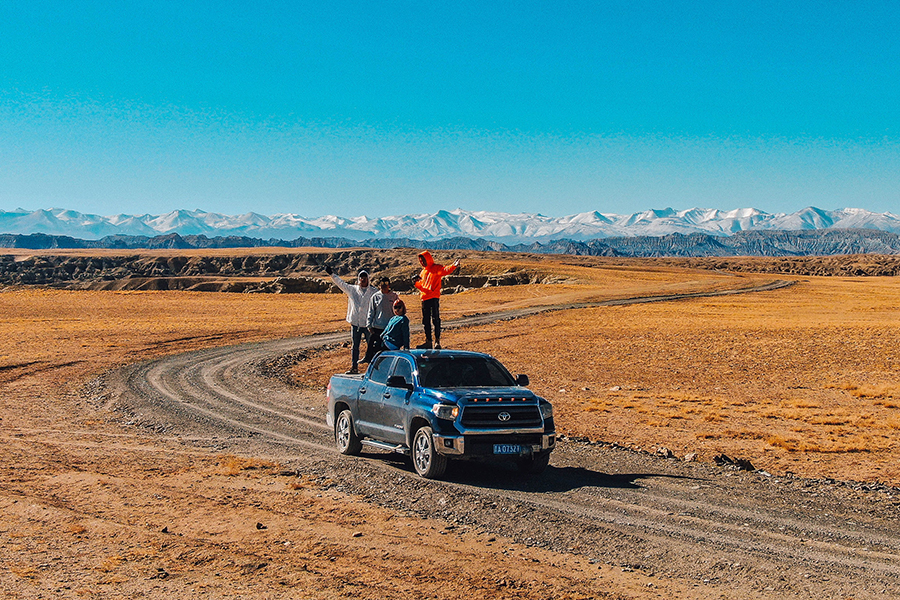
There were around 130,000 RVs in China by the end of 2020, data from the China Auto Dealers Association showed.
A total of 1,274 RV companies were registered in the first half of 2020, up 17 percent from a year earlier, according to Qichacha, a major enterprise credit record investigation agency in China.
Maxus, a major RV producer in China, said it sold almost 1,000 RVs in 2020, as the sales started to rise in the second half of last year. The vehicle-maker expects to sell 2,700 RVs this year.
In all, 11,359 new RVs were sold, and 1,217 pre-owned ones were traded last year, according to CADC data. Most of them were sold in cities in the Yangtze River Delta region as well as Sichuan and Guangdong provinces.
The association said the reasons for RVs' popularity lie in the fact that those cities are themselves popular travel destinations, and they have a solid local economy and local authorities are boosting tourism and the services sector.
Regions in the vast western China are gaining in popularity as well. Last year, Rv2go, a recreational vehicle rental company, added 500 RVs to its fleet for tours to Qinghai province, the Ningxia Hui autonomous region, and the Inner Mongolia autonomous region.
Lan Qingsong, vice-president of Maxus' parent company SAIC Motor Corp, said the RV market grew by around 40 percent before COVID-19 broke out, and, starting from the second half of 2020, the sales growth rate has been returning to the pre-pandemic levels. He said China is likely to overtake the United States as the largest RV market in five to 10 years. Last year, over 420,000 RVs were sold in the US.
"It is decided by our population, our economic growth and our need to upgrade our life including travel," said Lan.
Long drive
China has a vast travel market. Fang Zeqian, an analyst at the Trip.com Research Institute, said demand is returning to the pre-pandemic levels.
Data showed the number of tourist destination tickets booked via Trip.com for Qingming Festival is 33 percent more than that in the same period of 2019.
The China Tourism Academy estimated that domestic trips this year are expected to total 4.1 billion, up 42 percent, and the revenue generated will likely reach an estimated 3.3 trillion yuan ($502.3 billion), up 48 percent.
Driving is one of the often-opted choices because of the huge number of driving license holders, and for the sake of convenience and social distancing.
Data from the Ministry of Public Security showed over 440 million people have driving licenses, and there were 281 million vehicles on the roads by the end of 2020.
SUVs, thanks to their high ground clearance and better off-road capacity than sedans, were the only segment that saw sales growth last year, despite the fact that the overall vehicle market fell 6 percent year-on-year, according to the China Association of Automobile Manufacturers.
And SUVs, whose sales totaled 9.46 million units, overtook the sedans as the largest passenger vehicle segment. SUV makers are helping boost the trend by offering route tips and partnering with local destinations to give favorable travel packages.
Starting from 2012, British premium vehicle brand Land Rover has been releasing travel guides for off-roader lovers in China, covering different regions in the country, from the Xinjiang Uygur autonomous region to Sichuan and Yunnan provinces.
Established in 2018, Chinese brand Jetour is luring travel lovers who own cars with special accounts available via its nationwide partnerships with over 100 travel agencies and destination hotels.
It is convinced that short-distance travel has become part of people's life. This approach has helped the young brand to get established in the country's competitive SUV market, with 300,000 vehicles sold by the end of 2020.
"Why should people choose you when there are so many other SUV brands out there? Building a travel-related ecosystem is one of the most important goals for us," said Jetour President Bao Siyu. Data from analytics company MAS Data Technology showed that people tend to go on road trips when their average monthly family income reach 10,000 yuan. Of them, 68 percent have college education and most of them are born in the 1980s.
Dai Ke, founder of MAS Data Technology, said leisure is the primary goal of their driving trips, and they look forward to natural and historical destinations in the countryside than cities.
Some companies are introducing estate cars, which have large luggage room and better ground clearance than sedans but feature better driving experience than SUVs. They are popular in European countries.
Audi and Volvo are among the first to offer their estate cars in the country. Late last year, Ford and Volkswagen followed suit to launch theirs in an effort to expand the segment.
China's Wuling, which is known for its mini electric cars, is expected to launch its estate car this year.
Among other things, when its second-row seats are put down, there is a level place measuring 1,800 mm in length and 1,200 in width, allowing people to lie down comfortably at the campsites.
Zhang Guangrui, honorary director of the Tourism Research Centre at the China Academy of Social Sciences, said nowadays travelers prefer "freestyle travel", especially traveling with family and friends for relaxation.
They are less concerned about the fame of the destinations and instead focus on getting away from their daily lives, and short-distance trips close to cities are expected to become the most popular form of leisure travel, said Zhang.
Dai Bin, president of the China Tourism Academy, said Chinese tourists are increasingly seeking individualized experiences.
According to Trip.com, activities like driving luxury cars and RVs, aerial photography, flights in hot air balloons, mini helicopters, two-seater aircraft, outdoor hiking, paragliding, and diving, are becoming popular.
"Unlike in the past, they are more willing to slow down their pace and take in-depth trips with certain themes, encouraged by their growing spending power and evolving tastes," said Dai.
Road grid, infrastructure
The rising demand for self-drive travel is boosted and also facilitated by China's increased efforts in improving the road network, especially in the vast rural areas.
According to the Ministry of Transport, China's rural road network now extends 4.35 million kilometers, accounting for about 84 percent of the country's total road network.
From 2016 to 2020, China built or rebuilt more than 1.4 million km of rural roads.
By 2035, the length of the rural road network will exceed 5 million km, according to a development blueprint released by the ministry last month.
China is working on improving other infrastructure as well. There are around 1,200 campsites for RVs and other vehicles in the country, and more are under construction.
As electric cars are becoming part of people's lives, the charging pillar network is expanding to enable them to go extra miles.
By the end of 2020, there were 4.92 million electric cars and plug-in hybrids on China's roads, according to the Ministry of Industry and Information Technology. They will be joined by at least 1.8 million more this year, said the China Association of Automobile Manufacturers.
Data from the country's charging infrastructure alliance show that there were 1.68 million charging pillars, both public and private, by the end of 2020, up 39 percent year-on-year.
Most of them are built and operated by State Grid as well as charging service providers including Teld. Last year, State Grid spent 2.7 billion yuan to add 78,000 charging pillars into its existing network across the country.
This year's Government Work Report stressed that efforts should be made to build more charging pillars and battery swap stations this year.
Carmakers are doing their part. In September 2020, US electric carmaker Tesla finished installations of charging poles along the 2,000 km road from Chengdu to Lhasa, with one built every 154 kilometers. It has charging networks along other major routes as well, including from Shanghai to Chengdu, and from Harbin in Northeast China's Heilongjiang province to Sanya in China's southernmost Hainan province.
By March, it had installed over 6,000 charging pillars in around 300 cities in the country, said Tesla. As its charging pillar plant kicked off production in Shanghai, it will speed up its efforts this year in expanding the charging network. Volkswagen, as one of the largest car groups worldwide, has installed more than 8,000 charging pillars at more than 2,000 dealerships across the country. It has also built a joint venture with local Chinese companies, which is expected to build 500 charging stations by the end of this year.
Chinese companies, including electric car startup Nio, are pioneering battery swap technology. It allows a car to replace a fully charged battery in less than three minutes, when it usually takes hours to get a vehicle fully charged.
Nio said it will soon launch second-generation battery swap stations, which will work even faster. It is to build at least 500 stations by the end of this year. More than 195 stations were built by the end of March this year in around 80 cities.





