



EU's quest could bring tech nationalism









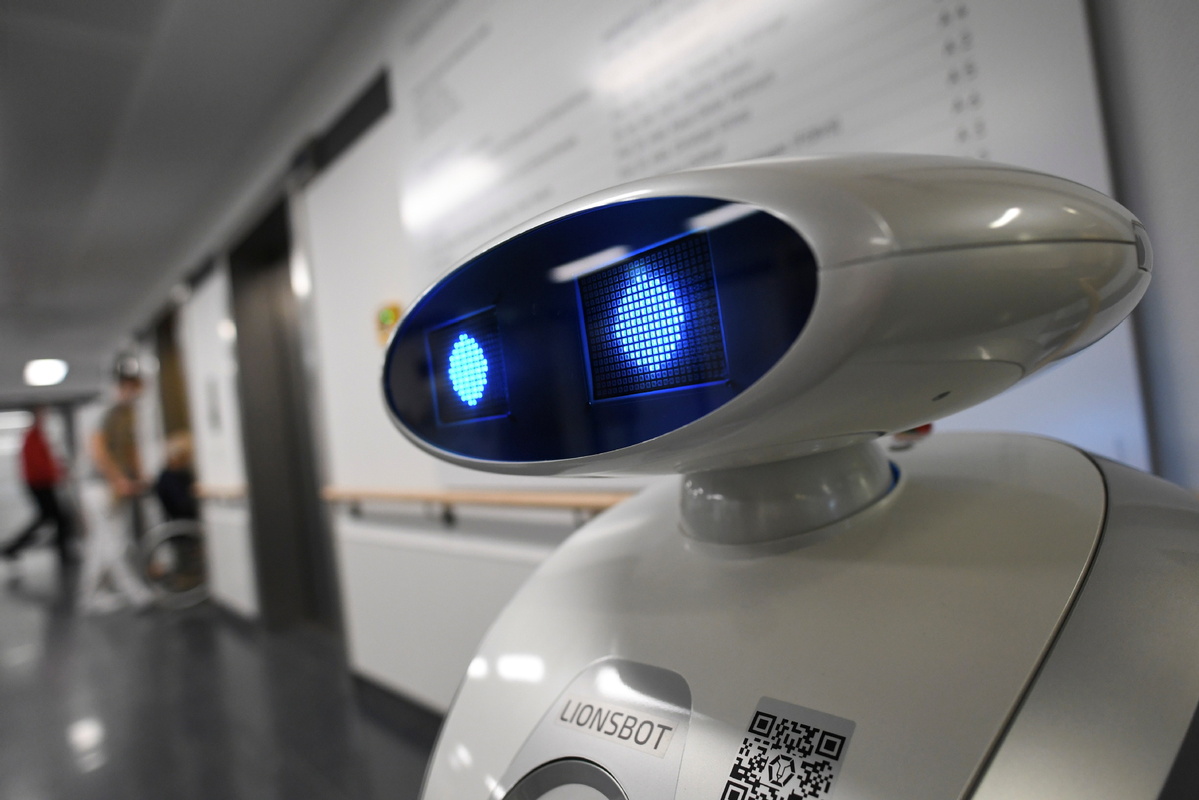
The European Union outlined plans in March for an ambitious Digital Decade to transform the 27-state bloc by 2030, its latest move in pursuit of what has become known as "tech sovereignty".
The initiative reflected concerns that Europe is falling behind in the new data-driven economy and is overdependent on the global leaders in the tech sector, China and the United States.
As French President Emmanuel Macron has put it, if Europe fails to create its own leaders in fields such as digital technology and artificial intelligence, "our choices will be dictated by others".
In this month's policy paper, the European Commission declared, "The EU's ambition is to be digitally sovereign in an open and interconnected world, and to pursue digital policies that empower people and businesses to seize a human centered, sustainable and more prosperous digital future."
The plan envisages investing billions of euros in a digital transformation of business and public services as well as extending access to 5G services to all citizens of the bloc.
However, it also reflects a concern that Europe is lagging behind in areas such as production of components. It recommends doubling the bloc's output of state-of-the-art semiconductors to 20 percent of the global total.
The largest chipmakers are currently in China and the US, countries that also host the largest social media platforms.
Europe also has some catching up to do in the area of innovation. Until the United Kingdom's departure from the EU, half of all the continent's unicorn tech startups (privately held startups valued at over $1 billion) were based there.
To better address such gaps, the policymaking European Commission aims to promote multicountry projects funded by the EU budget, individual member states and European industry.
Europe's digital deficit was raised last year by Thierry Breton, the EC's commissioner for the internal market, who said Europe would not be a bystander in a high-tech race between the two global leaders. This means "identifying and investing in the digital technologies that will underpin our sovereignty and our industrial future", he said.
Ursula von der Leyen, who has made the tech issue a key element of her EC presidency, has said the bloc must have mastery and ownership of the new technologies deployed in Europe.
While that might seem a legitimate and even desirable aim, it also raises concerns that the quest for tech sovereignty could end up being closer to a version of tech nationalism. That has been defined as a concept that links technological innovation and capabilities directly to a nation's-or in this case a bloc's-national security, economic prosperity and social stability.
Controversies in the US and Europe over the central role of Chinese tech giant Huawei in the next generation of 5G networks, ostensibly on security grounds, are seen as one aspect of such tech nationalism.
Tyson Barker, the technology director at the German Council on Foreign Relations, wrote at the start of this year that Europe's quest for digital sovereignty rests on a number of faulty assumptions.
Among these was the belief that tech innovation can be driven by large-scale state investment. He contrasted that with the reality of the dominant US tech sector, where the lion's share of funding comes from cash-rich big tech companies.
Barker warned, in an article in January's Foreign Policy magazine, that European anxiety about being left behind in the tech race could actually end up making it more dependent on technology from world leaders such as China and the US.
Arguing that Europe could not win the tech war it had initiated, he said it could better deploy its skills in helping to establish global digital standards and by attracting international tech innovators to work in Europe.
Others have warned that tech nationalism is another aspect of an anti-globalization trend that threatens the growing global interconnectedness of recent decades.
Keeping the lead in technological innovation had become one of the major fields of global competition, the Stockholm International Peace Research Institute has noted. It said the trend may have been aggravated by the COVID-19 pandemic, which has highlighted the fragility of international supply chains. "The lockdown might indeed have strengthened those in Europe and in other parts of the world who also want to engage in techno-nationalist policies," the institute said.
It stressed, however, that the capacity to innovate and produce advanced technologies relies on international scientific cooperation and the movement of people and ideas.
In Europe as elsewhere, there was therefore an inherent contradiction between tech nationalism and the protectionism it entails and the will to remain ahead in the technological race.
The author is a senior media consultant for China Daily UK.










