Points of reference










How can Latin America get onto a positive development path and what lessons can it draw from the Chinese experience?
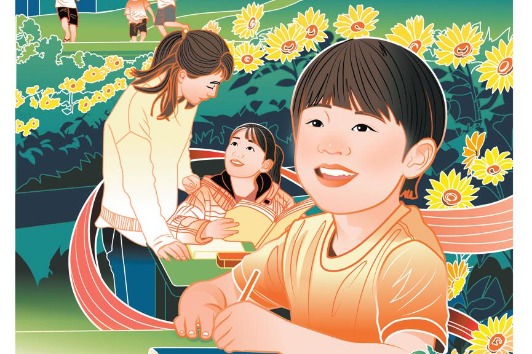
In February, President Xi Jinping announced the eradication of extreme poverty in China, thanks to the success of a long-term program implemented by the State. In a matter of eight years, a specialized pattern of targeted poverty alleviation, worked hard to substantially improve the standard of living of the last 100 million people who were still extremely poor in China. In doing so, the pattern was also completing work of the previous four decades that had lifted no less than 800 million Chinese out of poverty.
China has made available to the world a model capable of promoting a decent standard of living for people born in poverty. The significance of the event is heightened by the fact that the Communist Party of China will celebrate the centenary of its founding in July. The end of poverty in China is a great achievement of Chinese communism. Now we need to ask ourselves, to what extent can this experience be replicated in Latin America?
The first reflection is on the model itself. China took advantage of socialism to pool funds that could be allocated to accomplish the great task of eradicating poverty. That was the starting point for the program, the State's ability to perform high-effort functions over long periods of time. The eradication of poverty in China is an achievement of the State and not the spontaneous work of the market.
Next, China has planned its investments as leverage to generate a process aimed at people living in poverty and provide them with facilities to achieve a better economic future. Public investment in poor districts has addressed health, education and housing, providing a basic level that allows those at the bottom of society to a life with dignity. Likewise, the State has connected poor areas with markets, integrating them into productive chains that begin in the countryside and reach urban consumers. The Chinese model is composed of multiple elements that converge into one goal: to leverage local and personal development by opening opportunities for material prosperity.
For their part, at the beginning of this decade, Latin American countries were poorer than China and their states were considerably weaker. But this has not always been the case. In the middle of the 20th century, Latin American countries were middle-income while China was poor. Since then, Latin America has been stagnant, while China has grown significantly, especially over the last 40 years.
During this period, Latin America has tried two development models, both of which ended in a crisis.
The region wanted to end its reliance on agro-exports and become industrialized. But, it was a chimera that led to the formation of oligopolies that controlled protected markets by producing expensive and low-quality manufactured goods. For this reason, citizens were unhappy and neoliberalism surfaced in the early 1990s. Markets were opened and the state's influence was reduced. The economies grew and resumed the traditional pattern of exporting raw materials.
In countries such as Peru, the neoliberal cycle allowed economic growth, but the social horizon was lost and the poor were ignored. Therefore, economic growth was fragile and did not manage to become sustainable over time. A major crisis, such as the current pandemic, has caused the achievements of 30 years of neoliberalism in poverty reduction to evaporate in the short span of one year. Latin America is now as poor as it was in the early 1990s.
How can Latin America get back onto a positive path and what lessons can it draw from the Chinese experience? The first one is stability. Frequent changes of political model display a lack of consensus and an inability to implement long-term policies. The second is the state's political will. Without this, nothing is possible because the government's commitment is essential. Next the state's action is sustainable when it manages to leverage private initiative and generate a bigger market.
Thus, public investment is not a non-refundable subsidy that disappears in crises the way it has happened in Latin America. Last but not least, the goodness of a model depends on its ability to be implemented in different locations. To successfully meet general goals, it is necessary to know and respect the uniqueness of each social and territorial space.
Sharing the satisfaction and pride of the Chinese people for this important achievement entails a commitment, because there is plenty to be done. Around the world, the plague of poverty continues to affect millions of people despite the passage of hundreds of years. Someday it must come to an end.
The author is a distinguished professor at the Center for Latin American Studies at Shanghai University and doctor of Latin American History at Columbia University. The author contributed this article to China Watch, a think tank powered by China Daily. The views do not necessarily reflect those of China Daily.