



Vaccine IPR waiver may end up being just US posturing









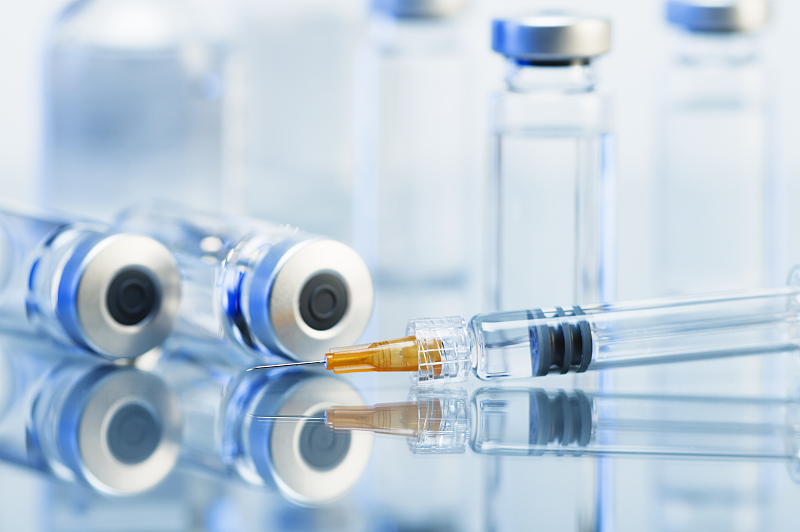
Since the outbreak of the novel coronavirus pandemic, international organizations, such as the United Nations, and developing countries have been calling on Big Pharma to waive intellectual property protection for COVID-19 vaccines, so as to increase vaccine production and ensure equitable vaccine distribution across the world.
Under increasing international pressure, the Joe Biden administration announced on May 5 that it supports temporarily lifting IP protections, with US Trade Representative Katherine Tai saying the US would participate in negotiations at the World Trade Organization to achieve the goal of IPR waiver.
With the virus still raging in India and some other parts of the world, the US' stance will boost cooperation in the global fight against the pandemic. Yet, in spite of earning praise from the WHO and the European Union, the US administration has invited severe criticism from American pharmaceutical companies and Germany for its stance. And as a fallout of the US decision, the stock prices of US vaccine makers Pfizer and Moderna have plunged.
The Joe Biden administration faces three challenges in turning its statement into an effective tool to boost the global fight against COVID-19. First, it is difficult to skirt international and domestic laws on IP protection. The IP protection waiver means the patent owner loses, even if temporarily, the right to prohibit others from using its patent, which could have serious legal consequences in the future.
Even if the proposal becomes a reality, the US has to help amend relevant international agreements under the WTO framework and then apply the new ones to its domestic laws. The current agreements on IP protection are mainly the Paris Convention for the Protection of Industrial Property, the Patent Cooperation Treaty, and the WTO's Agreement on Trade-Related Aspects of Intellectual Property Rights.
Adherence to TRIPS is mandatory for WTO member states, which are required to protect other countries' IP rights in the same way as they would protect theirs, although this has led to the formation of monopolies. Way back in 2001, WTO members passed the Doha Declaration allowing governments to issue compulsory patent licenses during a public health crisis based on TRIPS. In October, India and South Africa jointly proposed to the TRIPS Council that IP protection for the vaccines be temporarily lifted, which most developed countries including the US opposed.
The TRIPS Council will discuss the proposal again on June 8 and 9, and the Biden administration has to persuade other WTO members to follow its example, which will not be easy. The US also has to persuade American pharmaceutical companies to temporarily waive their IP rights, lower the threshold to access the patents and/or reduce vaccine prices. If the companies reject the idea, Washington could invoke the Bayh-Dole Act that empowers the federal government to exercise march-in right to issue patent licenses during emergency situations and pay compensation to the patent holders.
But it will be very difficult for the Biden administration to overcome the legal barriers at home and abroad, as three days after the US announcement on May 5, German Chancellor Angela Merkel reiterated her opposition to the proposal. On the same day, the CEO of Pfizer published an open letter telling employees that the company had rejected the proposal.
Second, the dispute over the patents began in February last year, with opponents questioning whether the waiver will address the vaccine shortage globally. Take the mRNA vaccines which Pfizer and Moderna have developed. At least 113 patents are involved in their R&D and production process, 70 percent of which come from the industry. Which means not all IP rights are owned by the vaccine manufacturers.
And even if all patent holders waive their IP rights, it would take a long time for countries to pass relevant legislation after the WTO approves the proposal. As Anthony Fauci, President Biden's chief medical adviser, said: "Going back and forth, consuming time and lawyers in a legal argument about waivers-that is not the end game. People are dying around the world…"
Third, it will not be easy for many US officials to abandon their "America First" and Cold War mentality, although they know combining the developed world's high-tech and the developing world's manufacturing is the most effective way to boost the global fight against the virus and address the vaccine shortage problem.
History tells us that for the common interest of humankind, the Soviet Union and the US put their ideological differences aside to work together to develop polio vaccines. And China and the US cooperated to produce the hepatitis B vaccine in the 1990s. But these are different times, because soon after Biden supported the move to waive IP protection, Republican Congressman Byron Donalds moved a bill, "Preventing Foreign Attempts to Erode Healthcare Innovation Act" aimed at preventing "the Biden administration from senselessly giving away America's intellectual property to countries like China".
Since populism is still growing in the US, preventing the politicization of vaccines will be a big challenge for the Biden administration. And if the administration cannot overcome such challenges, its support for waiving IP protection for the vaccines would just be diplomatic posturing.
The author is a researcher at the Institute of American Studies, Chinese Academy of Social Sciences.
The views don't necessarily represent those of China Daily.





