



Peace and stability in the S China Sea are best served by ignoring external troublemakers









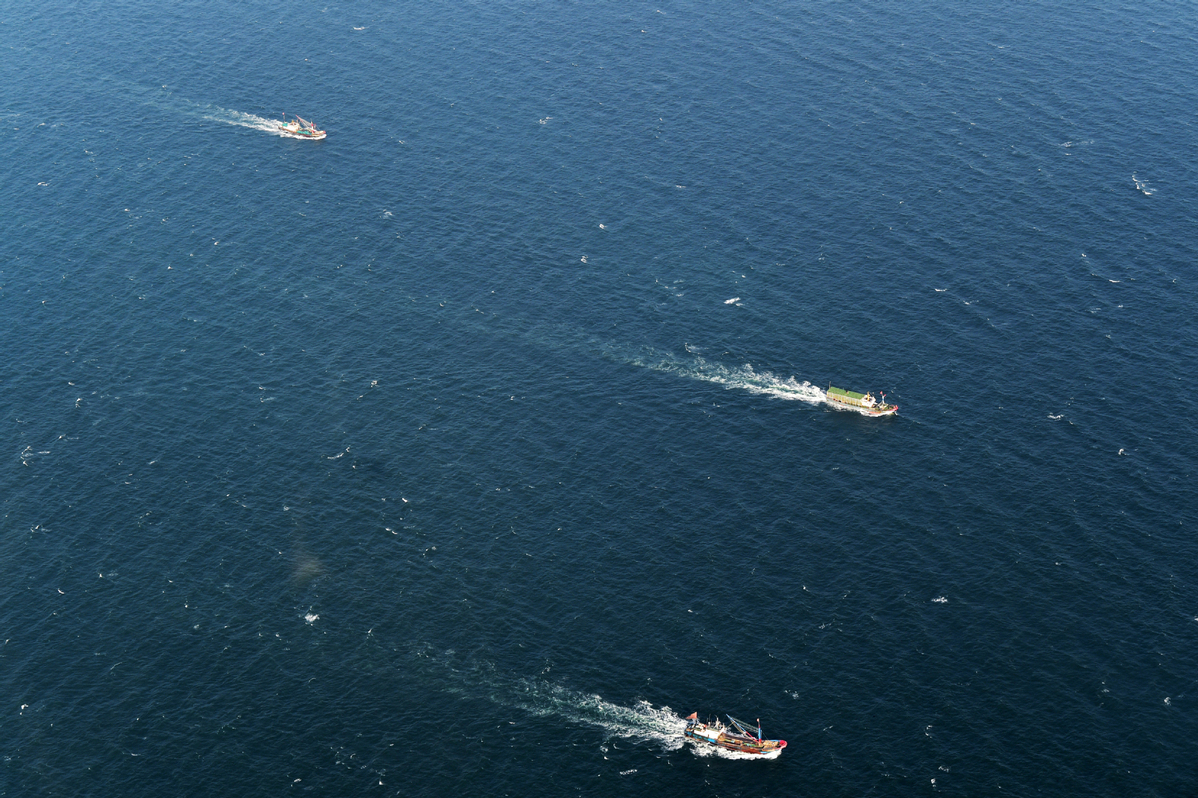
In recent years, the situation in the South China Sea has stabilized due to the joint efforts of China and the Association of Southeast Asian members. Positive progress has been made in bilateral cooperation on maritime search and rescue as well as marine conservation and research. The consultations on a Code of Conduct (COC) in the South China Sea are proceeding speedily.
During the fight against COVID-19, China and the ASEAN members have been working together to overcome the challenges. Ships and planes carrying medical supplies have been traversing the South China Sea, manifesting the mutual assistance and cooperation extended between China and ASEAN members during difficult times.
However, the United States and other non-regional countries frequently seek to use the South China Sea as a means of sowing discord between China and ASEAN members in their bid to contain China, which is undermining the hard-won stability in the region.
The Donald Trump administration explicitly viewed China as a strategic rival and thereby adopted a "whole-of-government-and-society" approach to hinder China's development.
The current US administration, although making some adjustments to its predecessor's China policies, has not changed the previous practices aimed at suppressing and competing with China or abandoned the provocative moves aimed at creating divisions among China and various members of ASEAN. The South China Sea policies of the current administration include the following three aspects:
First, it continues to try and exploit the disputes over territories in the South China Sea as a tool to contain China's development. The China policies of the current administration are not essentially different from those of the Trump administration, and so its stance on the South China Sea is essentially the same.
As the US continues to view China as its major competitor, the South China Sea remains its bargaining chip to conduct strategic containment of China. Different from the previous administration though, the Biden administration is taking a multilateral approach to interfere in the issue by seeking to work with various allies of the US.
Second, it continues to flex the US' muscles by sending military aircraft and vessels to the South China Sea. Military presence is an important part of US' policies in the South China Sea as a major way to demonstrate its "strategic determination".
In recent years, the military operations in the South China Sea by the US and its allies under the pretext of the so-called "freedom of navigation" have created serious risks of a mishap in the waters and heightened tensions in the waters.
Since the current administration took office, the US has continued to frequently send military vessels and aircraft to the South China Sea, which testifies to the continuation of the US military intervention into the region.
Third, like its predecessor, the Joe Biden administration is trying to create divisions between China and ASEAN members to undermine regional peace and stability. In recent years, in disregard of the efforts of China and ASEAN members to maintain peace and stability in the South China Sea, the US government has repeatedly made groundless accusations against China, exaggerated the divisions in the region and sought to exploit the differences between China and various parties. These moves are meant to portray China as the "destroyer" of the regional order and a "bully" in the South China Sea and so justify US interference in the region.
One of the major excuses used by the US to interfere into the South China Sea issue is to safeguard freedom of navigation. In fact, freedom of navigation is a false premise. The real intention of the US is to contain China, create friction between China and the ASEAN members, and thereby restore its declining hegemony in the region. This clearly shows that the US has become the biggest threat to peace in the South China Sea and the entire region. It is the real trouble-maker in the region.
The South China Sea disputes between China and some of the ASEAN members only account for a small proportion of relations between the two sides. ASEAN members are a priority in China's neighborhood diplomacy, and China-ASEAN relations have entered a new stage of all-round development with the joint efforts of both sides. ASEAN as a whole has become China's largest trading partner.
The COVID-19 pandemic, instead of obstructing bilateral exchanges and cooperation, has deepened the ties between China and ASEAN members. During his visit to Indonesia in 2013, President Xi Jinping proposed the two sides jointly build a China-ASEAN community with a shared future. Eight years on, the China-ASEAN relationship has grown into the most successful and vibrant model for cooperation in the Asia-Pacific and an exemplary model of shared efforts to build a community with a shared future for mankind.
Looking forward, China-ASEAN cooperation has great potential and broad prospects. Both sides should work together to rise above the distractions created by the US and jointly work to safeguard regional peace and stability to make the South China Sea a sea of peace, friendship and cooperation.
Ning Tuanhui, assistant research fellow at China Institute of International Studies(CIIS).
The opinions expressed here are those of the writer and do not necessarily represent the views of China Daily and China Daily website.
If you have a specific expertise and would like to contribute to China Daily, please contact us at opinion@chinadaily.com.cn, and comment@chinadaily.com.cn.





