Bridges of cooperation
Cross-border exchanges on the rise as China's Northeast and Russia's Far East deepen their economic integration









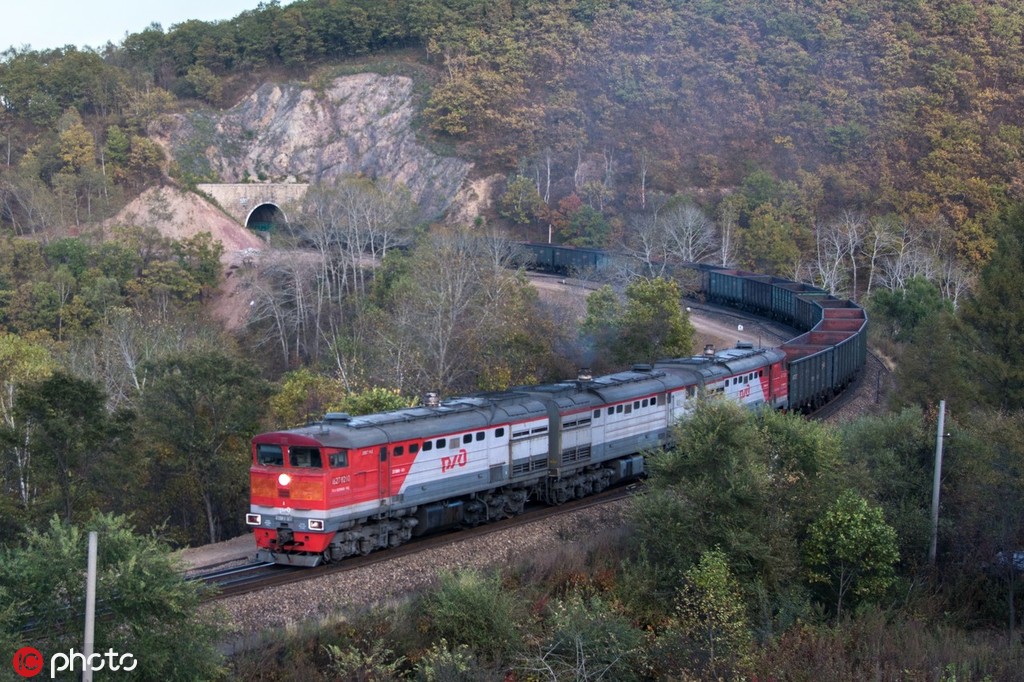
Cross-border trade is an important channel for goods, services, capital and labor to generate economic growth and revitalize borderlands. The past three decades have witnessed a surge in trade agreements, free trade areas, customs unions and regional integration initiatives that have facilitated tourism, investment and the exchange of goods. This trend has given border regions a new opportunity to attract investment, update infrastructure and promote business activities. The economic development has improved the living standards of people on both sides of the border.
Regions along the more than 4,000-kilometer China-Russia border have also benefited from deepening cross-border interactions. The two neighboring countries have developed complementary economic structures, with China emerging as a global manufacturing hub and Russia turning into a key world supplier of natural resources. It is, therefore, not surprising that the trade between them has been expanding rapidly over the past two decades. Between 2010 and 2019, China's imports from Russia increased by more than 130 percent, while Chinese exports to Russia surged by 67 percent.
However, a number of factors make it difficult to conduct cross-border trade. The lack of infrastructure means high transportation costs. Most of the border between China and Russia is formed by rivers, and currently there is not a single functioning bridge connecting the two countries. In the warmer months, passengers and goods are transported by ferries and barges, while in the long and harsh winter when the rivers freeze, cars and trucks can cross the border on temporary pontoon bridges, which impose weight limits on freight.
Another problem is the size of the local economy. The four Russian border regions of the Russian Far Eastern Federal District, the counterparts of Heilongjiang province, have a combined population of about 5 million people, which makes them less attractive to Chinese exporters and investors than the western part of Russia where most of the population is concentrated.
Administrative barriers due to different laws and regulations, cumbersome procedures and delays in customs clearance also present major obstacles to cross-border trade and investment.
Recent years have seen major improvements in the regions on both sides of the border. Economic development and cooperation in these areas have been declared a priority. The Chinese government has implemented a number of initiatives aimed at revitalizing the industrial base of the Northeast and deepening its economic links with Russia. The Belt and Road Initiative has boosted these efforts with a special focus on upgrading and expanding cross-border infrastructure. Granting short-term visa-free travel to Russian citizens from the border regions has allowed ordinary people to cross into China for tourism, shopping and leisure on a regular basis. A pilot plan introduced in the border city of Suifenhe allows Russian visitors to pay for purchases directly in rubles.
Excitingly, this year we might witness the historic opening of two new bridges across the Heilongjiang River, which is known as the Amur River in Russia. These will facilitate trade and economic cooperation between the border regions of China and Russia. After several decades of planning and negotiations, the 1 km-long road bridge between Heihe and Blagoveshchensk is ready for use, replacing the ferry and the winter pontoon link. The official opening has been delayed due to border closures during the novel coronavirus outbreak. When traffic starts flowing again, this bridge will not only become a symbol of the deepening economic integration between China's Northeast and Russia's Far East but also mark the start of a new period of cross-border exchanges after the pandemic brought everything to a halt.
The first international railroad bridge across the Heilongjiang River is set to be unveiled later this year, between the border town of Tongjiang in China and the Jewish Autonomous Region in Russia. It will form a new transportation corridor that will lower the import costs of Russian natural resources and will improve the connectivity between Heilongjiang province and Russia's Far East. The 2.2 km-long bridge has two sets of rails, allowing both Chinese standard-gauge and Russian broad-gauge trains to cross one at a time. The regions surrounding the bridge are likely to develop into a major logistics hub along the border.
As economic cooperation between China and Russia continues expanding, people and companies along the shared border are set to reap more economic benefits.
The author is a professor at the Department of Economics of Texas Christian University and a visiting professor at Fudan Development Institute. The author contributed this article to China Watch, a think tank powered by China Daily. The views do not necessarily reflect those of China Daily.