


Central bank targets exchange rate stability










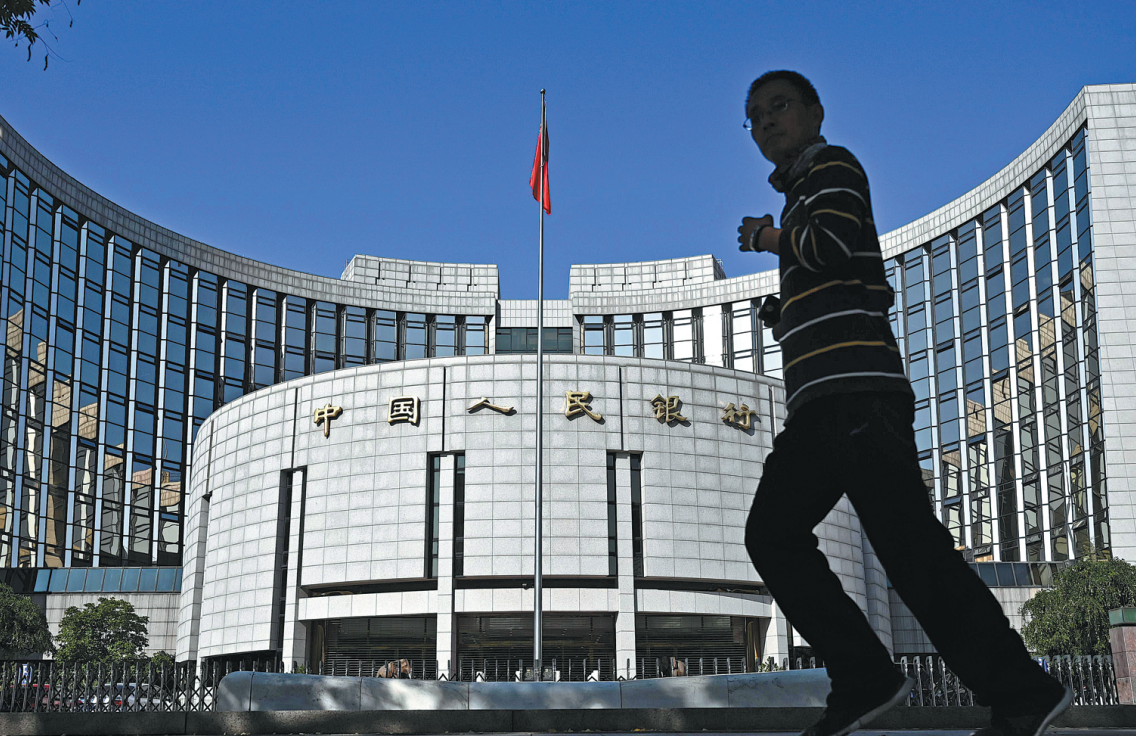
Wide range of options open to the PBOC, market players say
The central bank is determined to keep the RMB exchange rate stable against a basket of major currencies amid China's post-pandemic recovery, according to economists.
They voiced this view as the RMB's appreciation against the US dollar-a result of China's rapid economic recovery and impressive exports-loses steam, especially after the monetary authority curbed market speculation by withdrawing foreign reserves liquidity.
On Thursday, the RMB fixing rate against the dollar stood at 6.4298, after a national foreign exchange market self-disciplinary mechanism suggested companies take a neutral stance on managing forex risks, as both appreciation and depreciation of the currency is possible. The RMB peaked at 6.3572 per dollar on June 1-the highest level since May, 2018.
In April and last month, the RMB appreciated by more than 3 percent against the dollar and by nearly 1.4 percent against a basket of currencies tracked by the CFETS Index-a pace that fueled concern among monetary authorities. CFETS refers to the China Foreign Exchange Trading system.
Market players said the People's Bank of China, the country's central bank, has various tools it can use to maintain a stable exchange rate. On Tuesday, the bank decided to raise the required reserve ratio on foreign currency deposits in financial institutions-a rare move since the 2008 global financial crisis. This move is expected to reduce the supply of foreign exchange in the market.
Zhang Ming, deputy head of the Institute of Finance and Banking at the Chinese Academy of Social Sciences, or CASS, said other measures are available to the PBOC if the RMB comes under persistent pressure either from appreciation or depreciation.
The measures include open market operations using foreign reserves, and resetting the so-called counter-cyclical factor-the adjustment that contributing banks make to the daily trade-weighted reference rate the central bank uses to guide the RMB.
On June 2, China's forex regulator, the State Administration of Foreign Exchange, or SAFE, issued a new quota of $10.3 billion under the Qualified Domestic Institutional Investor, or QDII, program, allowing 17 Chinese institutional investors to buy more overseas financial instruments.
Analysts said the watchdog took the decision to balance cross-border investment, thus allowing more capital outflows and easing RMB appreciation pressure.
Guan Tao, global chief economist at BOC International and also a former SAFE official, said the QDII quota was the biggest one-off issue in a single month and showed that the authorities are determined to keep the RMB exchange rate at a "reasonable equilibrium".
"We expect the central bank and SAFE to take a series of new measures to achieve balanced cross-border capital flows. These measures might focus on opening the capital account and financial market, especially the stock, bond and foreign exchange markets," Guan said.
Lu Ting, chief China economist at Nomura Securities, said that if these measures were not so effective, the central bank might formulate its own policy actions in coming months.
Analysts said that the monetary authority should avoid any measures to intervene in or manipulate the foreign exchange market, as this would be contrary to market principles and international practices.
Global financial organizations, such as the International Monetary Fund, have consistently confirmed that China is not manipulating the RMB exchange rate.
Iris Pang, chief China economist at Dutch bank ING, said,"The PBOC is sticking to the idea of exchange rate liberalization."
She said the central bank's actions, such as raising the required reserve ratio for foreign deposits, are a way to deter speculation, while guaranteeing the market operates normally.





