



Efforts to improve conservation of biodiversity accelerated, bolstered
The work of rangers at a nature reserve in Northwest China is a microcosm of activity nationwide. Hou Liqiang reports from Xunhua Salar autonomous county, Qinghai province.









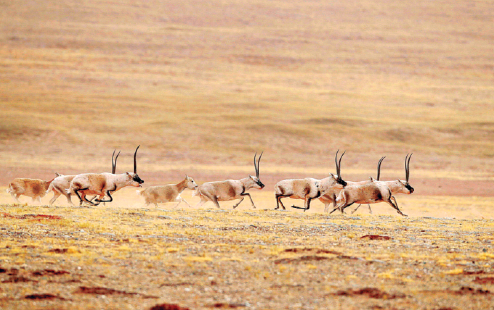
Peng has also seen the number of team members rise as the country attaches increasing importance to the conservation of biodiversity. When she started working at the reserve in 2006, only five technicians were employed to oversee species protection efforts. Now, the number has risen to 18.
The reserve is just a microcosm of the increasingly stronger ecosystem monitoring capabilities in Qinghai and across the country as a whole.
Ren Yong, head of ecosystem protection at the Qinghai Department of Ecology and Environment, said the province has established a monitoring system that covers all the areas under its jurisdiction.
While the province uses remote sensing methods to monitor different types of ecosystems, such as the high-altitude grassy marshland and prairies, the authorities responsible for protecting the land also monitor specific species, he said.
"Generally speaking, the province has established a system that consists of both micro- and niche-targeted monitoring," Ren said, adding that the authorities often use field monitoring equipment to assess problems unearthed by remote sensing.
According to the Ministry of Ecology and Environment, 18 percent of China's land has been designated as protected areas. That has provided effective protection for 90 percent of all land ecosystems and 85 percent of key wild animal populations.


- What they say
- Inside the nation's collective power to drive action
- Over 70 stranded Taiwan compatriots return home from Middle East via Chinese mainland transit
- New strategy to revitalize Chinese cities
- Xiangxi marches ahead on road to prosperity
- Presidium of China's annual legislative session holds 2nd meeting





