Rising to the challenge










China needs to introduce strong measures and proper policies to meet its carbon targets
China has embarked on a more arduous and challenging journey of pursuing carbon neutrality after peaking carbon emissions than the developed nations. It has only 30 years after peaking carbon emissions before 2030 to realize carbon neutrality before 2060, while for the developed countries, the period from emissions peak to carbon neutrality is between 50 to 80 years. Therefore, China's carbon emissions reduction curve will be sharper than theirs.
The experience of developed countries shows that a country's carbon emissions reduction curve is closely related to its industrial structure and urbanization ratio. Generally speaking, a country's carbon emissions will peak and start to drop when services account for around 70 percent of its GDP or when the urbanization ratio reaches around 80 percent. Currently, China's service sector accounts for 55 percent of its GDP and its urbanization ratio is only 64 percent.
The most feasible way for China to meet its carbon peaking and neutrality goals is through low-carbon transformation of energy production and consumption, decarbonization of industrial sectors, electrification and utilization of hydrogen energy in public transport, promoting green and low-carbon buildings in cities, and energy conservation of the entire society and economy.
Now that China has specific carbon targets, the country needs to put in place strong measures and proper policies to guarantee the realization of the targets.
First, China must act quickly to promote energy conservation in an all-around manner by expediting the innovation, promotion and application of energy-saving technologies. At present, there is still a gap between China and the developed countries in energy consumption per unit of GDP. It is imperative to bridge that gap, which will be conducive to reducing total energy consumption, realizing energy consumption peak at an early date and ensuing carbon neutrality. There is no time to lose.
China has a lot to do in energy conservation. The adoption of digital and intelligent energy-saving technologies to retrofit equipment in industrial sectors could reduce energy consumption by at least 30 percent.
The improvement of the comprehensive energy service system in industrial parks and urban communities-through multi-energy complementation, peak-valley load regulation, and intelligent power distribution-could reduce energy consumption by over 30 percent. Regarding public transport, the establishment and improvement of an urban smart transport system could reduce energy consumption by 20 percent. Furthermore, buildings could be renovated or retrofitted for higher energy efficiency, and new buildings be designed and built with carbon-neutral, low-carbon and energy-saving concepts.
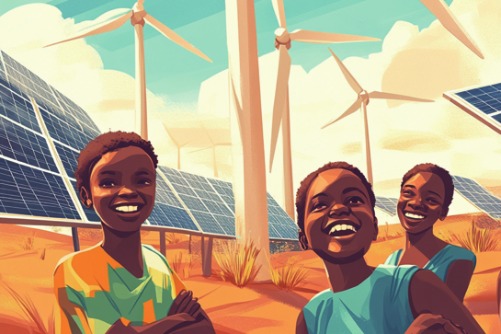
Second, China should promote green energy substitution at a quicker pace. To replace fossil fuels with green energy, China should prioritize technological breakthroughs and the wide application of such technologies as photovoltaic power, wind power, biomass, inland nuclear power, fuel cell energy storage, a smart power grid and new energy-related materials.
To date, the cost of photovoltaic power generation has been slashed to around 0.2 yuan ($0.03) per kilowatt-hour, making it an eligible and competitive source for the power grid. The cost of wind power generation is being reduced continuously. In the past, photovoltaic and wind power are both of little value for the grid because of their high cost and the uncertain supply.
Third, given that buildings account for about 40 percent of all energy consumption in China, to peak carbon emissions and achieve carbon neutrality, the carbon-neutrality concept should extend to both urban and rural planning, design and construction. The comprehensive renovation of existing buildings should be carried out to improve energy efficiency, and promote green and low-carbon ideas in new projects in cities, communities and villages.
Fourth, China should expedite afforestation and the building of forest carbon sinks. China's 14th Five-Year Plan (2021-25) has proposed increasing the country's forest coverage by 0.9 percentage points over the next five years. Increased forest coverage, along with improved ecological system, could create sizeable carbon sink effects. Furthermore, to create a good mechanism that motivates more social capital to join the sustainability campaign, China needs to explore and establish a more effective market-based system that monetizes ecological value and allows the ecological value resulting from investors' ecological inputs to gain due returns in the market.
The author is chairman of the China-US Green Fund and chairman of the academic committee of Pangoal Institution. The author contributed this article to China Watch, a think tank powered by China Daily. The views do not necessarily reflect those of China Daily.