



Technology doping in sport is in need of clear regulation









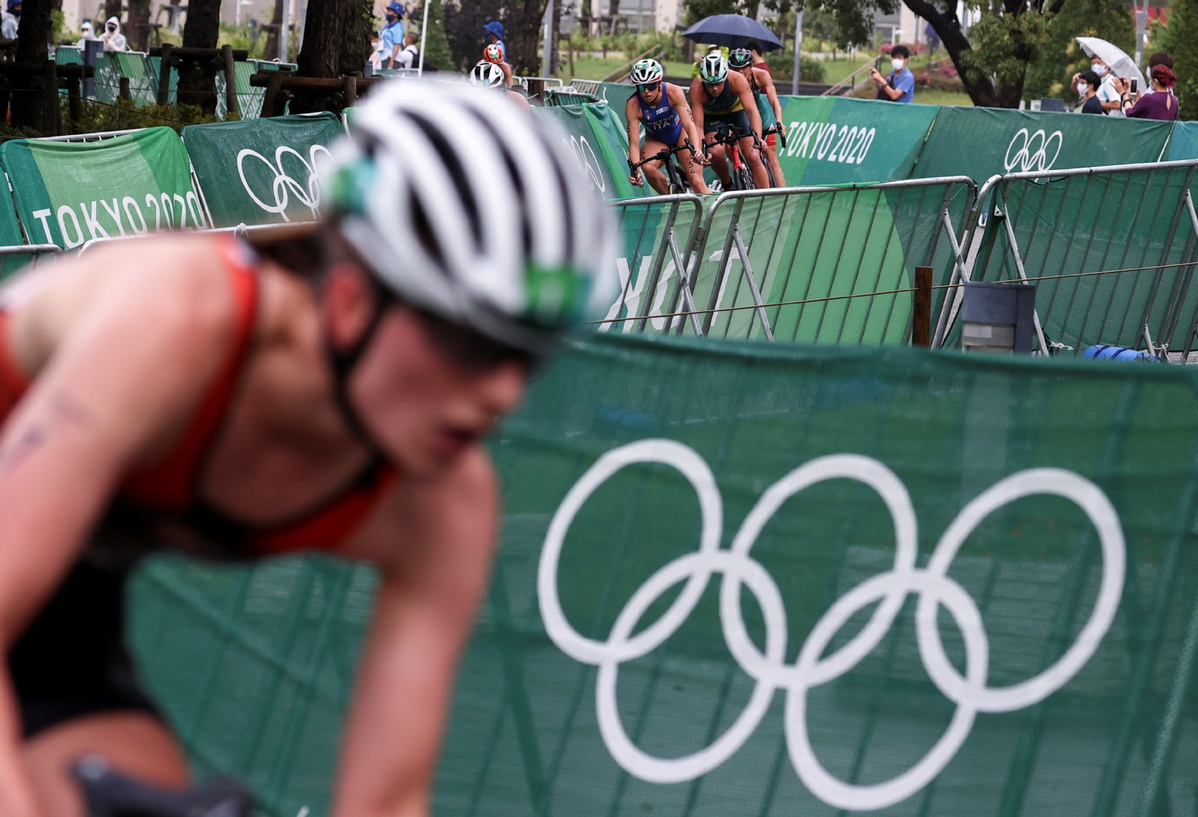
Anti-doping technology has always gone hand-in-hand with international sporting competition.
Many will be familiar with high-profile cases in which athletes trying to gain the upper hand by abusing drugs have been caught out.
The likes of testosterone, EPO, or anavar have run out of places to hide inside an Olympian's bloodstream. However, in recent years, other options have emerged. Technology doping is a more obscure and contentious method but one, nevertheless, that governing sporting bodies are equally concerned about in the ongoing Tokyo Olympics.
Whether it be the material of a sprinter's shoe, or the thickness of a swimmer's head cap, a race to regulate elite-level sporting equipment is also underway behind the scenes.
Technology doping is defined as using equipment to gain an advantage, deemed by the World Anti-Doping Agency, which is known as WADA, to be performance-enhancing, or against the spirit of the sport.
While this may leave some room for interpretation, ensuring athletes do not have an unfair advantage based on their equipment is essential.
For example, every long-distance running world record, from the 5 km all the way up to the marathon, without exception, has been broken since the introduction in 2016 of carbon fiber plates in shoes.
Carbon fiber provides a high amount of energy return in the runner's foot, allowing for a pushing effect on the rolling behavior of the forefoot to drive the athlete forward almost as if powered by a spring. Upon the material's debut at a major international level in the 2016 summer Olympic Games, all six marathon medals were won by athletes wearing the same type of carbon fiber plated shoes.
Concerns were then raised that significant advantages were clearly evident for some athletes to enjoy. Funding for such sophisticated equipment at the time was not equal, and concerns over technology inequality in the sport grew.
In the swimming pool, a technology arms race was also underway. At the 2008 Beijing Olympics, many swimmers adopted the Speedo LZR swimsuit, specifically designed to improve speed. The material covers the whole body reaching all the way down the leg to the calf muscle, optimizing the hydrodynamics of the swimmer. Drag was reduced by nearly 40 percent, which was calculated to lead to a tangible 4 percent difference in speed for swimmers.
Again, world records were broken in quick succession with 23 achieved at that event alone.
Technology in sportswear no doubt plays a vital role in improving performance. New innovations to improve safety and reduce injuries, however, are now clearly crossing the line with the dilution of athletic feats derived from talent and hard work. Athletes who do not have access to such equipment or who are from less privileged backgrounds or less well funded national teams may find that the fruits of their labor become less sweet as time goes on.
Regulation is needed, and WADA so far has left this to the discretion of independent sporting bodies that decide what is acceptable activewear.
Those sporting bodies can look toward Paralympic sporting organizations and draw from their extensive experience of sport equipment development.
The International Paralympic Committee, or IPC, states that such equipment must not only be safe and not provide an unfair advantage, but also be commercially available to all.
Patents restricting athletes to certain companies have caused issues in the past, as in the 2008 Olympic Games, where Japanese swimmers cut ties with their sponsors in order to compete in the aforementioned performance-enhancing Speedo suit.
The IPC states that human endeavor is the core value at the heart of competition, and so the impact of technology and equipment must be carefully regulated. In legal terms, this would mean that sporting bodies must clearly define tangibly to what extent skills or prowess in a sport relate to the equipment in question. It is this clarity in set measurements and biometric data that will allow organizations in the future to ensure sport stays fair.
Barry He is a London-based columnist for China Daily.



Most Popular
- Home skaters primed for final Olympic rehearsal in Beijing
- China's northernmost province embraces ice and snow sports craze
- Tributes pour in after passing of Go legend Nie, 73
- China's extreme sports season opens with underwater dance event
- China reaches knockout stage for first time in AFC U23 Asian Cup
- China ties Iraq 0-0 in its U23 Asian Cup opening match