



Doctor helps people breathe easier at high elevations









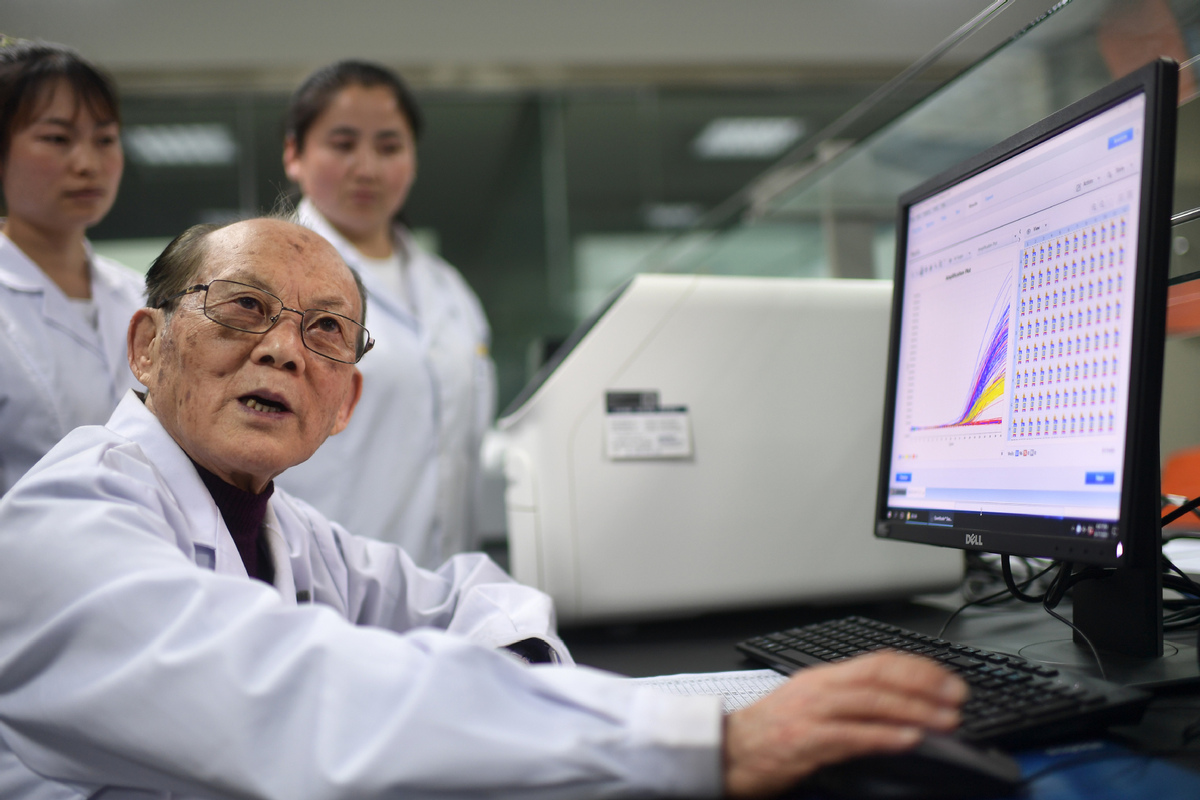
When he noticed that altitude sickness was also common among border soldiers and other migrants who came to take part in the region's economic development, he decided to look for a solution.
"To develop the region, you first had to solve the problem of adaptation to the high altitude," he said.
For decades, Wu spent his time observing and surveying the local population. His hard work paid off.
During construction of the Qinghai-Tibet Railway, the world's highest railway, in the early 2000s, Wu and his team devised a protection-and-first-aid protocol that allowed all 140,000 workers to avoid suffering the effects of acute altitude sickness.
Liu Fengyun, deputy director of the central laboratory of the Qinghai Province Cardiovascular and Cerebrovascular Disease Specialist Hospital, said no casualty during the construction was a "miracle".


- Guangdong remains at forefront of opening-up
- China's birth-friendly initiative supports women's 'full lifecycle'
- Xinjiang NPC deputy: Draft bill to strengthen ethnic unity
- Tianjin research team develops broadly applicable approach to nanotube synthesis
- Shenzhen empowers seniors with AI skills
- Shanxi 'slow train' offers affordability, convenience





