



RMB's rise likely to slow in H2, say analysts









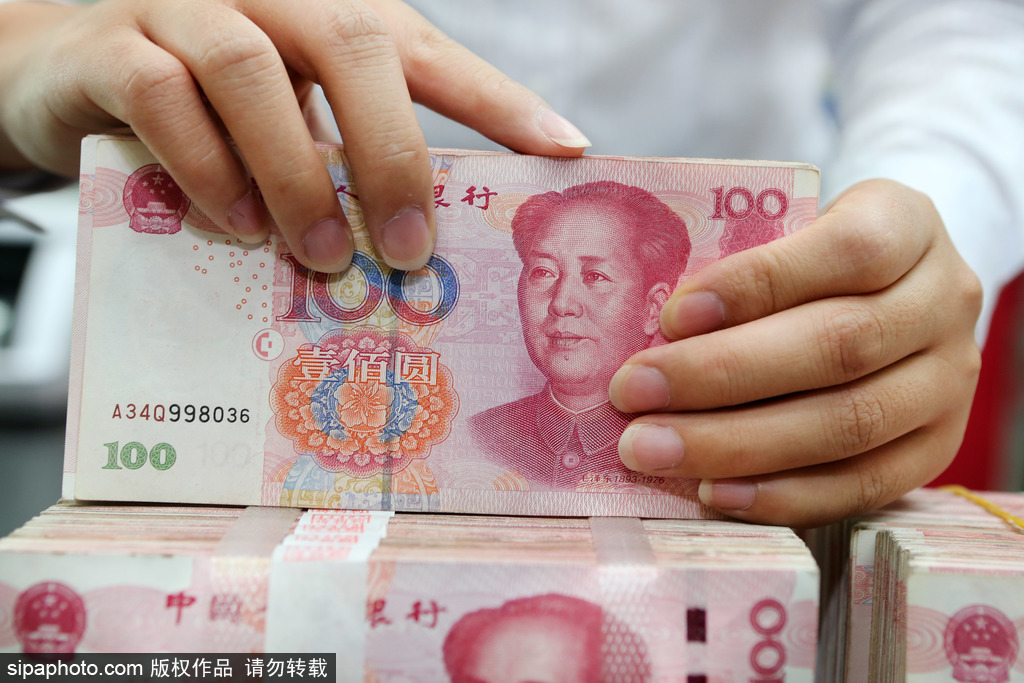
The Chinese currency yuan, also known as the renminbi, may face pressure in the second half of this year, which could slow its rise against the US dollar, analysts said on Monday, citing predictions of several economists at global financial institutions that China's economic recovery will likely soften, foreign trade surplus will narrow, while financial markets will continually attract foreign capital.
The central parity rate of the RMB, or the daily trade reference for the onshore RMB, was 6.4840 against the US dollar on Monday, down from 6.4625 on Friday.
In the second quarter, the RMB showed two-way fluctuations, which eased a strong appreciation in the first quarter.
Guan Tao, global chief economist at BOC International and a former official of the State Administration of Foreign Exchange, said positive effects of controlling the COVID-19 pandemic, economic recovery, interest rate spreads between China and the United States, and volatility of the US dollar are among the factors that will influence the RMB value in the second half.
Other economists expressed concerns about the disconcerting spread of the Delta variant of the COVID-19 in China. This, they said, may soften economic growth in the third quarter, after the strong rebound in the first half.
Fresh lockdowns and travel bans in some regions may also exert some downward pressure on economic growth, they said.
Meanwhile, export growth moderating due to milder demand overseas where some developed economies have reopened, and China's continually elevated import growth may further narrow the current account surplus, which could add downward pressure on the RMB in coming quarters, said Lu Ting, chief economist in China with Nomura Securities.
According to SAFE data, in the second quarter, China's current account surplus narrowed year-on-year, and so did net inflows of foreign direct investment, although they were still considered huge.
In the first half, however, China's current account showed a surplus of $122.2 billion. In the capital and financial account, direct investment reached a surplus of $123.7 billion, and the reserve assets increased by $84.9 billion, SAFE data showed.
A country's current account deals mainly with import and export of goods and services, while its capital account is composed of cross-border movement of capital by way of investments and loans.
The capital account measures the changes in national ownership of assets, as part of a country's balance of payments that records all transactions made between entities in one country with entities in the rest of the world.
The country's balance of payments reached a general equilibrium by the end of June at 1.5 percent of the current account surplus-to-GDP ratio, which is within a reasonable range, said Wang Chunying, SAFE's spokeswoman.
The RMB-to-US dollar exchange rate may fluctuate between 6.3 and 6.8 in the second half. As the growth pace of the world's two largest economies may further diverge, the RMB is likely to see greater depreciation pressure at the end of this year, said Zhang Ming, deputy head of the Institute of Finance and Banking at the Chinese Academy of Social Sciences, or CASS.
With external uncertainty continuing, RMB-denominated assets appear to retain their attractiveness, as evidenced by net cross-border capital inflows of equity investment, which helped increase China's foreign exchange reserves in July, said Wen Bin, chief researcher at China Minsheng Bank.
China's foreign exchange reserves rose to $3.2359 trillion by the end of July, the highest level since 2016.



















