Mobile app provider aims for growth in developed economies









Company saw sales revenue soar over 570 percent on a yearly basis in the first half
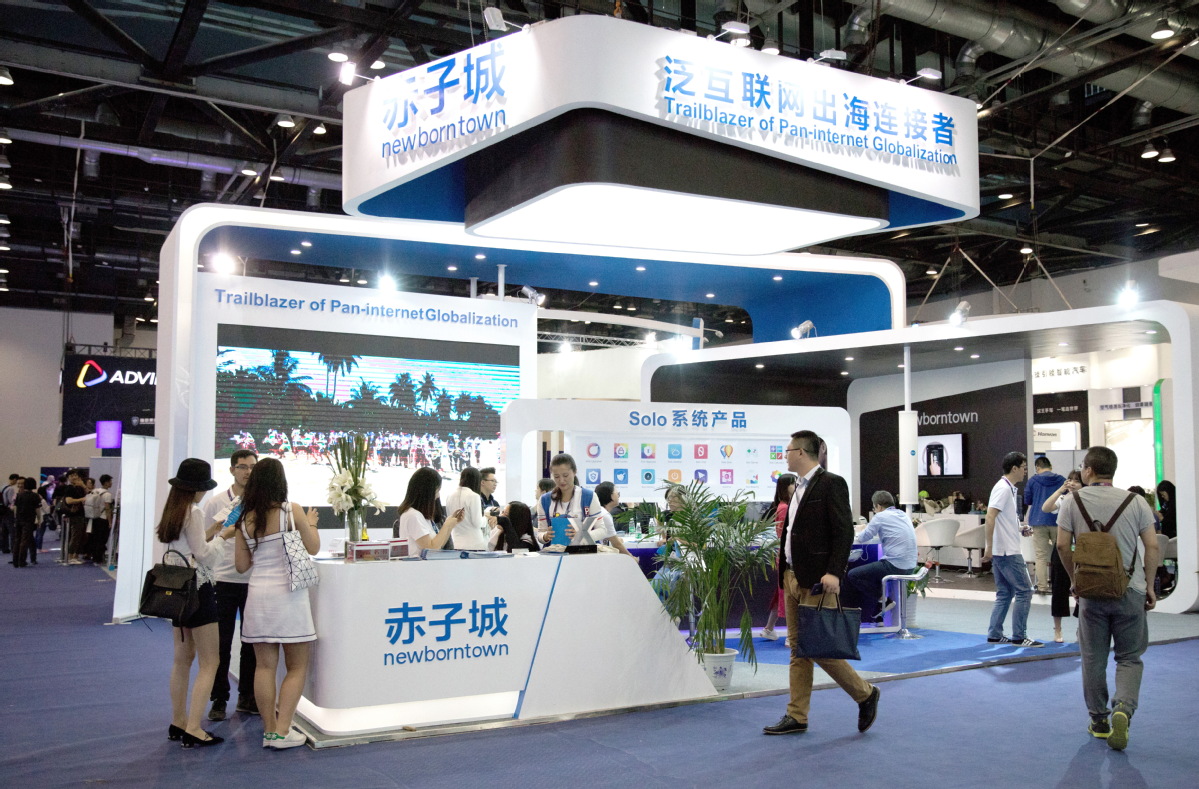
With its mobile applications being widely used in economies in Southeast Asia, the Middle East and South Asia, and gaining growing popularity in Japan and South Korea, Newborn Town Inc, a Chinese mobile internet service provider, said it will focus more on user value growth in developed markets including North America and Europe over the next five years.
Many opportunities arose from surging demand for audio and video-interacting social apps in these markets, driven by the stay-at-home economy and the commercial use of 5G networks in many parts of the world, said Li Ping, the company's president.
Thanks to China's mature domestic market in this field and the company's strong willingness to expand globally, Newborn Town began its overseas journey from markets of the Association of Southeast Asian Nations by introducing several social networking apps in 2014, and then gradually entered economies in the Middle East, North Africa and South Asia.
Supported by more than 10 overseas branches and offices in countries such as the United States, India, Egypt, Turkey, Thailand and Indonesia, the Beijing-based company started deploying more resources to developed markets in the past two years. It gained breakthroughs in terms of app downloads and revenue, especially in North America, the European Union, Japan and South Korea.
"In the short term, we plan to seize more market share in these markets and gradually develop markets in Australia and Latin America," Li said, adding that the company will increase investment in research and development on video, voice-chat and livestreaming social applications in the next stage, further enriching product functions and optimizing the customer experience.
The executive said users in developed markets such as Germany and the US are early adopters of online social networking, and have longstanding market education and purchasing habits for various services, compared with user groups in certain developing countries.
Even though the consumer groups in developed countries are not as big as emerging markets in terms of user size, they have much stronger purchasing power.
Supported by dozens of quality apps such as Yiyo, Mico and Yoho for global users in the fields of social networking and games, the company saw its sales revenue soar more than 570 percent on a yearly basis to 1.02 billion yuan ($157 million) in the first half, while it logged 120 million yuan in net profit during the period.
The Chinese company has provided services to more than 1.2 billion users across the world. By the end of the first half, its social networking apps had registered more than 250 million downloads worldwide.
"As a latecomer to developed markets, we will continue to improve our localized operating capabilities," Li said. "With the expansion of the market layout, we have become increasingly aware of the complexity of these vast overseas markets, as well as the magnitude of a localization strategy. Our team has been focusing on establishing the localization genes of the team, and we will stick to this strategy in the coming years."
Li said cooperation with overseas partners is an important part of Newborn Town's localization strategy globally. Through these partnerships, the company will be able to work with businesses in both upstream and downstream areas in those target markets, better understand their conditions and customer preferences, and enhance the brand's influence.
"Recently, our cooperation with overseas partners has become more diversified, we have worked with well-known international brands in many categories, mainstream TV networks, event organizers, streamer associations and content production teams to further promote our products and increase brand awareness," he added.
For example, Mico, one of Newborn Town's key social app products, recently cooperated with a Japanese watch brand to hold a contest to reinforce the brand's penetration in Japan. Under the rules, the winning user can work as a brand ambassador to conduct online and offline promotions for the watch brand.
Eager to compete with other established rivals, Newborn Town has been dedicated to innovation and product upgrades. It has focused on developing content-based products, particularly in the fields of games and social networking, to create high-frequency, high-stickiness and long-duration products with the aim of enhancing monetization efficiency and gaining a higher gross profit margin.
Together with localization and targeted market promotion strategies, the average monthly active users (MAU) of the company's social networking products reached 11.36 million in 2020.
Chinese app developers have secured a higher share of downloads in the global market in recent years, especially in countries and regions involved in the Belt and Road Initiative, and their influence is expected to grow in the next decade, said Zhao Ying, a researcher at the Beijing-based Institute of Industrial Economics, which is affiliated with the Chinese Academy of Social Sciences.
"The COVID-19 pandemic has not only propelled a large number of foreign consumers to purchase more products via online channels, but also pushed them to open more social network accounts and spend more time on various social apps since last year.
"In previous years, popular app categories in overseas markets were games, photography and tool apps. Now we are seeing more apps, created by domestic companies, generating revenue by offering quality video and audio content, social network-driven commerce and knowledge. This has also boosted China's trade in services," Zhao said.
Powered by knowledge-intensive trade in services, China's trade in services rose 6.7 percent year-on-year to around 2.38 trillion yuan in the first half, while the deficit of services trade stood at 120.46 billion yuan, about 281.25 billion yuan less than the same period last year, said the Ministry of Commerce.
In contrast to merchandise trade, trade in services refers to the sale and delivery of intangible products such as transportation, tourism, telecommunications, construction, advertising, computing and accounting.
Chinese companies' pursuit of innovation-driven high-quality growth and "go global" moves will shore up its trade in services, and continue to contribute to the world's services trade growth and economic recovery from the COVID-19 pandemic, said Zhou Mi, a senior researcher at the Chinese Academy of International Trade and Economic Cooperation in Beijing.
"The country's services trade is growing at a fast pace and the nation is expected to have stronger presence in global services trade on the back of its high-quality economic development and huge domestic market," he said.
The nation has a complete industrial chain in manufacturing, a sector currently undergoing transformation and upgrading in pursuit of high-quality development, which will support the development of the services sector, especially subsectors closely related to manufacturing, he added.