



Fresh view of food systems needed to help Africa beat hunger









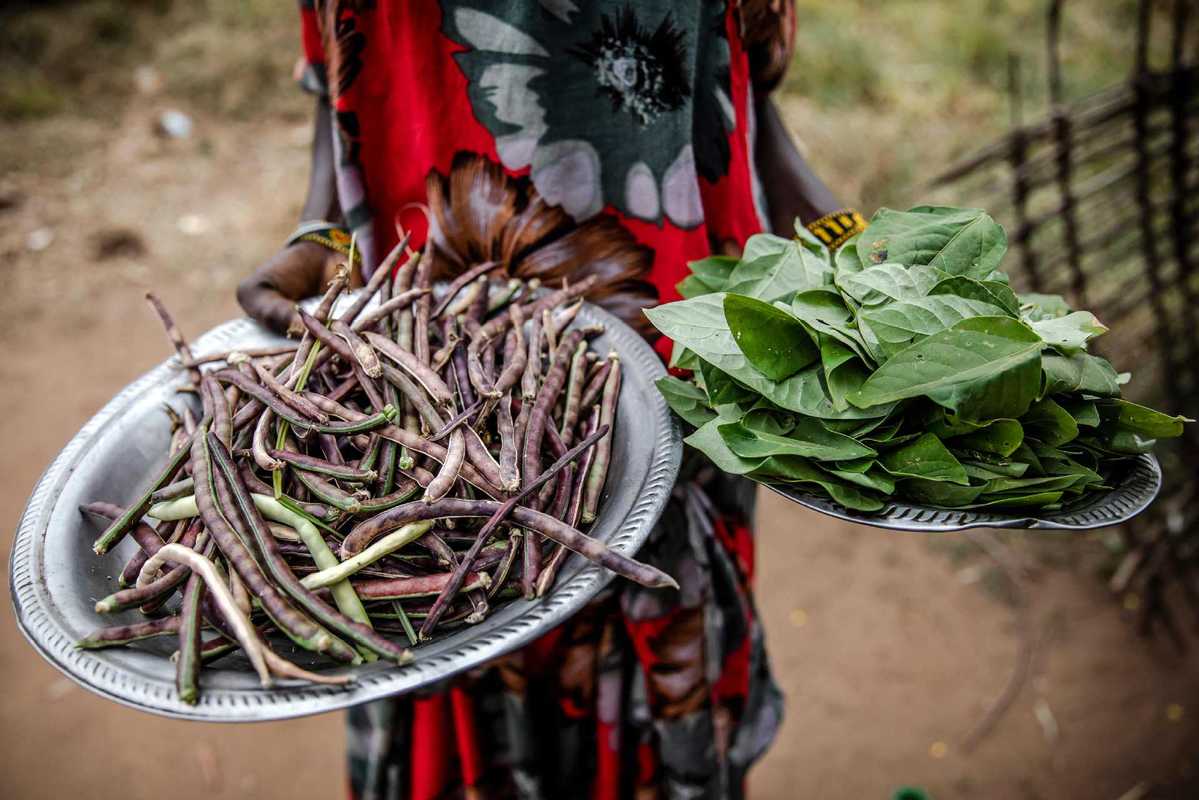
For many decades, it has been perceived that the solution to food insecurity in Africa is increased agricultural productivity. While this is part of the solution, it is not the entire remedy. Without increasing resilience through integrated agricultural markets for cost-effective and nutritious foods, the continent's food value chains will continue to be broken.
This has been made clear during the COVID-19 pandemic, which has disrupted supply chains with breakdowns in everything from transportation and communication to finance and education. These breakdowns have led to widespread increases in global food insecurity, affecting vulnerable households in almost every country in Africa.
With the effects of COVID-19 expected to continue through 2021 and into 2022, there are fears of a worsening food situation for the more than 20 percent of Africans-272 million people-who are already living with or at risk of severe food insecurity. Such dire situations confirm that we have fallen behind on our commitment to achieving zero hunger, a key United Nations Sustainable Development Goal.
However, just as the COVID-19 pandemic has pushed us to work differently, I believe it presents an opportunity to reimagine a new vision for the future of food systems on the continent. This is our time to unite as one voice to define and coordinate our visions for the future of food systems in Africa.
Right now, we are working to repair significant damage caused by a variety of factors, including droughts that have cost Africa $372 billion since 2014, and the 2019-20 locust outbreak, which destroyed more than 356,000 metric tons of cereal crops, and nearly 1.5 million hectares of crops and pasture in Ethiopia alone.
We must not only recover from these losses but leapfrog over them to build a resilient future. On this path, business and public leaders must come together to step forward and commit to the targets set by the UN's 2030 Agenda for Sustainable Development. It is important to note that there are just nine harvests left for us to achieve the goals, and we are currently not on target.
We also committed 10 percent of our budgets toward agriculture under the Comprehensive Africa Agriculture Development Programme-a pledge that only a few countries have fulfilled. It is now our time to drive efforts to recommit to food and nutrition security and sustainable food systems across the continent. Sustainable food systems require us to look at the entire value chain, from input supplies, mechanization, irrigation and extension to transportation, processing, distribution and healthy consumption.
There are a number of countries that have instituted food systems that work for their realities, leading them to better feed their people while giving them stable livelihoods. The government of Burkina Faso, for example, is succeeding in increasing its domestic rice output through investments and policies that favor local production. The government is working toward production of 1 million metric tons annually, which will reduce rice imports by over 75 percent. In Tanzania, too, agri-industrialization flagship projects have increased the participation of women as entrepreneurs in manufacturing and processing, creating opportunities that did not exist before. The aim is to increase the country's total GDP by 5 percent, while creating 1 million jobs by 2025.
I have recently been to both Burkina Faso and Tanzania, as well as Kenya, Ghana, Malawi, Nigeria and Ethiopia, where I personally witnessed the impact of investments including flagship projects in agricultural development. Lessons can be drawn from the most effective strategies in such countries, with the successful programs adapted to suit different countries' contexts.
Development partners also have a fundamental role to play in Africa's agricultural transformation. As one example, 62 percent of farmers supported by the Alliance for a Green Revolution in Africa have adopted technology to increase their yields and incomes. The alliance has also leveraged $141 million in new investments through partnership with the Africa Green Revolution Forum's Agribusiness Deal Room. This is in addition to programming that has directly supported 3.5 million female farmers.
To review the progress and commitments that will move the continent's food systems forward, stakeholders will gather at the 2021 Africa Green Revolution Forum Summit, in Nairobi, Kenya, from Sept 7 to 10. The summit will feature pathways to the future of Africa's food systems based on equitable livelihoods, better nutrition, resilience in production and competitiveness in markets.
This year's forum meeting takes place at a critical juncture in the global discussion on food systems. UN Secretary-General Antonio Guterres has convened the UN Food Systems Summit as part of the "decade of action" to achieve the UN's Sustainable Development Goals by 2030. The summit has seen many coalitions forming globally to reenergize and refocus efforts to deliver healthier, sustainable and equitable food systems.
The Africa Green Revolution Forum Summit will leverage the momentum of the UN Food Systems Summit to elevate the coordinated African voice in identifying immediate actions for accelerating the progress, partnerships and recovery toward an inclusive agricultural transformation.
This is our time to elevate the future leaders of African agriculture, particularly youth, women and small-business owners, throughout the food system, from farm to fork. We must resume our commitment to achieving zero hunger on the continent by taking critical steps toward integrated food systems.
We own the decision to participate and shape a vision that commits resources to Africa's food systems transformation. Will you join us? I look forward to welcoming you at this year's Africa Green Revolution Forum Summit.
The author is former prime minister of Ethiopia and current board chair for the Alliance for a Green Revolution in Africa.










