Calligraphy, in the DNA of Chinese culture, has been loved by Chinese people from ancient times to the present, showing no signs of fading even today. In fact, it is now finding even greater relevance . Millions of modern Chinese, from kindergarten kids to centenarians, from farmers to high officials, show their respect to great ancient calligraphers by imitating model calligraphic books and tablet inscriptions by ancient masters year in and year out. Among these artistic superstars, Su Shi stands out as one of the brightest.
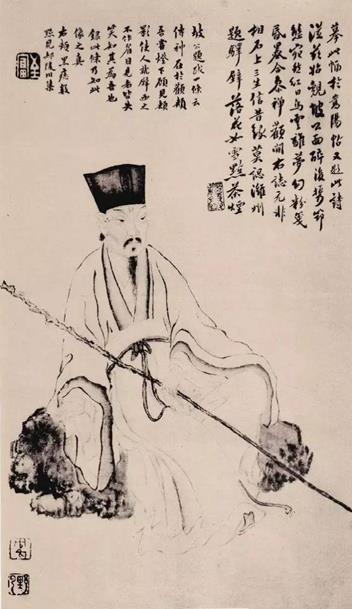
Su Shi (1037-1101), alias Su Dongpo, was a famous writer, calligrapher, gourmet and painter of the Northern Song Dynasty (960-1127). Ouyang Xiu, a high-ranking official in charge of the imperial examination, was deeply impressed by Su Shi's literary talent, marveling at his bold and creative spirit revealed in his candidate paper, saying: "He has a good understanding of what he has read and he applies it well. He will surely lead the literary world someday."
Su Shi is known by nearly everyone in modern China. As a brilliant calligrapher, his aesthetic taste and calligraphy theory exert profound influence on modern calligraphy practitioners, both professionals and amateurs. Regarded as the third most famous semi-cursive script in Chinese history, Han Shi Tieis Su Shi's finest extant calligraphic work.

As an artistic masterpiece combining poetry with calligraphy, the Han Shi Tie was created during the traditional Cold Food Festival in the third year of Su Shi's exile in Hangzhou. The opening of the piece offers simple narration in relatively small characters, but as it proceeds in the second section to 春江欲入戶 (the spring floodwaters at the threshold of the house), the characters gradually become larger and the tenor of the calligraphy becomes more forceful. It climaxes with the intense vitality of the characters 破灶 (broken kitchen) in line four of the same section, and then returns to a more restful state before rising again to a second climax with the word 哭途窮 (meaning cry over quandary), where the emotions driving the artwork seem to reach their soul-stirring peak. The whole work seemed fully controlled by the author's emotions, thereby breaking many conventions. It has a dramatic effect on viewers.
The great significance of Su Shi's calligraphy lies in his advocacy of yi (self-expression), which became a hallmark of Song calligraphy. As Su Shi himself wrote in one of his poems: "Knowing no rules, my calligraphy is a vehicle for self-expression; I do all brushstrokes and dots offhand, without thinking how and why." Through yi, calligraphers can convey their genuine feelings and bring forth a rich association of ideas. Su Shi was inspired by the Zen teaching of "proceeding directly from one's heart." He used this approach as a guide for his calligraphic practice and established his unique theoretical system.
Su Shi strongly advocated for change and innovation. When he was young, he once expressed his wishes to follow in the footsteps of the ancient sages. After comparing calligraphic works of previous dynasties, he concluded the secret to fine calligraphy is to create new things by modifying conventional norms. He praised Wu Daozi, a famous painter of the Tang dynasty, for "bringing forth innovations out of existing norms" and for "evolving wonderful ideas by maintaining a bold and unrestrained spirit." Su Shi was proud in his later years that he had followed no rules, and had contempt for rote imitation.
His second theoretical belief was to capture the spirit of previous masters rather than rigidly imitating their forms. In learning from Yan Zhenqing, a great calligrapher of the Tang Dynasty (AD 618-907), Su Shi succeeded in capturing Yan's spirit even though he ignored his calligraphic form. He believed the correct method was to read model calligraphy books and scrutinize the art with great care. He declared: "My calligraphy is innovative, though maybe not very good. It is a real pleasure to refrain from toeing the line of the ancients."
Su Shi also put great emphasis on the importance of individuality. His artworks are like needles hidden within cotton — inward strength and outward softness. Huang Tingjian, a good friend of Su Shi and a great Song calligrapher, criticized him for using too much ink, ridiculing his works as "toads squeezed flat by a rock". Yet Su continued to go his own way and finally created a unique style, which was "robust but graceful," as well as "dignified, smooth and elegant."
Finally, Su Shi emphasized the importance of staying natural. He pointed out that the basic requirement in holding the brush is to leave the hand open and loose, letting the brush do the job without violating norms. A relaxed mind paired with a natural hand posture will leave the calligrapher in the best mood for creating. To help foster such a relaxed mood, he would sometimes resort to drinking wine. Only in this state could a calligrapher work with what seemed like the sweeping power of a rainstorm.
It is safe to say Su Shi will be worshipped by future generations. It is not only because of his marvelous calligraphy but his personality: integrity in words and behavior, childlike curiosity, optimism in the face of hardship, a great sense of humor. All these qualities nourished his calligraphic talent and pushed him to new heights.
Lin Yutang, a famous Chinese writer, once commented: "Su Dongpo was a hopeless optimist, and a great humanitarian, a friend of the people, a great writer, calligrapher, painter, experimenter of home-made wine, an engineer, a person who hated puritanism, a Yoga Buddhist, a giant in Confucianism, an emperor's secretary, a passionate lover of wine, an honest judge, a political naysayer, a moonlit wanderer, a poet, a clown. But this is not enough to tell the whole story of Su Dongpo. More than any other Chinese poet, Su Dongpo had the richness, variety and sense of humor of a genius, with a brilliant intelligence and a childlike soul."
The author is a professor at Dalian Minzu University.
The views don't necessarily reflect those of China Daily.