Exit strategist









This week commemorates the 120th anniversary of Chinese diplomat and wartime legend, Ho Feng Shan, who against all odds, and in defiance of governments, saved thousands of Jewish lives, Ho Manli reports.
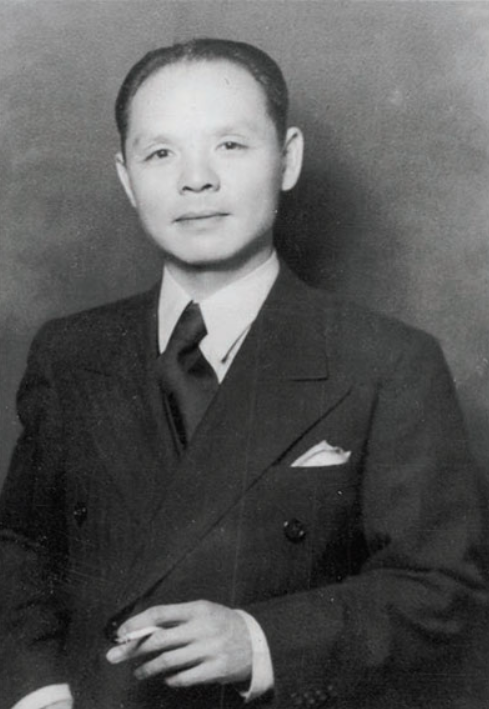
My father, Ho Feng Shan, was born into poverty in rural Hunan province on Sept 10, 120 years ago, during the twilight of the Qing Dynasty (1644-1911). Today, he is remembered as the Chinese diplomat who, on the threshold of World War II, saved thousands of Jews and provided the Chinese port city of Shanghai as a refuge of last resort.
I am often asked: "What would lead a man from China to save Jews when others would not?" My answer has been: "If you knew my father, you would not need to ask." But of course, that is no longer possible. To the majority of people, my father is already a one-dimensional historical figure from long ago onto whom they can project their own interpretations.
For example, my father is called "the Chinese Schindler", a label I regard with some irony. For, aside from having saved Jews, my father had nothing in common with Oskar Schindler, the German war-profiteering businessman and Nazi party member whose single attack of conscience led him to save the Jews laboring in his factory.
So who was Ho Feng Shan? He would be better described as a 20th century Zhuge Liang (181-234), after the legendary statesman, diplomat and strategist from the Three Kingdoms period (220-280). My father's favorite classic novel was, in fact, Romance of the Three Kingdoms, in which Zhuge Liang employs the "empty fort strategy" to foil an invading army.
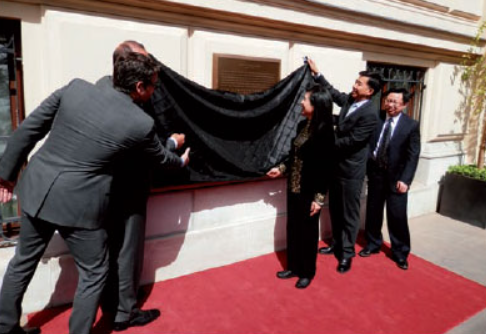
As a diplomat, my father possessed no armies or weapons. Instead, he had to rely on his wits and strategic prowess throughout his career. One of the best illustrations of this is his rescue of thousands of Jews and his creation of a haven for some 18,000 of them in Shanghai.
In March 1938, the union of Austria and Germany (Anschluss) unleashed a Nazi reign of terror which precipitated a Jewish refugee crisis. The initial efforts of the Nazis to render their territories "cleansed of Jews" was to expropriate their assets and to drive them out.
Nazi authorities told Jews that if they could produce "proof of emigration" in the form of an entry or end destination visa to another country, they would be allowed to leave. Even relatives who had been arrested and deported to concentration camps would be released.
Unfortunately for the Jews, as demonstrated during the Evian Conference of July 1938, almost none of the 32 participating Western nations would let them in.
At this time, diplomats like my father were in a unique position to help a large number of Jews. None did, except for the one diplomat who, unlike his peers, faced the most daunting obstacles as the representative of China.
The first obstacle my father faced was accessibility to China. The preceding year, Japan had invaded his home country and occupied all of its ports of entry. Any document or entry visa issued by a Chinese diplomat would certainly not be recognized by the Japanese occupiers.
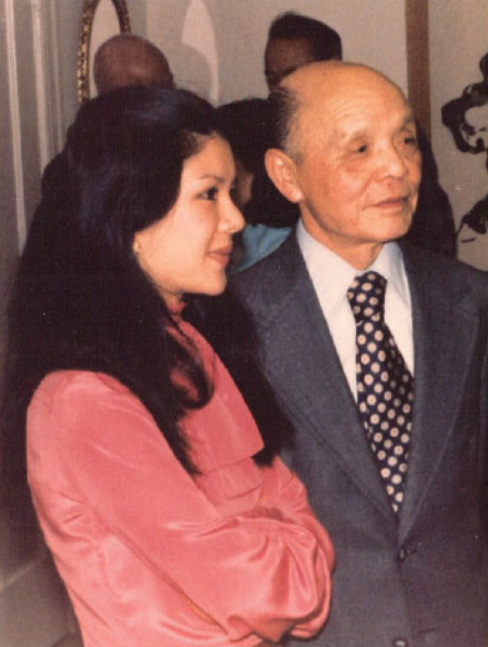
There was only one loophole: the port city of Shanghai. The Japanese invaded Shanghai in August 1937, driving out Chinese government authorities, which left the harbor unmanned. The other foreign powers in the city did not want the Japanese to take over the harbor because it would "inconvenience" them. So, the harbor was left completely unattended, without passport control or immigration. Anyone could land without showing papers or passports.
My father took advantage of this situation to issue entry visas with an end destination to only one place in China — Shanghai — which actually required no visa to enter.
This was my father's "Shanghai visa strategy", his intentional off-label use of a normally standard entry visa. Armed with these Shanghai visas as "proof of emigration", Jews were allowed to leave by the Nazis, and their imprisoned relatives were released. The Shanghai visas could also be used to enter otherwise inaccessible countries on the pretext of transiting through them on the way to Shanghai.
My father himself said: "These visas are to Shanghai in name only. In reality, they will provide a means for Jews to find their way to their preferred destinations."

Thousands of visa recipients were able to use these Shanghai visas to escape from certain death at the hands of the Nazis and to find safe haven elsewhere.
As for the Jews in Germany, and later, Czechoslovakia, who had no access to my father's consulate in Vienna, his visa strategy succeeded in putting the Chinese port city of Shanghai on the map for them as a refuge of last resort, which they could enter without documents.
As a result, from the end of 1938 through 1940, some 18,000 Jewish refugees were able to find refuge in Shanghai. The majority of them were German; only 5,000 to 6,000 were Austrian, as most Austrians were able to obtain and use my father's Shanghai visas to make their way to "preferred destinations".
The second obstacle my father faced was from his home government in Chongqing. The Nationalist government had long maintained diplomatic and economic relations with Germany, but by 1938, Hitler had turned toward Japan, Germany's soon-to-be ally, and relations with China had deteriorated.
In desperation, vice-foreign minister Chen Jie was dispatched to Berlin as the new ambassador to try to salvage relations. My father was ordered to desist from issuing visas to Jews in order to not appear to be contravening Hitler's policies. But my father did not obey.
My father's generation had witnessed the humiliation that China had suffered under foreign imperialism and was determined not to allow that to continue. As a result, he was particularly sensitive to the persecution of any peoples.
He would later say: "Seeing the tragic plight of the Jews, it is only natural to feel deep compassion, and from the standpoint of humanity, be impelled to help them."
My father was subsequently punished for his disobedience. Around the same time in 1939, the Nazis confiscated the consulate building on the pretext that it was Jewish-owned. My father asked his home government for relocation expenses but was refused. He moved to smaller quarters nearby at his own expense and reopened the consulate. He remained undaunted.
My father had a long diplomatic career, earning the praise of not only the host countries to which he was posted, but even from those who called him a "worthy adversary". The very qualities that made him an outstanding diplomat made him the right man, at the right time, to save Jews. He was a man of conscience, courage, compassion and most importantly, strategic brilliance. Had one of those elements been missing, we would not have this extraordinary story of life-saving heroism.
Ho Manli did not follow her father's diplomatic footsteps and instead chose journalism. She was a member of the Boston Globe reporting team that earned the paper a Pulitzer Prize for coverage of the Boston school desegregation crisis in 1975. In 1981, she was one of the foreign editors who helped launch China Daily, and has continued to work with the paper during special events such as the 2008 Beijing Olympics and the launching of the China Daily US edition. For the past two decades, she has been uncovering and documenting the history of her father's wartime heroism and is working on a book.
homanli@chinadaily.com.cn