Pioneering efforts by free-trade areas even more vital amid pandemic









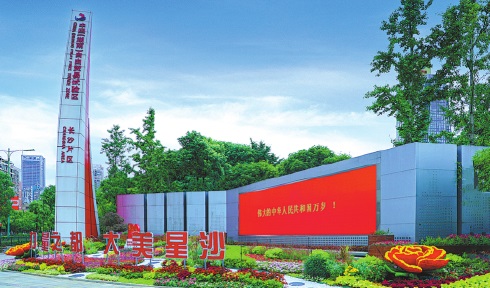
In September 2013, China established its first pilot free-trade zone in Shanghai. It was conceived as a special economic zone, where overseas investors could operate with specially defined inducements that included tax breaks and a simplified administrative process.
By 2020, the number of pilot FTZs in China had grown to 21. Experts believe they have served effectively as a testing ground for the country's experimental approach to further opening-up, deregulation and enabling a business climate for overseas investors.
Since the severe global economic downturn caused by the COVID-19 pandemic, these FTZs have played a notable role in boosting growth in China.
Figures from the Ministry of Commerce show that in the first seven months of this year, import and export volumes at the FTZs amounted to 16.6 percent of the national total, an increase of 42 percent from the same period last year, and faster than the national average by 10 percentage points. In addition, actual use of foreign capital in the zones accounted for 17 percent of the national total, a growth of 33.5 percent year-on-year.
Tu Xinquan, dean of the China Institute for WTO Studies at the University of International Business and Economics in Beijing, said the FTZs are a result of China's willingness to engage in wider opening-up.
"Joining the World Trade Organization in 2001 was an important landmark in China's greater efforts toward reform and opening-up, and the country has made remarkable progress in aligning with WTO rules and obligations since then," he said.
"By 2013, the requirements have largely been met, and the country needs to explore new motivations and pathways for greater opening-up. This is a key motivation for pilot FTZs."
Tu said he believes the zones are more about institutional reform, as they are used to test the opening-up of more services sectors to foreign investors.
"For the service sector to attract foreign capital, there needs to be more streamlined regulatory requirements and better opening-up, and that boils down to more effective government service and more delegation of power," Tu said, adding that this is how the FTZs have become testing grounds for China's administrative reform.
He also said he believes the biggest contribution of FTZs is the improvement they have made to China's business environment.
Over the past eight years, the State Council, China's Cabinet, has been encouraging FTZs to experiment more with reform and opening-up, including delegating more administrative authority to the provincial level in the pilot zones, especially in terms of investment approval and market access, and the full implementation of decoupling business licenses and operation permits.
These reforms were first tried out at select FTZs and later rolled out nationwide, generating notable improvements in China's business environment.
Zhou Mi, a senior researcher at the Chinese Academy of International Trade and Economic Cooperation in Beijing, said that speedy reform to FTZs is particularly necessary this year, because their roles are especially important against the backdrop of the pandemic.
"China became the world's largest recipient of foreign direct investment in 2020, and it needs to offer a more friendly environment for investors," Zhou said. "The 21 pilot FTZs serve as a window for foreign investors and governments to better understand China's opening-up and its regional differences, as well as to bring in more opportunities."



- China moves to set national standards for pre-made dishes
- Chinese company unveils plans for commercial space flights
- Latest addition to Shiziyang Bridge constructions brings main tower above 300 meters
- Hebei's 'ancient pressure cooker' setting internet ablaze
- Major urban renovation restores Xi'an's ancient moat
- China launches nationwide employment assistance program