



Green transformation, digitalization key to future









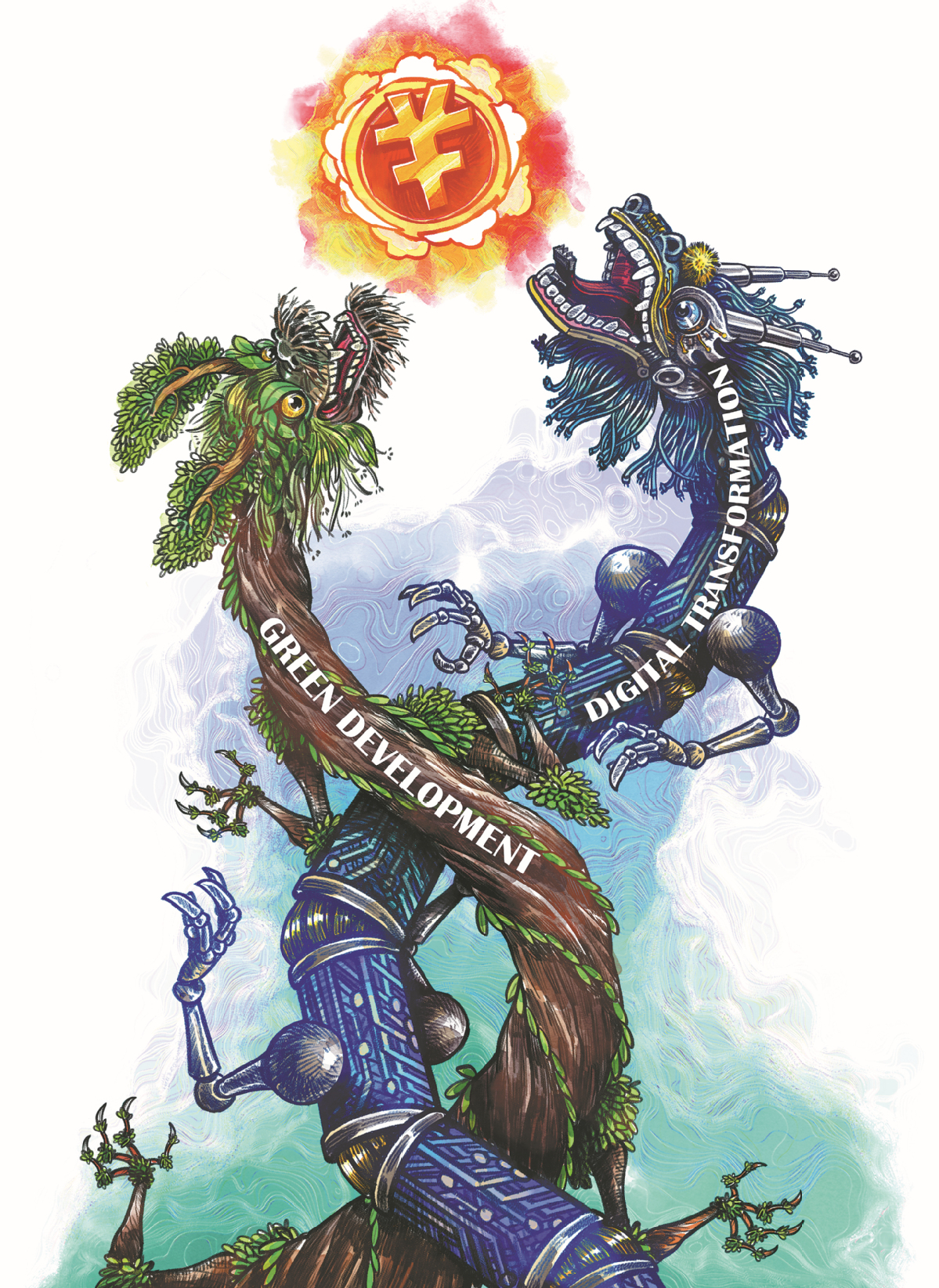
The world is rapidly changing. Evolving consumer demand, climate change, disruptive technologies and uncertainty about the global economic recovery are all issues that companies have to carefully think about and deal with. They must stay agile and resilient to face increasingly tough competition. For companies to succeed, I believe two transformations are greatly needed-digital and green. Not only are these two transformations important, they are also closely linked and contribute to the success of each other.
A hot business topic
Digital transformation is not entirely new and has been a hot business topic for a few years. However, COVID-19 has made it much more urgent. In a recent KPMG survey, we asked CEOs of the world's largest companies how their attitude toward digitalization has changed after the pandemic. Some 80 percent said the pandemic has greatly accelerated their digital transformation, and 30 percent said that progress has been pushed forward by years. One CEO even said: "I think we've seen three to four years of progress in just three to four months."
Digital transformation has brought changes to many aspects of the Chinese economy. For example, a major trend of China's consumption is the rise of domestic brands. Many factors have contributed to this, such as the improved product quality of domestic manufacturers, the growing influence of Chinese culture and the rise of Generation Y and Generation Z as shoppers. But another important driver is that many Chinese companies have digitally transformed and have used big data and AI to identify emerging customer demand. They are fast in introducing new products and designs to meet individualized and shifting consumer preferences. Many Chinese brands have ditched their stereotypical image of being dull or cheap and have become cool and fashionable. Digital transformation has certainly played an important role in driving the change.
Digital technology has also increased the scope and depth of China's services trade. For example, affected by COVID-19, global trade in services excluding travel fell 8 percent in 2020. However, against the backdrop of global slowdown, China's services trade excluding travel grew 6 percent last year, supported by the country's increasing use of digital technology in the sector. China's exports of ICT(information and communications technology) services have been growing at an average rate of over 10 percent in the past few years and their share in total services trade rose from 12 percent in 2016 to nearly 17 percent in 2020. During this year's China International Fair for Trade in Services, many online conferences, negotiations and contract signings were conducted "on the cloud", overcoming geographic limitations. Not only is this a vivid illustration of China's digitization, but also a help for the recovery of the global services industry after the pandemic.
One of the biggest challenges
Climate change is one of the biggest challenges of our times. We must act urgently to reduce carbon emissions and make the transition to sustainable growth. As a large economy willing to shoulder corresponding responsibilities, China has set an ambitious goal to peak carbon emissions by 2030 and achieve carbon neutrality by 2060. Achieving these goals will not be easy and needs collective action. Everyone is a stakeholder in global climate change.
We are glad to see the business community embrace green transformation. In our latest 2021 Global CEO Outlook survey, 30 percent of CEOs told us they plan to invest over 10 percent of their revenues toward sustainability measures in the next three years. All respondents in our survey are CEOs from companies with an annual revenue of at least $500 million and a third with more than $10 billion. If you put the numbers together, this amounts to a substantial investment.
On top of that, the road to a net-zero economy will also need support from green finance. Many studies estimated that China needs to invest over 100 trillion yuan ($15.46 trillion) in the coming decades to achieve its emissions goals. Government funds will likely only cover a portion of the investment; so, financing by the capital markets is very much-needed. China has the world's largest volume of green loans and is second in terms of green bonds-and there is still a lot of room to grow. In addition, to build a multilayered ecosystem of green finance, other products such as carbon trading markets, ESG-environmental, social and governance-investment and green insurance should also be further developed.
Financial institutions are clearly important players here and they need to set up a forward-looking strategy for green transformation. They should also stress test their risk exposure related to environmental and climate change. These risks can arise either from physical factors (like floods, wildfires, and storms) or from transitions (like rising costs or reduced market opportunities due to higher emissions standards). While physical risks are probably more visible, the growing effects of transition risks must also be carefully evaluated.
Why the 2030/2060 emissions targets are crucial
When China announced its 2030/2060 emissions targets, some people might have been skeptical whether China should set such ambitious goals. The time between China achieving peak emissions and carbon neutrality is only 30 years, compared to at least 40 years for most advanced countries. However, I have always been very confident that China will accomplish its goals, given its strong manufacturing sector and the rapid development of the digital economy.
Take renewable energy, for example. China is already a global leader in wind and solar power equipment production. Of the world's 15 largest wind power equipment manufacturers in 2019, eight were from China. In addition, China also has the world's largest installed capacity of wind and solar power, both accounting for over one-third of the global total. Furthermore, the use of digital technologies, such as AI, big data and the internet of things has greatly accelerated the development of renewable energy. For example, a big hurdle for wind power is that it is subject to weather conditions and some power generated may be lost. The use of AI in China's wind power industry has improved demand forecasting and reduced waste. With enhanced efficiency, China's abandonment rate of wind power dropped from around 20 percent in 2016 to 3 percent in 2020, a remarkable improvement.
Meanwhile, the rapid development of digital technology also means growing power consumption. Electricity consumption of data centers in China reached 60-70 billion kilowatt-hours in 2019, accounting for nearly 1 percent of the country's total power usage. With the deepening of the information age, it is estimated that the power usage of data centers will double by 2030 and represent about 1.5-2 percent of China's electricity consumption. Renewable energy clearly has an important role to play in reducing carbon emissions with the increasing use of digital technologies.
In summary, digital and green transformation will be the key trends in the coming years and bring both challenges and opportunities. Companies should carefully consider these developments, design a clear strategy and work with stakeholders to tackle these priorities.
The writer is chairman of KPMG Asia Pacific and KPMG China.
The views don't necessarily reflect those of China Daily.



















