Three opportunities, three challenges










While promoting the transformation and upgrading of its economy, China must seize the new opportunities and be alert to and manage the risks
China's move toward the middle- and later-stage of industrialization has opened up three strategic opportunities for its economic upgrading and development.
The first opportunity is the new technological revolution and industrial transformation. Digitalization is still accelerating, with new technologies, including big data, artificial intelligence and cloud computing, pushing forward the latest round of technological advancement. This has led to the emergence of the digital economy and new industries, while traditional industries are getting further reshaped, promoting China's economic upgrading.
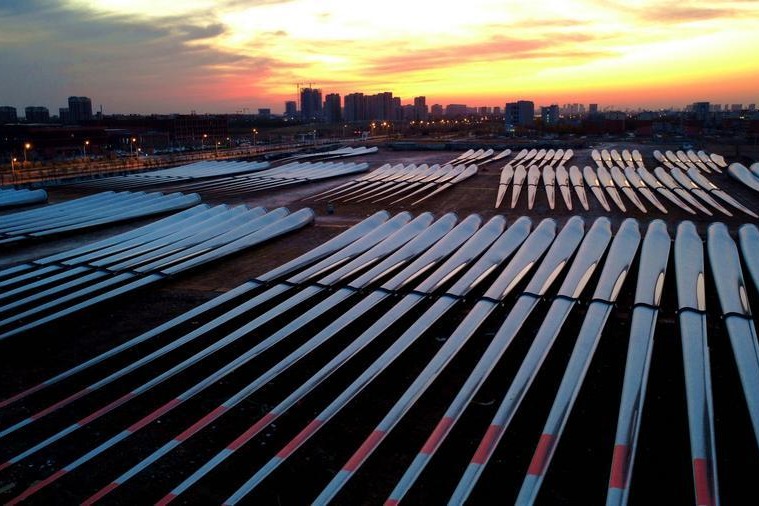
The second opportunity is the green transformation. China has pledged to peak its carbon dioxide emissions before 2030 and achieve carbon neutrality before 2060.Other major economies, too, have announced their deadlines for peaking carbon emissions, greatly boosting the global low-carbon and green transition. The green transformation brings plenty of development opportunities and heralds a profound and sweeping socio-economic transformation. All countries should seize the opportunities arising out of the green transformation.
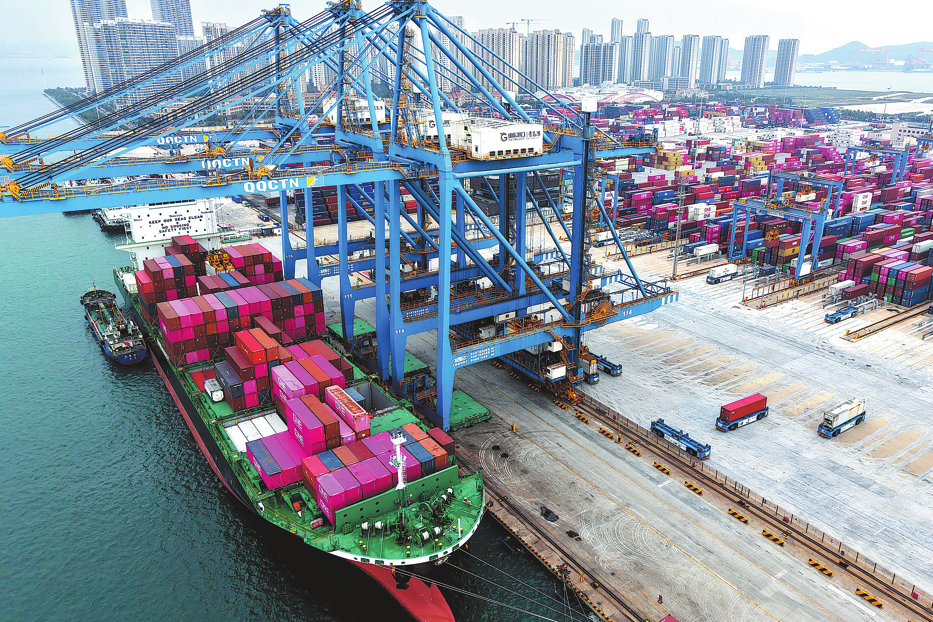
The third opportunity is the consumption upgrading of China's huge market. The past more than four decades have been marked by upgrading on the supply side led by shifts in consumption demand. Every round of consumption upgrading has resulted in a corresponding expansion of the supply side. From the global perspective, China's huge market and the rapid upgrading of its market structure are helping it attract global production factors.
Despite the strategic opportunities, China is also facing three major challenges to its economic transformation and upgrading.
First, the competition among major economies is intensifying. As the gap in economic strength between China and the United States is narrowing, the US is bent on containing China's rise to maintain its dominance and hegemony.
By adopting the "small yard and high fence" strategy, the US is trying to decouple from China in key technologies. In a bid to strangle China's leading technology companies, the US is denying them access to core technology and components, while posing risks to the stable operation of supply chains. In the global arena, the US, rallying support from its allies, seeks to marginalize China by pushing for reform in the global economic governance system and making rules that favor itself.
Second, China's comparative advantage is changing. The country's rapid growth in the past few decades has been largely attributable to its abundant low-cost labor, which made it the largest exporter of labor-intensive products in the world. Now that many emerging economies have embarked on an export-oriented path of development, they are claiming some of China's international market share by offering even lower labor costs, leading to the outflow of some labor-intensive industries from China. To realize economic transformation and upgrading, China is forced to cultivate new competitive advantages in capital-and technology-intensive industries, where it is facing suppression from the developed economies.
Third, China is experiencing a demographic shift. In the past, China enjoyed a demographic dividend thanks to its massive pool of low-cost labor. Now the country's population is aging rapidly, and the working-age population has passed its peak, with the costs of labor rising. Given the transformation of its demographic structure, China can only sustain its economic growth by improving the quality of its labor force. The aging population will have a far-reaching impact on the country's economic growth rate.
The central government is therefore promoting the transformation and upgrading of the country's economic structure and is implementing a new "dual circulation "development paradigm that meets the requirements of high-quality growth. This is the general guide for China's economic restructuring and upgrading. To this end, attention should be paid to the following aspects.
First, new policies are required in line with the transformation from the demographic dividend of quantity to one of quality, and efforts should be made to strengthen China's innovation capacity, and facilitate the digital and green transformation of the economy.
Second, China should stick to opening-up and reform, and form new competitiveness in global competition and cooperation. It also needs to create a favorable external environment for development.
Third, China should continue to expand its domestic demand, and facilitate its internal economic circulation. The two most important tasks are to promote people-centered urbanization and ensure the healthy and stable development of the real estate market.
Fourth, the key to comprehensively deepening reform is to properly handle the relations between the government and the market in which the market plays a decisive role in resource allocation and the government plays a better role in macroeconomic regulation.
Last but not least, a balance also has to be struck between development and security. From a broader perspective, the country should properly manage the relations among reform, development, stability and security. It needs to guard against major risks in economic development and upgrading, not least the financial risks, and risks in the operation of industrial chains, resources and energy supply, as well as food and information security.
In brief, in the new stage of development, China should seize the opportunities, manage the risks and focus on key areas to promote the transformation and upgrading of the economy.
The author is vice-president of the Development Research Center of the State Council.
The author contributed this article to China Watch, a think tank powered by China Daily.
The views do not necessarily reflect those of China Daily.