


Seed banks provide vital lifeline for future










The first step
Collecting seeds is the first step of preservation, and GBOWS cooperates on this task with national partners who receive regular training from the seed bank.
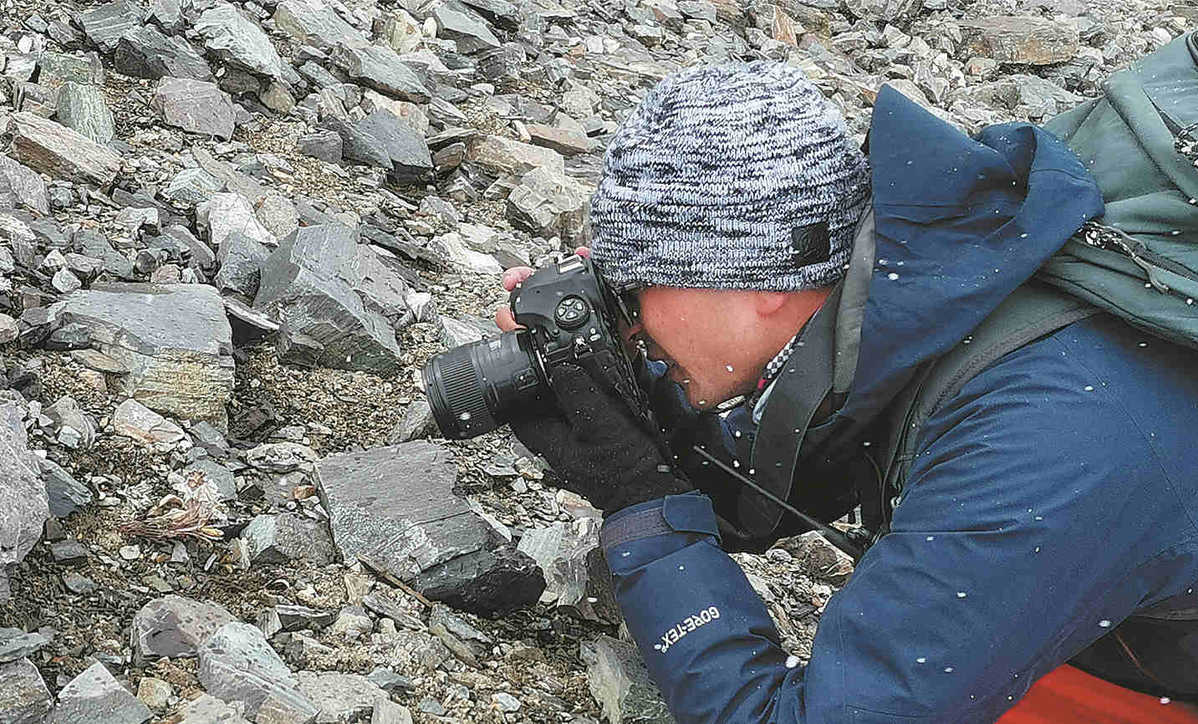
Apart from seeds, collectors take specimens for verification. For future study, they record details of the plant, including where it was found, its size and the number of individual plants in the habitat.
This year, collectors from the bank visited many regions nationwide, including areas with low populations in West China and also sinkholes in the south and southwest.
At sinkholes in Mengzi city, Yunnan, researchers found two rare plant species, Petrocosmea grandiflora and Elaeagnus bambusetorum, which had not been seen for more than 100 years.
Species are targeted and prioritized if they meet at least one of three standards-they are endangered, endemic or of economic importance.
After arriving at the bank, the seeds undergo a series of processes before they can be stored long-term.
First, they are checked by botanists to ensure their "identity". Then, the seeds are slowly dried to 5 percent moisture content in a drying chamber, which maintains a temperature of 15 C and relative humidity of 15 percent.
The seeds are next cleaned before being weighed and counted manually, which is time-consuming and requires patience and an eye for detail.
Then, the seeds are placed in suitable containers and weighed on an electronic scale under a plastic cover, which prevents the results being influenced by factors such as the wind.
The weight of the seeds is recorded in grams correct to four decimal places-even more accurate than a scale for weighing gold.
Before being stored, the seeds receive an X-ray "health check". After this, they are photographed.
Seed morphology researcher Li Lianyi said, "For big seeds, an ordinary camera is enough, but for those with a diameter of 1 or 2 millimetres, photomicrography is used.
"Some tiny seeds cannot be seen by the eye, but photomicrography allows us to appreciate their spectacular shapes and colors."
After these procedures are completed, the seeds are sealed in glass bottles or jars. Each container has a barcode that can be scanned to enable scientists to view information about the seeds inside.
The containers, large and small, are stored in a huge chamber at a temperature of minus 20 C. Such chambers are freezers built underground to reduce the influence of the local environment.
The seed bank has five such chambers, covering a total of 190 square meters and capable of storing 170,000 collections.
Germination tests are conducted on a seed accession after it is banked to ascertain viability and to establish a germination protocol.
Seed revival is conducted on a palmsized cell culture dish with agar, a gelatinous substance obtained from some red seaweeds. In most cases, it usually takes a few days for the seeds to sprout.
Seed curator Li Hui said, "Some seeds remain dormant and need a little inducement to 'wake them up'-for example, a biological enzyme or an external force, such as chipping or breaking out the hard seed coating."
For seeds without a germination study, she said it sometimes takes four or five years for them to revive. "For instance, some seeds only sprout through interaction with a biological enzyme found in the intestinal tracts of birds," Li Hui said.
The bank has provided technical support for the preservation, research and use of China's wild plants. It also provides seed germination guidance services.
"Most of the orders are from forestry, grassland and agricultural colleges and research institutes," Li Hui said.
"A test is usually conducted every five or 10 years after the seeds are stored to check their ability to grow. The result is a significant part of our research on the plant."





