Vocational education — removing the stigma









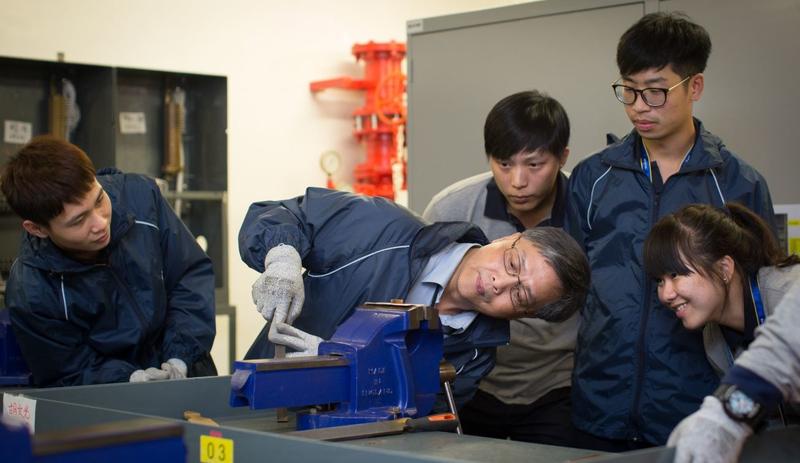
As the off-campus tutoring market on the Chinese mainland comes under tightened regulations, the chronic problems surrounding vocational education have re-emerged as tutoring companies look to pivot their businesses to professional training.
While policymakers vow to promote professional education to meet the nation's social and economic needs, vocational education on the mainland is still frowned upon by many parents and students.
"Many parents in the country, to some extent, have the 'vocational secondary school panic' — that professional education is inferior to academic pathways. This attitude cannot be overlooked," said Xiong Bingqi, director of the Beijing-based 21st Century Education Research Institute.
The fundamental problem lies in the inequality between vocational education and academic pathways, with a stigma attached to the former, Xiong said. "Employers have long favored prestigious universities and their students, while turning a blind eye to vocational school students," he said.
Schools at the basic education level revolve around examinations, attaching paramount importance to promotion rates and marginalizing students with poor academic performance. These students subsequently form the bulk of those entering vocational institutions.
Vocational education is deemed to be the last choice for students and parents, hence, is perceived as inferior to other academic pathways, said Xiong. Such labeling has greatly undermined teachers, students, and parents' recognition of vocational education which, in turn, has led to problems like students giving up hope.
Inflaming the stigma is the employability bottleneck, Xiong pointed out. Vocational education graduates are frustrated that their degrees and experiences are not recognized by employers and their qualifications aren't translated into tangible benefits in the workplace.
"There's a continued urge to get into famous schools, and some employers, including the public sector, unilaterally demand certificates from big name universities in hiring staff. This has fanned the craze for top universities in the community."
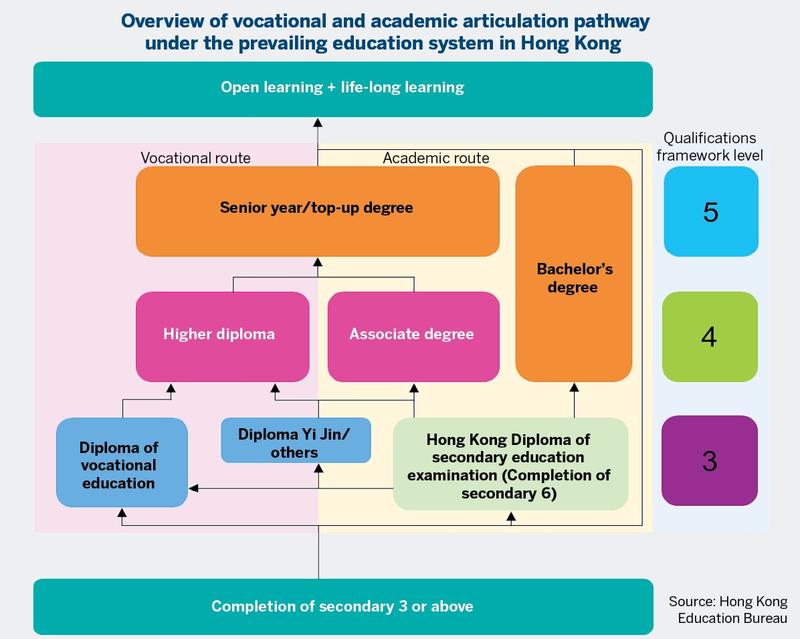
He warned that developing vocational education cannot be detached from reality. "If the job prospects of vocational school graduates are good, parents and students would naturally like to pursue it."
The stigma that vocational education is the last choice among students should be overcome by tangibly improving its quality and appeal, Xiong said. "Professional schools should help their students get rid of the misconception about vocational education and equip them with solid skills so that they can reposition themselves in society."
Currently, there're two types of schools at the senior secondary level on the mainland — general academic high schools and vocational high schools. The country's Ministry of Education has proposed that up to 50 percent of students taking the zhongkao, the high school entrance examination, should pass each year.
Mainland students take the zhongkao at around 16 years old, and choose their future paths after getting the examination results. Those who pass can be admitted to a general academic high school, while those who fail will drop out of school or turn to vocational secondary schools.
Vocational high schools took in 6.4 million students last year — up 7 percent year-on-year and accounting for almost 43 percent of the total enrollment at senior-level secondary schools. There were 16.6 million students enrolled at secondary vocational schools as of late August, according to the Ministry of Education.



- Pact to boost China's gold market
- Annual lantern festival opens in Shanghai
- Work teams dispatched after earthquake hits Diebu county in Gansu
- Zhangjiajie National Forest Park transforms into a winter paradise
- Thousands enjoy freshly cooked laba porridge in Sichuan
- Short videos highlight the beauty of Hebei