



Biodiversity protection now more pressing than ever









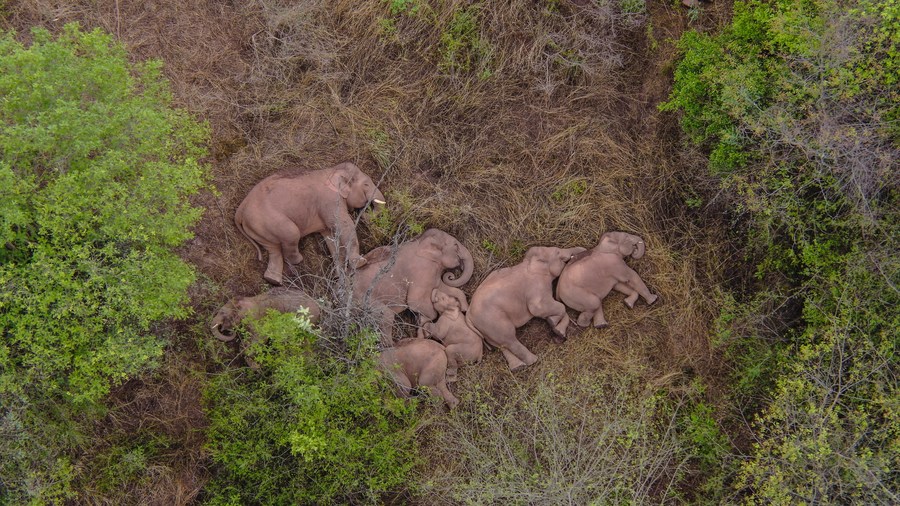
The world is losing its biodiversity faster than at any time in the recorded past centuries. The danger this loss represents is enormous, and reversing the damage will require a coordinated global effort.
The loss of biodiversity is both the cause and the effect of climate change-a self-fulfilling cycle of more loss, faster climate change, even more loss, and so on. The potentially devastating cliff that the world faces is getting higher.
Speaking on Oct 12 during the 15th meeting of the Conference of the Parties to the Convention on Biological Diversity, President Xi Jinping addressed the danger directly by calling for building a shared community of all life on Earth. He underlined China's efforts to develop an "ecological civilization" in which humans and nature coexist in harmony, and he said the country would launch the $233 million Kunming Biodiversity Fund to protect biodiversity in developing countries.
The announcement marks a step forward in global efforts to protect biodiversity, and other countries should follow suit. China's commitment represents the kind of effort that the world badly needs.
The issue of protecting plants and animals is more pressing than ever.
The danger may be particularly acute in parts of the world that have the most biodiversity. These include places like Brazil, with its Amazon rainforest, central African regions, Indonesia or China, which is home to almost 10 percent of all plant species and 14 percent of all animal species on the planet.
So far, 20 parties to the Convention on Biological Diversity are identified as mega-diversity countries by the World Conservation Monitoring Centre of the UN Environment Program.
In the declaration of COP 15, which China hosted in Kunming, the capital of Yunnan province, all participants are called on to take "urgent and integrated action", and countries are urged to put biodiversity at the heart of their development plans.
The problem is that while such declarations are nice enough, they are political documents and in no way binding. It is very easy for countries to put a signature at the bottom of such a declaration and just as easy to forget about it. The United States, for example, despite its power and resources, has not ratified the convention after signing it in 1992.Although the first UN Convention on Biological Diversity was signed in 1992, few of its targets have been met. A 2010 agreement signed in Aichi, Japan, led to countries setting 20 targets to slow biodiversity loss and protect habitats but, again, hardly any of those targets were met either.
The difference now is that the cost of not putting biodiversity-and climate change-at the heart of development policies is much, much higher.
An index developed by Britain's Natural History Museum suggests that the world in 2020 had only 75 percent on average of its biodiversity left-far lower than the 90 percent identified in the index as a safe limit to prevent an "ecological recession".
The massive loss of biodiversity is speeding up climate change. Protecting biodiversity, on the other hand, could help limit the worst impacts and perhaps even help reverse some of them. This is why the idea of building an "ecological civilization" is important.
Still, a new target in place to protect 30 percent of the territories of UN member countries by 2030, known as"30 by 30", may prove to be difficult for many nations.
Some countries, like Brazil and Indonesia, where much more than 30 percent of the landmass is covered with biodiversity, would be put at a disadvantage if they are blocked from leveraging the resources of large chunks of their landmass.
Given the problems, it will be important for countries to work together to average each other out. Brazil, for example, may be able to set aside much more than 30 percent of its landmass and, in so doing, protect enough biodiversity-heavy land to also account for the shares of several other countries.
But for this to work, countries will need a multilateral push that compensates them for their efforts. One way may be for richer countries to "pay" for their share and work with peers that may have the land resources to meet the"30 by 30" goal but not the financial ones.
Another proposed goal coming out of the biodiversity conference-for countries to cut subsidies by at least $500 billion per year for activities that harm biodiversity-has yet to be met in earnest.
China's new commitment is part of yet another effort that would require governments to dedicate an additional $200 billion per year to developing countries to protect biodiversity. Contributing to the Kunming Biodiversity Fund is conducive to easing the concerns of the developing world.
Amid the challenges, the biodiversity fund and those of other countries can help to average out the efforts of individual nations. This would go a long way in promoting "ecological civilization "and helping to restore balance to the world.
The author is managing director of Bahati, an editorial services agency based in Hong Kong. The views do not necessarily reflect those of China Daily.










