Gansu new energy helps power other provinces









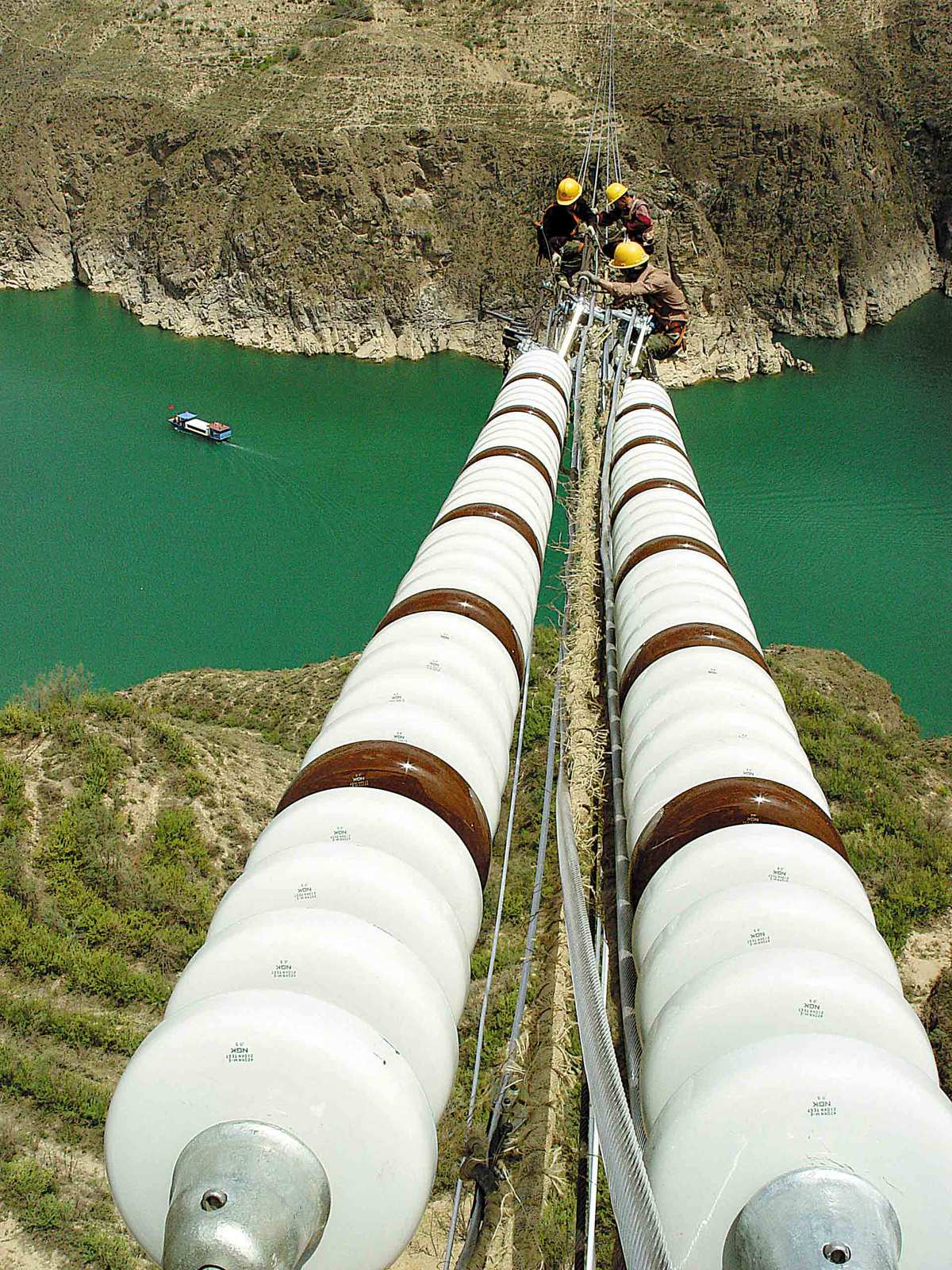
During the first half of this year, Northwest China's Gansu province transmitted more electricity to other provinces than ever, including energy generated from wind and solar sources, thanks to a system that has helped stabilize transmission to the power grid.
"Wind and solar energy are like wild horses because they don't produce electricity in a stable way. They are too dependent on weather conditions. Our task is to tame them," said Zhou Qiang, an engineer at the State Grid Gansu Electric Power Company.
Over the past decade, Zhou's team has been working on a control system to increase grid capacity to incorporate new energy power, while ensuring its operational safety.
Gansu transmitted 27.7 billion kilowatt-hours of locally generated electricity to North and Central China during the first half of this year, a year-on-year increase of 16.5 percent. The province also generated 22 billion kWh of new energy electricity, an increase of 10.6 percent year-on-year. Some of this was also transmitted to other provinces.
New energy represents a growing proportion of energy in the province, but the Gansu Electric Power Company still generates most of its energy from traditional sources, like coal and hydropower.
The electricity transmitted helped ease shortages in recipient provinces, and reduced carbon dioxide emissions from coal-fired power plants by about 28 million metric tons, the company said.
A power line linking Jiuquan city in Gansu with Shaoshan in Hunan province, had supplied about 15.3 billion kWh by August, Gansu Daily reported.
China's depopulated western regions have abundant sources of coal, water, wind and sunlight for power generation. West China has been transmitting electricity to eastern areas where demand is higher since 2000, as part of a decadelong central government development program for the region.
As the country embarks on its low carbon transition, western regions are focused on generating and transmitting cleaner new energy power.
In June, the Gansu government announced that it had finished the country's first 10 gigawatt wind power plant in Jiuquan, construction on which began in 2009.
However, the plant can only operate properly in stable weather conditions.
Over the years, Zhou and his colleagues have been researching ways of harnessing power output.
Intermittent wind power can lead to fluctuations in power grid voltage and other system instabilities.
"The stable connection of wind power to grids remains a worldwide problem," Zhou said.
His team is focused on ways of monitoring wind and solar power plants, power prediction, error assessment and security strategies.
It is also responsible for maintaining monitoring facilities for wind and solar energy power.
"We aim to ensure the stable and safe operation of the grid," he said.
In 2019, Zhou's team won the national award for progress in science and technology for its research on wind and solar power coordination and control.
Because power has to be used immediately before it is lost, another challenge is that due to the intermittent nature of wind and solar power, there may be too much energy when it is not needed, and too little when it is, especially during peak hours.
Power storage can solve this problem by releasing it when it is needed. The company said it plans to expand pumped power storage station construction to help consumption of new energy power.
By 2025, the annual capacity of energy storage in the province should be no less than 10 percent of the installed generating capacity of new energy, the newspaper added.





- China launches remote-sensing satellite for Algeria
- China reports drop in workplace accidents, fatalities in 2025
- From Kansas to karst: Unpacking Guangxi's charms
- China carries out nearly 8.5m hectares of land greening in 2025
- Chongqing red leaf festival draws record 4.7 million visitors
- Zhou Liang sees hope for Yangtze sturgeon after decades of conservation work