



Global medicine takes cue from Chinese patients









Agreements boost nation's R&D status in field of pioneering research dealing with a wide range of diseases
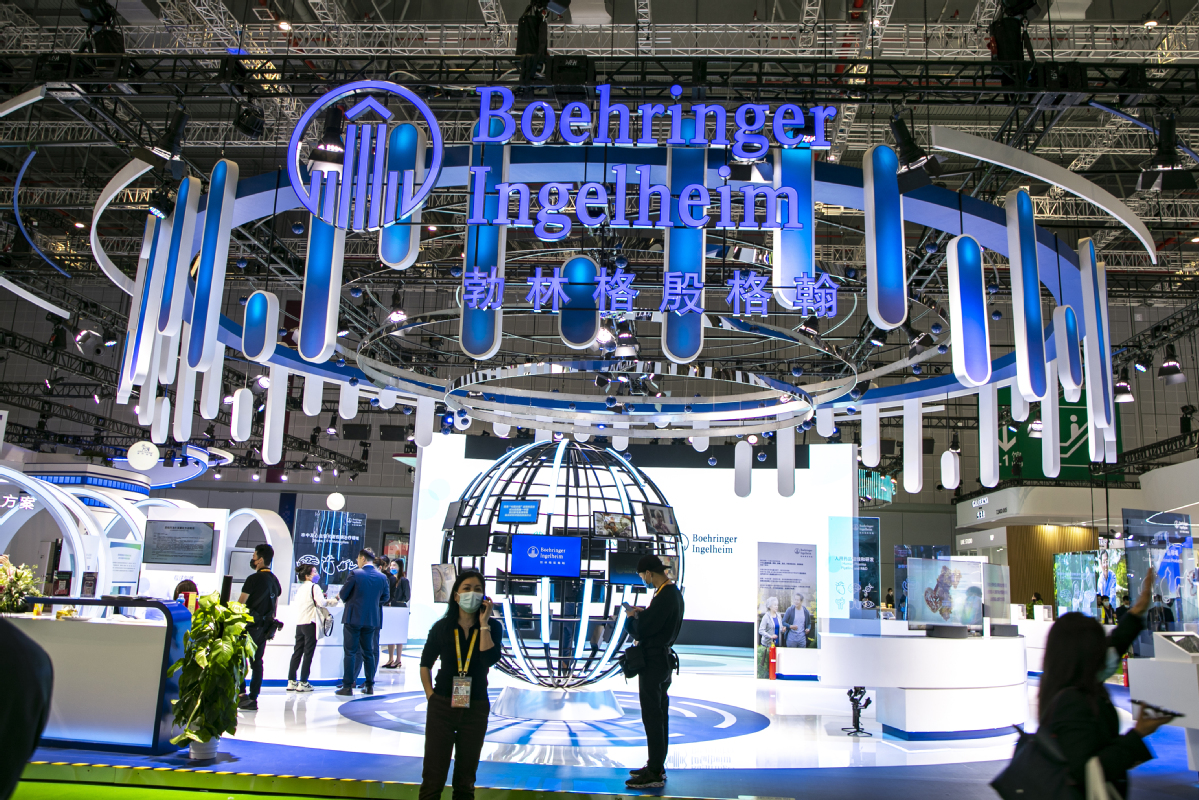
German pharmaceutical company Boehringer Ingelheim signed framework agreements with three major domestic hospitals during the fourth China International Import Expo held in Shanghai in early November to include them in the company's early-stage clinical research of innovative compounds it developed globally.
The collaboration with Shanghai Huashan Hospital, Shanghai Cancer Center and Shanghai Mental Health Center brought the total of Chinese medical institutions that reached such agreements with the company to 19. This follows the company's China Key initiative to include Chinese patients' needs in its global research and development strategy, which started in 2019.
Such collaboration allows Chinese patients to share the latest results of new drug R&D at the same time as patients elsewhere. More importantly, diseases that are more prevalent in China will get more attention, industry insiders said.
"Periodic results have been achieved in the tumor, immunity, central nervous system, metabolism and cardiovascular fields from existing collaboration with Chinese hospitals," said Zhang Wei, head of medicine at Boehringer Ingelheim.
Also, based on the clinical needs of local patients, some clinical trial projects, including innovative therapies for the treatment of solid tumors as well as obesity and fatty liver disease, were already ongoing, he said.
While Chinese institutions are increasingly participating in the international R&D network of multinational pharmaceutical companies, and clinical research programs in China are more synchronized with the world, the particular needs of Chinese patients are more visible and better represented today than ever before, experts said.
Wang Bin, general manager of Boehringer Ingelheim Biopharma China, said that one obvious change in the domestic biopharma industry over the past decade is that the R&D focus shifted toward disease categories that afflict Chinese more often.
The change has become evident in the number of company clients included in the contract development manufacturing organization model, which allows research-oriented companies to focus on R&D while outsourcing drug development and manufacturing to Boehringer Ingelheim, he said.
"A decade ago, the most common practice in the domestic biopharma field was to produce generic drugs, and therefore most drugs were for the treatment of diseases with a high incidence in the West-but not necessarily high in China," Wang said.
"However, drug development tailor-made for China and Asia is a growing trend. More drug R&D programs are focused on lung cancer, intestinal cancer and some other diseases that severely affect Chinese people's health," he said.
At Draeger Medical Equipment, based in Germany, there are around 100 Chinese scientists and engineers working at its China R&D center, accounting for 10 percent of the company's global R&D effort, said Gabor Polivka, CEO of the company's division in China.
"Chinese researchers played a big role in incorporating 4G technologies and network connections in our medical devices for doctors to monitor the condition of patients, the application of which was remarkable when treating COVID-19 cases in quarantine wards," Polivka said.
Another example was masks, he said. When the company started producing masks in China last year, the China team made changes in the design to make them better fit Asian faces.
"Today, masks made in China are sold not only in China but also in some other regions of Asia," Polivka said.
For Swiss pharmaceutical company Novartis, the new arrangement ensures that China teams provide input to its global development programs much earlier.
"We now consider feedback from our local China team as well as Chinese regulators. At the same time, we consider feedback from other major global regulators in designing our phase 3 studies," said Vas Narasimhan, Novartis CEO.
Johan Kahlstroem, head of the cardiovascular, renal and metabolism business unit at Novartis Pharma (China), said 100 percent of its clinical trials in relevant disease areas in China take place simultaneously with global trials today.
"The inclusion of Chinese patients directly in our trials does not mean only a minimized gap between the launch of a new drug in the West and in China. Starting trials earlier also means that we can use the insights from a clinical program as early as possible and implement them in others," Kahlstroem said.
Early insights may also give clues to R&D teams on the treatment patterns of a potential new therapy and how it actually interacts with the standard therapy in China, he said. "Early insights help us really drive clinical preparedness for using a drug," he said.
Edwards Life sciences, which has been introducing heart valve and critical care products to China over the past two decades, said that it shares the vision of having Chinese clinical teams involved in R&D on its therapies.
Michael Mussallem, chairman and CEO of Edwards Life sciences, said the company is encouraged that research teams at Chinese hospitals have been increasing their capabilities, and the company is also improving its in-country clinical resources.
"For example, we conducted field research with Chinese physicians on a key pipeline technology for surgical treatment of heart valve disease so that their voices can be better heard in this important therapeutic area," he said.
One recent example was the recent publication of the first 200 commercial case results of the company's transcatheter aortic valve system Sapien 3 performed by Chinese doctors in real-world settings, which demonstrated exciting results, said Mussallem. Transcatheter procedures are minimally invasive surgeries that can be used to replace heart valves.
"We look forward to continuing our work with hospitals and clinicians around China to address the unmet needs in the treatment of aortic, mitral and tricuspid valve disease, and to generate early data and evidence that'll be relevant globally," he said.
To have Chinese patients' needs better represented, United States-based pharmaceutical company Bristol Myers Squibb recently made a change in the reporting procedures of its China R&D departments.
Instead of reporting to their respective global departments, they now report to the company's R&D head in China, who then reports to the company's global executive vice-president in charge of drug development.
The company has over 30 clinical trials ongoing in China of immuno-oncology treatment, which uses a person's immune system to fight cancer. They cover cancers of the lung, liver, stomach and esophagus, which are more common in China.
In the field of immunology, the company said it has eight clinical trials in different phases, covering illnesses such as Crohn's disease-an inflammation of the bowel-the skin disease psoriasis and lupus nephritis, a kidney condition brought on by the autoimmune disease lupus. These are illnesses for which patients have long awaited new therapies.



















