Envoy: Limitations on science cooperation harm both countries









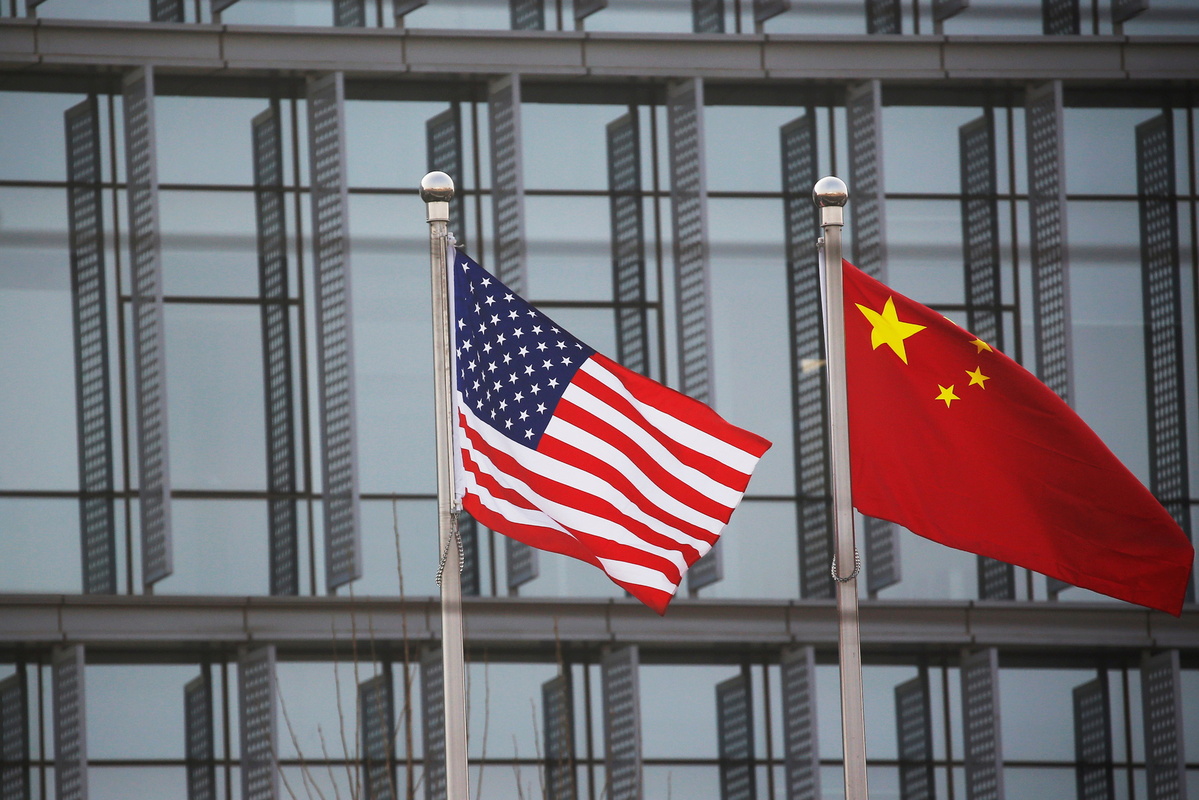
When China and the United States work together to address global issues, they can deliver great benefits to both countries and the world; but when limitations are imposed on them, the interests of both sides will suffer, China's top envoy in Washington has said.
In a wide-ranging interview with Science & Diplomacy Magazine published on Friday, Ambassador Qin Gang said he hopes China and the US will ramp up their scientific and technological cooperation, to deal with the COVID-19 pandemic as well as climate change.
Science & Diplomacy Magazine is an online publication produced by the American Association for the Advancement of Science, or AAAS, Center for Science Diplomacy.
The magazine's executive editor, Kim Montgomery, noted that since China and the US established diplomatic relations in 1979, the US-China Agreement on Cooperation in Science and Technology, which has been renewed each year since, has led to robust collaboration in science and technology.
Montgomery asked Qin to elaborate on China's vision of the nexus between science and diplomacy.
Qin noted that scientific and technological exchanges and cooperation have played an important role in the development of China-US relations, and are still an important part of the bilateral relationship.
"Even before we officially established diplomatic relations, US President Carter's science advisor visited China," Qin said, referring to Frank Press, who headed a high-level delegation of government scientists and officials that had the nations' first direct talks on science and technology in July 1978.
During the 40 years following the first formal cooperation agreement was signed in 1979, more than 30 protocols and deals in a wide range of areas, including health, climate change, ecological protection, and nuclear safety, have been signed under the framework of the agreement, Qin said.
"When China and the United States work together to address global issues as the ones I just mentioned, and jointly manage the uncertainties of emerging technologies, we can deliver greater benefits to our two peoples and better prepare humanity for an uncertain future," he said.
Limitations on that collaboration, including restrictions on Chinese scientists and students, are in the interest of neither side, he added.
In the interview, Montgomery said diplomatic initiatives can help foster international scientific collaboration and strengthen scientific capabilities worldwide and are instrumental in addressing global challenges, such as climate change.
He asked Qin about China's diplomatic priorities in working with the US and the international community on finding science-based solutions to shared problems.
Qin said that, confronted with the pandemic, China has shared information and experience and strengthened international cooperation in the joint research and development of vaccines, treatments, and testing.
China has provided more than 1.8 billion doses of vaccines to more than 100 countries and international organizations, and the total number of vaccines made available to the world this year will reach 2 billion doses, Qin said.
"We hope that China and the United States will strengthen their scientific and technological cooperation to help the world overcome the pandemic as soon as possible," he said.
The ambassador also noted there is much room for China-US cooperation on climate change. He said both countries have fossil fuels accounting for more than 80 percent of energy consumption, and both are transitioning to renewable energy faster than any other country in the world and are looking for advancements in clean energy technologies.
"The US-China Clean Energy Research Center (CERC), a typical example of bilateral research cooperation, has produced many mutually beneficial achievements in the past decade," Qin said. "The project has been suspended, but we hope to find a new model of cooperation regarding clean energy."