Keeping an eye on AI









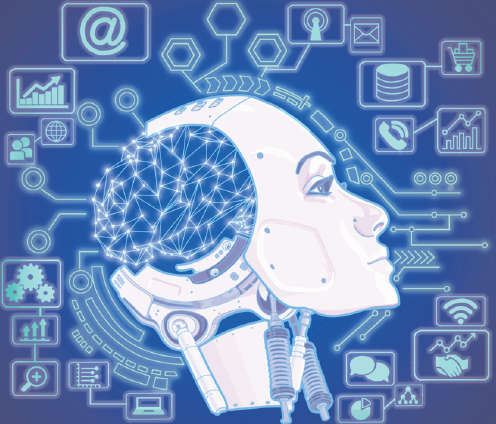
More cooperation is needed across borders, sectors and generations to develop necessary governance frameworks for its application
Artificial intelligence exemplifies perhaps more challenges than any other technology. It has vast, untapped potential to accelerate the United Nations Development Programme's efforts to promote sustainable development, improve response to crises, better target its programs and make its institutions more effective, responsive and accountable to the people they serve.
Indeed, it is already furthering the Sustainable Development Goals across the world, from supporting smart cities in East Asia to helping farmers in sub-Saharan Africa identify crop pests. In China, the world has seen firsthand the value of AI tools in responding to the COVID-19 outbreak through diagnostics. The UNDP's country office, meanwhile, has deployed an AI chatbot to disseminate health information.
AI has become a driving force in other sectors too, from education to transportation. According to UN Secretary-General Antonio Guterres's Roadmap for Digital Cooperation released in May 2020, AI was forecast to generate some $4 trillion in added value for global markets by 2022. This figure might now be bigger as a result of increased demand.
But the pandemic has also highlighted the inhibiting and adverse impacts of AI. In some areas, these reflect the social and economic consequences of technological transition. For instance, the International Labour Organization has called for more strategic education and workforce planning in light of increased machine use.
In others, the governance of AI needs to be developed in concert with the technology. Just as AI can help to scale up programs, it can also scale up bias and exclusion through lack of knowledge, negligence or malicious intent. Discrimination can become more acute, inequalities more entrenched. AI is not a silver bullet. It is only as good as the humans that deploy it, the data on which it is based, and the standards that govern its use.
More cooperation is needed across borders, sectors and generations to develop the necessary governance frameworks. We need to look at AI holistically, understanding issues around ethics and human rights, human capital and infrastructure, data availability and quality, as well as transparency and accountability.
The UNDP is committed to supporting its partners navigate these issues, while delivering development impact on the ground.
It is often said that one of the challenges of AI governance is that technology moves faster than policymaking. The UNDP's agile approach helps it to identify real-life issues in real time, and to craft solutions and best practices based on lessons learned.
In the Philippines, for example, the UNDP supported a poverty assessment tool that was significantly faster and cheaper than traditional on-the-ground surveys. Open geospatial datasets were merged with demographic and health surveys to estimate the wealth of people by micro-location, thereby enabling better targeting of poverty alleviation programs.
In Ukraine, the UNDP worked on a system that enables communities to track forest fires and identify vulnerable communities, helping to reduce economic damage, ecosystem loss, pollution and deaths. And in Brazil an AI solution was used to analyze court data, assisting authorities with smarter resource allocation.
Insights from these experiences have helped to shape the UNDP's thinking on AI governance. For instance, the UNDP has seen firsthand the value of multi-stakeholder approaches including governments, international organizations, tech companies and civil society. Adopting an inclusive approach from the outset can build trust, flag risks in areas such as discrimination, and speed up implementation.
The UNDP has also seen the need to engage excluded segments of society, including those who are offline, so that AI tools can be used by those who stand to gain the most. This means investment in the digital sector more broadly, to ensure that the digital divide does not deepen inequalities.
And there is a need to build strong data foundations, including data governance, to avoid exacerbating gaps and algorithmic biases and mitigate risks. This is not only a matter of inclusion. There is an economic imperative, too: the potential cost of data breaches worldwide could be as high as $5 trillion by 2024.
Going forward, the UNDP will learn from these experiences to strengthen its support to partners. One important tool currently being developed is an AI readiness assessment that will identify gaps in policies, planning, staff and tools, as well as implementation and evaluation. The UNDP will continue to work with China and other partners across the UN to support international cooperation on AI.
The UNDP stands ready to support governments and other stakeholders in constructing a governance framework for AI to become the force for sustainable development we know it can be, for all people, everywhere.
The author is United Nations assistant secretary-general and United Nations Development Programme director of the Bureau for Policy and Programme Support. The author contributed this article to China Watch, a think tank powered by China Daily. The views do not necessarily reflect those of China Daily.