RCEP to boost allocation of resources









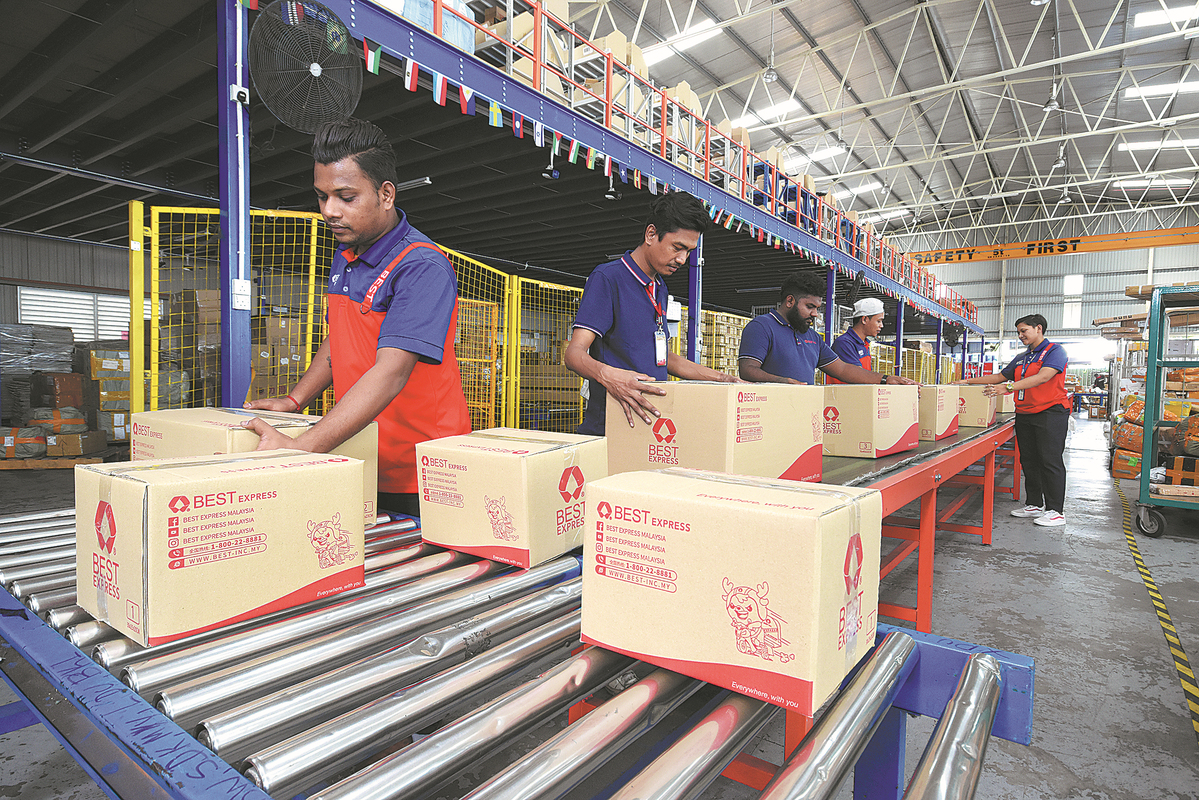
Trade agreement will see tariffs cut significantly with member economies
The implementation of the Regional Comprehensive Economic Partnership is set to significantly enhance resource allocation for China in domestic and foreign markets, while strengthening regional industrial and supply chains to hedge against the negative impact of the COVID-19 pandemic, according to officials and experts.
Trade and investment expansion will facilitate China's formation of the new dual-circulation development pattern to eventually benefit enterprises and people beyond the nation, which takes the domestic market as mainstay and lets domestic and foreign markets reinforce each other, they added.
"China is ready to fully honor its obligations as the RCEP agreement enters into force," said Yang Zhengwei, deputy head of the Ministry of Commerce's Department of International Trade and Economic Affairs.
Signed by 15 Asia-Pacific economies in November 2020, the agreement has created the world's largest free trade bloc by economic size. It takes effect on Saturday in 10 member economies, including Singapore, Thailand, China and Japan, followed by South Korea on Feb 1.
More than 65 percent of tariffs on goods traded between China and Australia, New Zealand and ASEAN member nations were set to be abolished immediately when the agreement becomes effective, Yang said.
Establishing bilateral free-trade relations for the first time with Japan, 25 percent of Japanese exports to China and 57 percent of Chinese exports to the nation will become tariff-free on Saturday.
In addition, there will be immediate zero tariffs on 39 percent of exports from South Korea and 50 percent of Chinese exports to the nation.
As the regional market unifies under the umbrella of the RCEP, enterprises are set to enjoy expanding market potential and a better environment to do business with a higher level of trade and investment liberalization and facilitation, Yang said.
For customers, the agreement brings easier access to more high-quality products with cheaper prices, he added.
Data from the General Administration of Customs showed imports and exports between China and the other 14 members of the RCEP totaled 10.96 trillion yuan ($1.72 trillion) in the first 11 months of 2021, or about 31 percent of China's total foreign trade value.
Cui Fan, a professor at the School of International Trade and Economics of the University of International Business and Economics, said the agreement's entry into force can stimulate trade and investment in the bloc remarkably.
"That will accelerate regional economic integration, add resilience to regional industrial and supply chains, and raise development confidence as the pandemic's disruptions to recovery continue," Cui said.
According to Yang, China has been ready to fulfill 701 binding obligations under the economic agreement, which will gradually eliminate 90 percent of goods tariffs within the bloc over 20 years, with many abolished immediately.
Based on the nation's tariff reduction commitments, China has implemented a new timetable for the year on tax reductions. The government has also introduced measures to familiarize enterprises with RCEP rules, he added.
He also suggested Chinese enterprises get familiar with the RCEP rules to apply them. With the RCEP rules of origin, Chinese enterprises should proactively take part in the regional industrial and supply chain adjustments in order to expand their business, he said.
Rules of origin in a free-trade agreement determine if a product originates from a member to apply related provisions, and the RCEP rules of origin allow products to have just 40 percent of their value to be added within the region to enjoy lower or zero tariffs.
Yang also urged Chinese enterprises to align with high-standard international practices to continuously improve product quality and become more competitive, while safeguarding legitimate interests with eligible measures.