



Global carmakers raise stakes in bid to cash in









Removal of equity cap gives greater control of joint ventures to international vehicle brands
International carmakers can now have majority control of their Chinese joint ventures, but auto analysts warn that the change in equity structure does not guarantee their success in the world's largest vehicle market.
"A majority stake may mean more profit if the company is successful, but its success is not the natural result of such a change," said Dong Yang, a former executive of the China Association of Automobile Manufacturers.
"That is because the change alone will not bring about better products or lower costs that will mean a competitive edge over others," said Dong, highlighting the importance of investment in research and development and closer cooperation between the partners.
China earlier this year removed the 50 percent equity cap for international car companies in their Chinese joint ventures that make gasoline passenger vehicles, allowing them to have the majority stake.
The caps, which were put in place in 1994, were moved in 2018 for the electric car sector and in 2020 for companies producing commercial vehicles including trucks and buses.
Because gasoline vehicles account for the absolute majority of the country's vehicle market, the policy change is perceived by many as the opportunity to maximize international carmakers' return on investment in China.
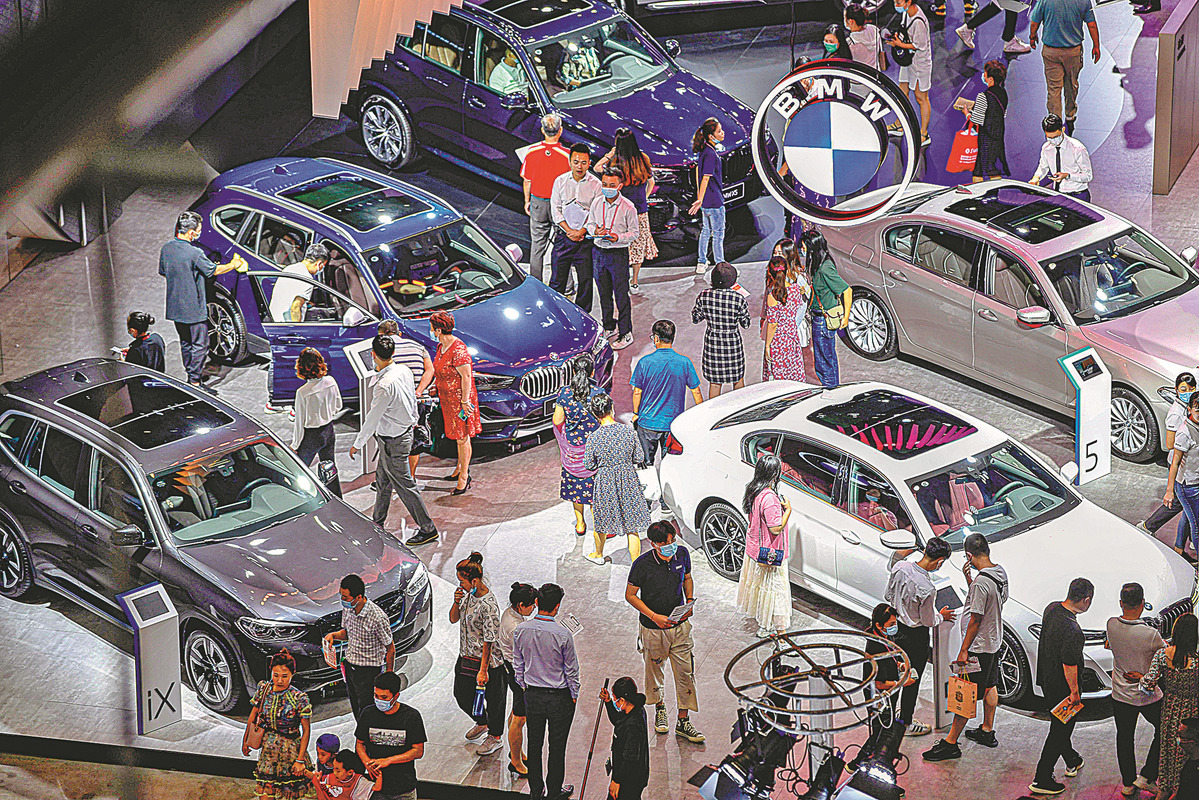
BMW became the first international carmaker to take majority control of its Chinese joint venture, when it raised its stake in BMW Brilliance to 75 percent earlier this month.
The German carmaker inked a deal with Brilliance Auto to scale up its stake in their joint venture from 50 percent to 75 percent in 2018, when China announced its timetable to relax ownership rules in the automotive industry.
Analysts suggest a majority stake in joint ventures, which also means a larger say and faster decision-making, will stimulate international carmakers' ambitions and strengthen their commitment in China, the world's largest vehicle market.
BMW and Brilliance has also renewed the contract of their joint venture to 2040.
"Today marks an important step, as we continue to expand our long and successful commitment to China," said BMW Chairman Oliver Zipse, in a statement when the joint venture's renewed contract took effect earlier this month.
"We firmly believe that our continued success in the world's largest automotive market can only go hand in hand with the growth and further development of our BBA joint venture," said Zipse.
BMW saw a 9 percent growth in its deliveries in China to 846,237 vehicles in 2021, as the best-selling premium carmaker in the country.
BMW Brilliance, based in Shenyang, Liaoning province, produced 700,000 vehicles in the year.
Chief Financial Officer Nicolas Peter told reporters that BMW's sales are expected to grow further in 2022 as demand continues to rise in China.
BMW said it is expanding its production capacity in China, with one plant currently being expanded and a new one under construction.
Among other vehicle models, BMW will start producing the X5 SUV, previously imported from the United States, in the second quarter of the year at the BMW Brilliance joint venture, according to Reuters.
"Our extended joint venture contract lays the foundation for further mutual growth and progressive development in the future. It therefore paves the way for balanced development in the three main regions of the world, as we have done in the past," said Peter.
Some other international carmakers are considering raising the stakes in their joint ventures to save their prospects.
Late last month, Stellantis said it would like to increase its equity from 50 to 75 percent in its joint venture GAC-Stellantis, adding this will set a new basis for its business in China.
The joint venture, which produces and sells Jeep-branded vehicles, delivered merely 20,000 vehicles last year, around half of its sales in 2020.
Hyundai's Kia is restructuring its partnership with Jiangsu Yueda Group, after another partner, China's State-owned carmaker Dongfeng, quit the joint venture earlier this year.
Kia did not make public the equity it will hold in the new partnership, saying more details will be released in April, but analysts said it is likely to have the majority stake as part of its efforts to revive its fortunes in the Chinese market.
Kia and Yueda have announced that they would invest $900 million in their joint venture to boost its competitiveness.
The joint venture's goal is to sell 4 million vehicles in 10 years from now. Its cumulative sales in China stand around 6 million since its establishment in 2002.
It was previously one of the most popular carmakers in China. Its models were more affordable than those from European and Japanese carmakers and had better quality than Chinese ones.
Its sales peaked in 2016 at around 650,000 units but deliveries have since dwindled, falling to 160,000 units in 2021.
The company lost 4.75 billion yuan ($747 million) in 2020 and 2.61 billion yuan in the first 10 months of 2021, according to Shanghai United Assets and Equity Exchange.
"The situation has changed. The auto industry has entered a new stage with electric cars and smart vehicles, and so has competition among carmakers," Dong said.
"So the policy change should not only serve as the chance to seek more profit but also a new starting point for all-around cooperation," he said.



















