



Xi Focus: How Xi's thought fosters a greener, more sustainable Chinese economy









BEIJING -- The Beijing Winter Olympics which closed Sunday became the first Games in history to be carbon neutral; this is an unlikely achievement that could not have happened without China's greening transformation over the past decade.
Previous Winter Olympics have claimed to be carbon neutral, but China is considering a much broader range of emissions, an article on Nature's website quoted the International Olympics Committee as saying. It notes that China has been investing heavily in renewable energy as part of its overall goal of achieving carbon neutrality by 2060.
Amid a great deal of green efforts is the eye-catching renovation of used Olympic venues. The 'Ice Cube,' a premier curling venue, for instance, was retrofitted from the iconic 'Water Cube', swimming and diving venue of Beijing 2008, and at the Shougang competition zone, world-class facilities were repurposed from a disused steel plant.
These new landmarks not only offered audiences captivating sights but also attested to the sweeping changes in China's economic landscape toward greater sustainability under the guidance of Chinese President Xi Jinping's economic thought.
AN OVERALL TRANSFORMATION
Back in 2012, the country began to face dual pressure from both the slowing growth in the aftermath of the international financial crisis and environmental woes caused by years of extensive development.
That year, China's aggregate gross domestic product (GDP) accounted for 11.5 percent of the world's total, but its energy consumption per unit of GDP, or energy intensity, was 2.5 times that of the world's average level.
"We owe so much to the ecological environment. If we don't do solid green work from now on, we will pay a higher price in the future," Xi said in December 2012, during his first inspection trip out of Beijing as general secretary of the Communist Party of China Central Committee.
Since then, China has ramped up its efforts on an unprecedented scale to advance the greening transition of the economy as Xi's hallmark green development phrase "lucid waters and lush mountains are invaluable assets" become a maxim in the country.
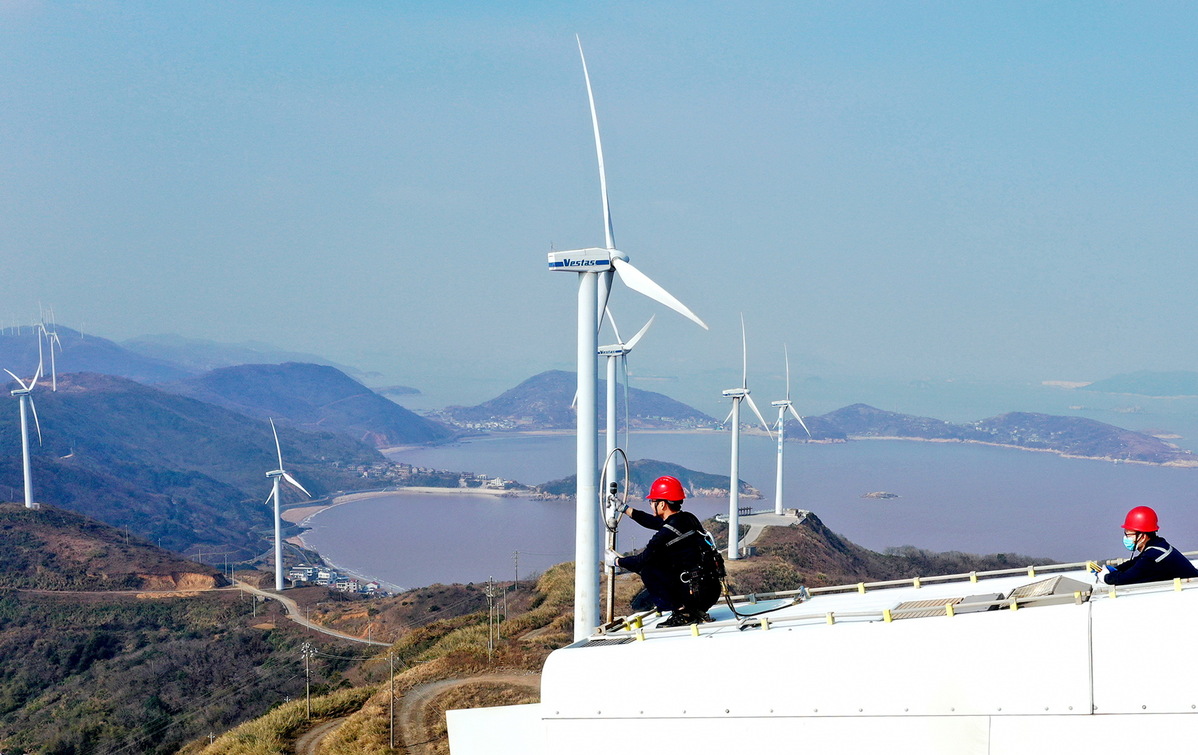
Taking energy mix, for instance, the world's second-largest economy began to be less reliant on coal and other fossil energies causing high emissions, while increasing the proportion of clean energies.
In 2021, energy intensity dropped by 2.7 percent from the previous year, official data has shown. The progress came as the indicator declined by 28.7 percent from 2011 to 2020.
The proportion of coal in China's total energy consumption was reduced from 69.2 percent to 56.7 percent during the 2010-2020 period.
In 2021, the share of coal consumption further dropped by 0.8 percentage points year on year, while that of clean energies including natural gas, hydropower, nuclear power, wind power, and solar energy climbed 1 percentage point.
"Protecting the environment is protecting productivity, and improving the environment is boosting productivity," Xi said during an inspection trip to south China's Hainan Province in April 2013.
Along with the transformation of energy structure, China has also steadfastly prompted its upgrade of industrial structure, with the service sector and low-carbon industries growing rapidly.
Accounting for 53.3 percent of China's total GDP last year, the service sector's contribution rate to economic growth reached 54.9 percent, 16.5 percentage points higher than the second industry.
For the primary industry itself, carbon emissions have continued to decline. It is estimated that from 2015 to 2020 carbon dioxide emissions per unit of added value of Chinese industries fell by about 22 percent, according to a white paper on China's response to climate change.



- IP protection for new fields to improve
- Draft rules define premade dishes in consumer interest
- Self-powering pacemaker could last a lifetime
- China intensifies crackdown on misuse of personal data
- China issues new rules classifying online content harmful to minors
- Chinese vice-premier urges efforts to consolidate poverty alleviation achievements














