



Realty sector will ride over difficulties









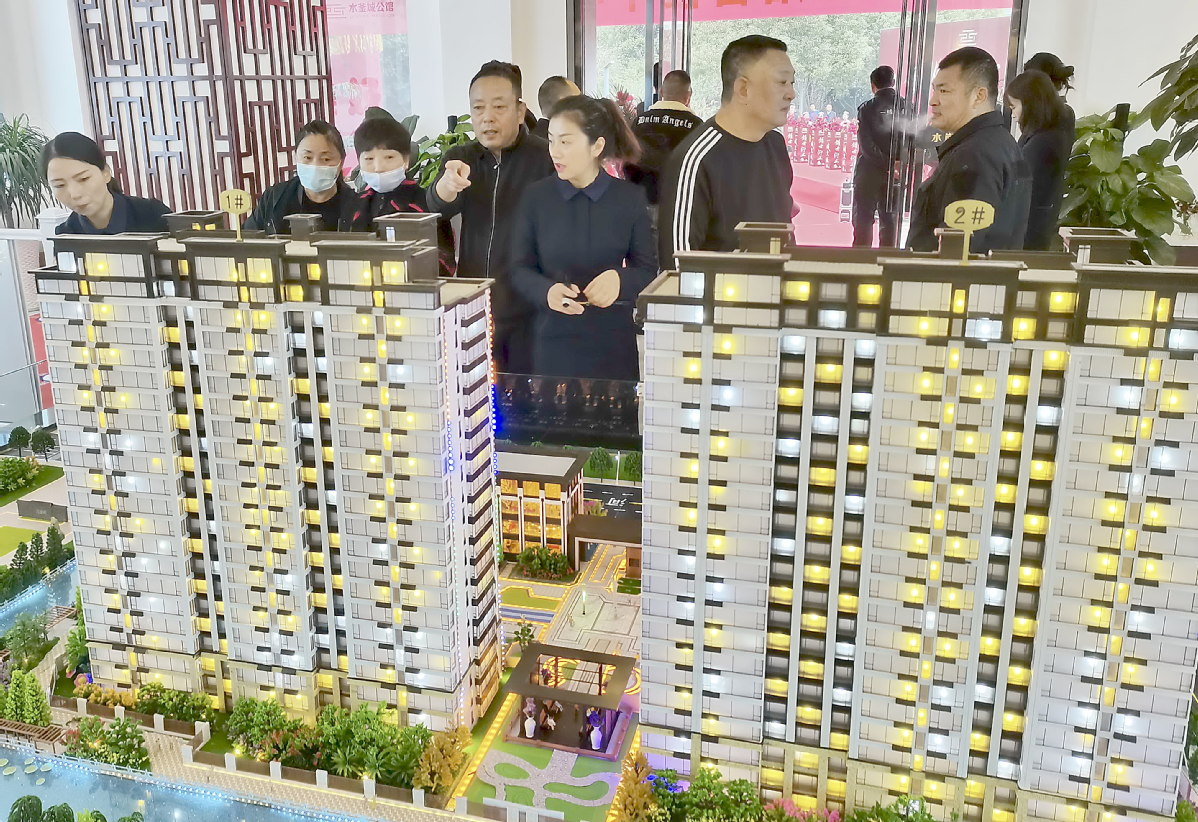
Editor's note: The two sessions, which opened on Friday, have drawn widespread attention as they will chart the course of economic and social development under the framework of socialism with Chinese characteristics. What impact will the two sessions have on the economy and society this year? Three experts share their views on the issue with China Daily.
The key task of China's economic policy this year is to maintain economic stability, for which a healthy real estate market is important. But despite the trend of the real estate market raising concerns, experts differ on how to address the issue.
Many commentators say it is almost impossible to stabilize the economy without implementing stimulating policies to boost investments from both developers and households in the real estate sector, given the crucial role real estate investment plays in economic growth.
As for the debt crisis of some major real estate enterprises in the past year, which has triggered financial shocks, some commentators assert that the government has no choice but to relax the rules and regulations for the real estate sector so that it can rebound strongly and in turn boost the overall economy. To be sure, there are already some signs that local governments are loosening their real estate policies in some cities.
On the other hand, many observers say the central government has taken measures to regulate the real estate sector to ensure "housing is for living in, not for speculation" over the past few years to prevent systemic financial risks caused by excessive speculation in and overheating of the real estate market, as well as to alleviate the difficulties of new homebuyers in big cities. So, if the central government suddenly reverses the policy due to short-term economic pressures, it could cause more uncertainties and creates doubts over the policymakers' previous decision.
Therefore, they assert that a drastic alteration of the real estate policy is not likely this year. Also, some analysts say real estate investment is important, but the easing of policy will cause the money released by credit easing to flow into the property market again. This will deny the real economy of adequate financial support and thus create obstacles to economic stability.
Considering debates together, it seems difficult to achieve the three goals of "boosting the economy", "preventing risks" and "meeting housing demand" at the same time. In order to prompt enterprises to increase investment in the real estate sector, it is necessary to create some space for them to make profits, which requires significant relaxation in the control policy including lifting of restrictions on purchase and loans.
However, once the policy is relaxed, it will be difficult to control the huge risks created by high housing prices. As a result, speculation will increase, squeezing out of the market the demand of people who genuinely need housing. The result: housing might become unaffordable for many, especially the low-income group.
If the policy focuses only on risk prevention, however, investments in the real estate sector will be insufficient, the gap in housing supply will not be filled, and the needs of new homebuyers, especially the younger generation, will not be met. Many may believe the demand of new homebuyers, including those who have migrated from rural areas to urban areas or from smaller cities to big cities, can be met by building more subsidized, affordable housing and rental housing. But for this purpose, housing investment needs to be increased.
A real estate market with "more investment", "less risk" and "more affordable housing" is what both policymakers and society wish to see. In reality, however, it is difficult to develop such a market. Difficult it might be, but not impossible.
First, in order to stabilize the economy, the real estate industry can no longer be heavily leveraged. This is the central government's bottom line, and the real estate enterprises are also adapting to this change.
The real estate sector has entered a new stage, and the slowdown in housing demand is the result of macro variables such as the "new economic normal", change in population structure and the level of urbanization. Also, an increasing number of real estate enterprises have come to realize that the era of high leverage, high turnover and high profit is over, and they have to adapt to the business environment of low leverage, low profit and affordable prices, since it is not plausible to divert real estate capital to other sectors.
Second, it is true that there is still some room for real estate investment, but the bulk will be needed for the re-development of the existing housing stock. There is high demand, however, for investments in the rental housing sector, reconstruction and restoration of old residential areas, smart property management, and the property services market. These fields require significant amounts of investments, and despite their relatively low leverage, they can greatly improve urban housing conditions.
In fact, many leading real estate enterprises have made efforts to enter the "long-term apartment rental" market even though the sector is not highly profitable, because they need the cash to flow to survive. Many such enterprises are interested in investing in affordable rental housing, too-as the government has advocated-in order to keep their business running and retain their employees.
And third, the government, thanks to its rich experience in regulating the realty sector, can identify property enterprises violating the development, leasing property operation rules and regulations. Even after relaxing the credit-control rules for the real estate, the government can effectively ensure that credit is turned into actual investment under the premise of controllable risk, especially for affordable housing investment.
Since these observations are based on the developments in the real estate market in recent years, we are confident that the sector will attract more investment, lower the risks, and provide more affordable housing.
Chen Jie is a professor at the School of International and Public Affairs and director of the Center for Housing and Urban-Rural Development, Shanghai Jiao Tong University; and Wu Yidong is an assistant professor at the School of Business, Anhui University of Technology.
The views don’t necessarily reflect those of China Daily.





