



Gender equality today for a better tomorrow









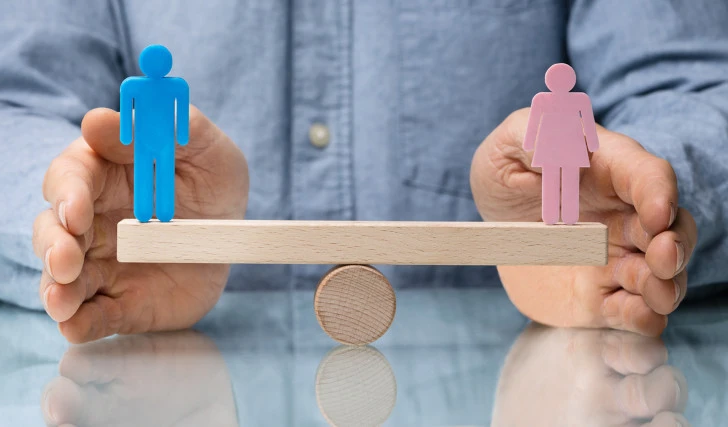
For millennia, "Mother Nature" has personified our planet. Rooted in ancient philosophy from around the world, she reflects Earth's ability to give-and nurture-life.
Globally though, women are yet to gain equal opportunities and rights to men, while the world they share is in immediate danger. Climate change is already here. As UN Secretary-General, António Guterres, warned recently, many ecosystems have reached the point of no return and nearly half of humanity now lives in peril.
The frequency of climate disasters varies across communities, as do vulnerabilities arising from them. Yet one thing is constant: while women are at the forefront of climate action, they face greater risks. Women are responsible for more than 70 percent of water management and collection worldwide, and constitute, on average, 43 percent of agricultural labour in developing countries. However, they lack the same tools as men to manage changes in their climate: while women are more likely to report a climate shock, they are less likely to receive information about it.
In climate action, the green transition and Disaster Risk Reduction (DRR), the rights and needs of women and girls must be met, to protect and empower them, and thus strengthen resilience across society. Only by mobilizing everyone's potential can we fight climate change together.
Themed "Gender equality today for a sustainable tomorrow," this International Women's Day, we recognize the leadership and contribution of women and girls around the world to climate mitigation and adaptation. We also call for their rights, along with their crucial role in climate action to be fully reflected in climate policies, programmes and investments.
To ensure this, five areas must be tackled:
First, women's environmental leadership and rights must be better supported. Currently, their participation is too low to influence decisions and policies: in 2020, just 15 percent of environmental ministers globally were women, up from 12 percent in 2015. This is exacerbated by structural inequalities, including their high burden of unpaid care and household work, gender-based violence, as well as limited access to resources, like land. These gaps are of critical concern, as existing evidence shows that women's participation leads to better resource management and climate interventions, along with stricter climate policies, resulting in lower emissions. It is therefore vital that everyone-including governments, the private sector and society-empowers women and girls, by giving them tools and training to lead on environmental issues. For example, between 2015 and 2020, the International Fund for Agricultural Development (IFAD) in partnership with UN Women, worked with Qinghai's provincial government to train rural women on climate-smart agriculture and maintaining crop diversity. Reaching close to 70,000 rural women in Qinghai, the project saw many emerge as community leaders, lifting food production, incomes and resilience, including climate change and COVID-19.
Second, gender perspectives must be integrated into climate decision-making. Women are disproportionally exposed to natural hazards and pollutants, due to their high participation in agriculture, textiles, and manufacturing, while lacking information and resources to protect themselves. Currently, just 24 percent of 120 countries identify gender equality institutions as part of climate governance, with only 27 percent emphasizing women's participation. Going forward, gender-responsive environmental policies and programmes can be expanded by boosting decision-maker capacities through training, while enhancing coordination between sectors. Governments should apply gender-disaggregated statistics, ensure women are equally consulted and that gender considerations are included throughout the policy-making process.
Third, gender-responsive, just transitions require ending labour market discrimination, so more women can enter and lead in the green and blue economies. In 2019, women made up only 27.1 percent of China's power sector workforce. Yet, globally, an estimated 80 percent of new jobs created by dismantling fossil fuel dependency will be in areas currently dominated by men. As such, eliminating occupational segregation and gender-based discrimination in labour markets, while promoting women's equal access to decent work in green and blue economies, is key to a just green transition. The United Nations Development Programme (UNDP) in China has supported thousands of young women in gaining vocational training and accessing jobs in the traditionally male-dominated hydrogen-powered vehicle sector. Empowering women presents a win-win opportunity for developing clean energy, as it contributes to a more inclusive workforce, as well as a larger human capital base to sustain growth.
Fourth, within the much-needed boost to public and private climate financing, greater attention must be given to gender responsive climate adaptation and mitigation. This requires more funding for climate projects explicitly tackling climate effects on women, while empowering women taking climate action. It also calls for more funding for women's rights organizations and institutions. For example, from 2022, the International Fund for Agricultural Development set a global target for at least 35 percent of all new projects to transform women's lives. The United Nations Environment Programme (UNEP) supports women across the Asia-Pacific in accessing finance and technology to build renewable energy businesses, enabling climate-resilient livelihoods.
Finally, ensuring women's sexual and reproductive health and rights in environmental disasters is crucial. The destruction of infrastructure, roads and clinics by climate and environmental crises curtails those rights when goods and services become unavailable. Therefore, health systems and service delivery must be strengthened, increasing information and psychosocial support around disasters. United Nations Population Fund (UNFPA) works with China's government and other partners to help people adapt to climate change, including providing necessary health services and preventing violence against women during crises.
As we all look to build back better from COVID-19, UN Women, UNDP, IFAD, UNFPA and UNEP are uniting to advance gender equality across climate action, through enhanced cooperation with China's government and other partners. However, all of society is needed-including the private sector and every community-to give women the tools, data and training to be equally equipped in the task of protecting our planet-and equally protected in its increasingly unpredictable future.
Smriti Aryal is UN Women China country representative,, Beate Trankmann is UNDP resident representative for China, Matteo Marchisio is country director for China, DPRK and ROK at the IFAD, Justine Coulson is UNFPA representative in China and Tu Ruihe is head of UNEP China Office.





