From 'hardware' to 'human-ware'
As many future jobs require specific skills, it is important for the Digital Silk Road to address human capital gaps in Southeast Asian countries









With 640 million consumers, a growing middle-income group, and deepening smartphone penetration, Southeast Asia presents huge opportunities for technology and ancillary companies.
However, each country's capacity to compete in the digital economy varies and geographical divides impede the region from integrating into a common digital market for investments, goods or labor.
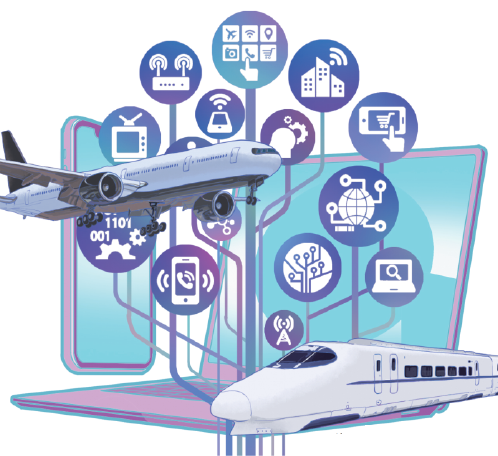
The Digital Silk Road aims to supplement the Belt and Road Initiative's terrestrial and maritime connectivity by linking countries through fiber optic cables, cellular towers, widespread internet and telecommunications connections, as well as "soft" digital infrastructure such as common technical standards, "smart-city" development, e-commerce platforms, mobile-payment systems and other digital-economy applications. As the world's second-largest digital economy after the United States, China has benefited greatly from its advanced digital infrastructure during its own rise.
China-based information and communications technology companies have a strong interest in pushing forward the Digital Silk Road to secure access to untapped markets abroad and promote local development. Unlike the Belt and Road Initiative's large-scale physical infrastructure, Digital Silk Road projects are feasible in a resource-constrained environment because they are lower in cost and easier to deliver.
The Digital Silk Road is gathering momentum in Southeast Asia. The China-ASEAN Information Harbor was launched in 2019 and a number of undersea cable projects are being built. Private Chinese companies, such as Huawei, Alibaba and Sense-Time, have invested substantially in the region. Huawei established its OpenLab in Bangkok as part of the "Thailand 4.0" initiative in 2017 and launched the first 5G testbed in February 2020. Kuala Lumpur has become the first city outside of China to adopt AliCloud's smart-city system. Alibaba has supported small and medium-sized enterprises in Southeast Asia to tap into the vast Chinese market through the Electronic World Trade Platform. The eWTP's Malaysian hub hosts more than 2,600 Malaysian SMEs and is estimated to have created 60,000 jobs and contributed billions of dollars of revenues in trade.
Chinese companies involved in Digital Silk Road projects are also helping connect peoples through exchange programs and training schemes. Huawei has established training centers in various countries since 2012 for young people in the telecommunications industry. Its "Seeds for the Future" program has invited more than 30,000 engineering students selected from over 108 countries (including Southeast Asia) for training in China in the telecommunications sector and in Huawei's operations since 2011.
The Digital Silk Road will have a strong impact on the region's job prospects as e-commerce, e-payments, and other digital projects become increasingly popular. It will also facilitate the creation of jobs in the mobile app development sector, virtual reality design, and through working online or joining the so-called gig economy labor market. More widespread access to affordable digital infrastructure will create an enabling environment in which on-demand and other services can thrive. Examples range from grocery delivery and ride-hailing services to more sophisticated tasks, such as accounting, editing and music production.
In addition, by increasing access to markets, especially the massive Chinese market, Digital Silk Road infrastructure will also facilitate the creation of new and efficient value chains by creating new channels and modes for global trade and facilitating cross-border logistics.
The private sector's shift to digital trade makes broad-based economic growth and employment possible, especially for SMEs. The COVID-19 pandemic is further reinforcing such trends. China and many countries have increasingly been using digital technology and big data. The success in using artificial intelligence and other technologies to identify and monitor virus carriers propels interest across Southeast Asia.
Also, the sudden dependence of so many on the ability to work remotely indicates that a significant and inclusive expansion of Wi-Fi, broadband, and other hard and soft infrastructure will be necessary to enable the acceleration of digitized economic activity. As such, Southeast Asian companies will likely express interest in having deeper and broader collaboration with Chinese technology companies around their proven technologies and business implementation models.
Nevertheless, this positive economic trajectory is not a given. Without properly designed policies, the forces of change could lead in the opposite direction or increase income inequality. The gains offered by the Digital Silk Road also threaten to displace workers and exacerbate inequality between high-skilled and low-skilled workers. The digital work generated by new technologies requires internet access and is subject to education and skill biases, and this may disadvantage less connected, less digitally literate and less educated workers, often located in rural or impoverished areas. While the proponents of the Digital Silk Road are committed to improving digital infrastructure connectivity, participating countries will need to create a road map to deal with tensions between uneven technology adoption and the introduction of digital technologies in the workplace.
As many future jobs will look different from today's employment and require specific skills, it is important that more emphasis is put on addressing the gaps in the region's educational and skilling programs. This requires the governments to shift their policy agendas from "hardware" to "humanware", making substantial investment in human capital and enhancing digital skills for the next generation of workers. China can also share its experience and practices in enhancing resources for the labor force and in improving availability and accessibility of on-the-job training. Public-private partnerships should also be leveraged to facilitate technology transfers and training.
The increase of Digital Silk Road activities will bring more frequent cross-border data flows, posing new policy challenges in the fields of privacy, security, competition and taxation. This will require collaboration between the Chinese government and Southeast Asian governments to work together in terms of legislation concerning cross-border data transfers, dispute settlement mechanisms, risk pre-warning and network security, and the unification of technical standards. Regulations and protection laws will also need to be installed to keep governments and private firms in check, building mutual trust and shared benefits for sustainable digital economies.
The author is director of the division of general affairs at the China Center for International Knowledge on Development.