Tending the foundations










Scholars highlight people-centered development, Deng Zhangyu reports.
Editor's note: China's ancient wisdom informs its contemporary leadership. In this series, China Daily explores how age-old principles and philosophies continue to steer the nation's governance.
In March, China held its annual legislative meetings, dubbed the "two sessions", where lots of issues related to public wellbeing were raised and discussed.
Hot topics centered around proposals by lawmakers and political advisers addressing the medical care system and common prosperity, such as raising the threshold of personal income tax and reducing the medical insurance payment by rural people aged 60 and above.
People's well-being has constantly been on the top of the agenda at the annual meetings, considering that the people-centered philosophy promoted by President Xi Jinping is the fundamental concept of the governance of the Communist Party of China.
Since the 18th National Congress of the CPC in 2012, Xi has attended 10 annual two sessions, where the word "people" was frequently mentioned by the president.
"We must always put the people first, always serve the people wholeheartedly, and always work hard for the people's interests and happiness," Xi said at the two sessions in 2018.
Zhang Xiping, a professor with Beijing Language and Culture University, says: "The people-centered philosophy has been rooted in Chinese traditional culture for thousands of years. Under President Xi's leadership, it has been officially recognized as the origin of the CPC's governance ethos."
According to Zhang, a scholar in Sinology and cultural exchanges between China and the West, the philosophy shows the nature of the country-to ensure and improve the well-being of all people.
Last year, China designed a medical care plan for the 14th Five-Year Plan period (2021-25), in which it aims to establish a multitiered medical insurance system with universal coverage that benefits urban and rural residents in a fair and sustainable way.
Recently, the National Healthcare Security Administration included COVID-19 rapid antigen tests in its medical insurance coverage as a temporary measure against the pandemic.
"To some extent, China and Western nations share something in common in providing public service for its people. However, the basic characteristics of the countries are different," says Zhang.
He says that under Xi's leadership, since 2012, great efforts are being made to revive the country's traditional culture. And his people-centered philosophy is a stable system, which is based on Chinese traditional culture, but accepts elements practiced by developed countries.
The 100 years of the CPC's development proves that the Party should combine its strategies with Chinese culture. It has also learned from the West, such as Marxism. However, late Chinese leader Mao Zedong's wartime strategy of encircling the cities from the countryside was not Marxism, it came, instead, from traditional culture, Zhang says.
"Some Sinologists regard ancient China and modern China as totally different nations. I think that's not right. Modern China is developing by learning from its ancient wisdom," Zhang says.
Lei Bo, an associate professor of history at the Chinese Academy of Social Sciences, says that the governance of the CPC is combining ancient Chinese wisdom with modern strategies. It has reactivated a people-centered concept that evolved during different dynasties in Chinese history.
"The concept of putting the people first is a very fundamental base of Chinese civilization. It can be traced back to Confucianism, which advocated benevolent policies," says Lei.
According to the Confucian classic Shangshu, people are the foundation of a country, and only when they lead a good life can the country thrive. It was common sense in ancient China that a good emperor should love the people from his heart.
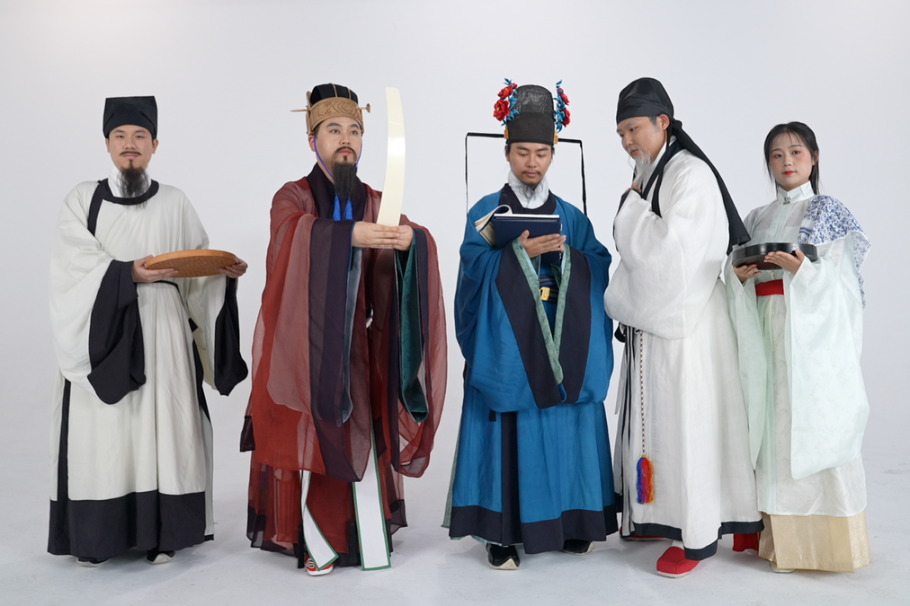
Philosophers like Confucius in the Spring and Autumn Period (770-476 BC), Mencius in the Warring States Period (475-221 BC), as well as political advisers in later dynasties, all encouraged their respective emperors to empower themselves with the love of their people.
While those were very different times, and the ruling system was archaic by comparison to the methods of today, the defining principle remains the same.
This ancient wisdom in governing the nation is still reflected in today's China. The CPC has an obligation to serve the people, in order to reach a greater goal-to realize common prosperity.
When Xi talked to Roberto Fico, president of the Italian Chamber of Deputies, in March 2019, Xi said: "Running such a huge country is a grave responsibility, and it brings arduous work. I will fully commit to the people and never fail them."
Speaking of the characteristics of the masses, Lei says ignorance and intelligence usually coexist, and a good system should inspire the latter in its people and try to avoid ignorance.
"It's very difficult to explore a path that can inspire the wisdom of the masses. China strides on. We're still exploring the path," says Lei.
He says that, in some Western countries, the system prefers to cater to its people without strict guidance. Consequently, politics turns into a grandstand for politicians, manipulated by media and money.
"What China is doing is exploring its road by learning from its ancient wisdom to tackle challenges, such as the financial crisis, the trade war and the pandemic," Lei says.
The extending financial gap between the rich and the poor has long existed. The medical insurance coverage is not yet perfect, but the system quickly practices reform from inside, says Zhang.
The threshold of personal income tax was raised to 5,000 yuan ($785) in 2018 from 3,500 yuan in 2011.Property tax has also been discussed by political advisers for years.
"Problems are inevitable during development, but we're in the right direction with the people-centered philosophy," says Zhang.
Contact the writer at dengzhangyu@chinadaily.com.cn