Tap the education dividend
More high-caliber talent should be cultivated to boost the competitiveness of Chinese labor force










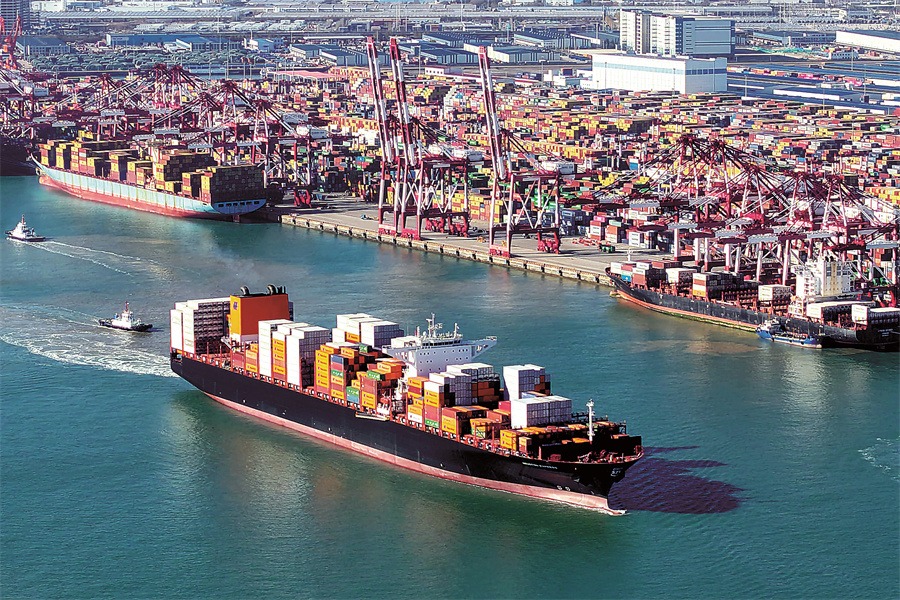
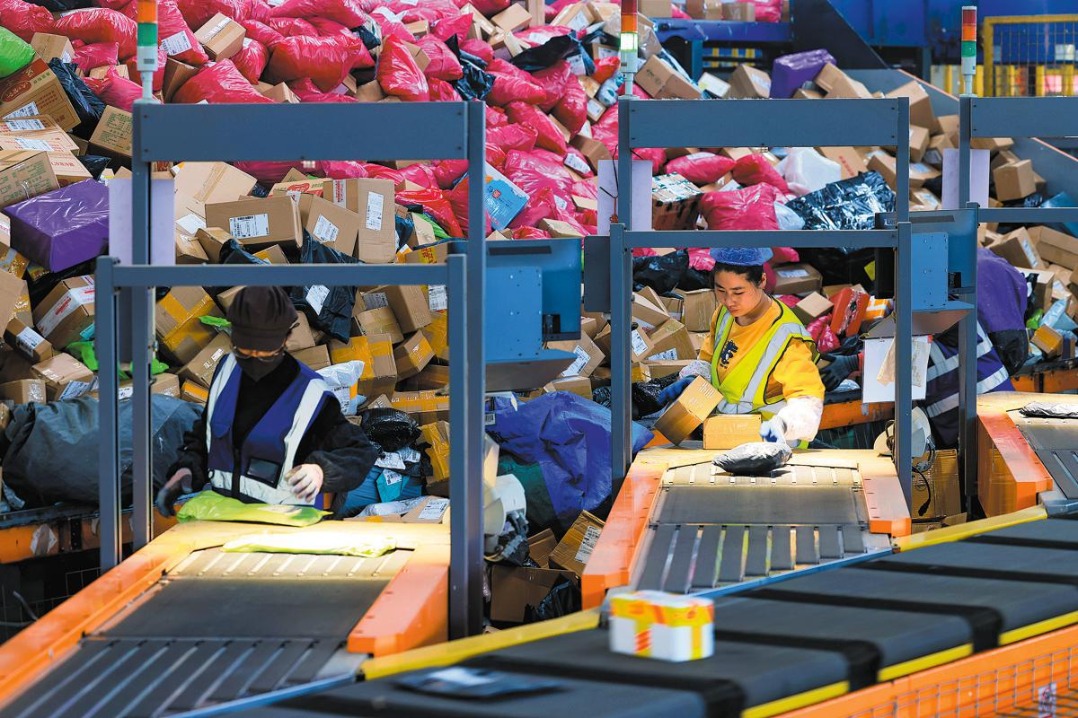
An abundant and cheap labor force has attracted multinational companies in developed countries to move their manufacturing units to China, turning the country into the "world's factory" and ensuring decades of rapid economic growth. From 1978 to 2021, China's GDP rose by 9.2 percent on average annually in real terms, and the per capita GDP soared to 80,976 yuan ($12,713) in 2021 from 385 yuan in 1978.
Some believe that China's economic miracle in the past four decades can be largely attributed to the country's population dividend, and its future economic growth will also largely depend on this. But as China sees a declining birthrate and increasingly aging society, the demographic dividend's contribution to its economic development is waning.
In fact, compared with the demographic dividend, the education dividend gave greater impetus to China's economic growth in the past and will continue to do so in the future. The country's population policy should be focused on improving the quality of its human resources.
Since the reform and opening-up policy was implemented four decades ago, China has made enormous efforts to develop education, and has built the world's largest education system. The Chinese people's education is now at the upper-middle level in the world. In 2020, out of every 100,000 people, there were 15,467 with a higher educational background, compared with 615 in 1982, and people on average received 9.48 years of education, up from 5.68 years in 1982, providing solid human resources support for building a modern socialist country. With a labor force of 900 million people, among whom 170 million have received higher education or professional skills training, China boasts of the world's largest pool of human resources.
As the world's second-largest economy, China's demographic shifts are drawing global attention.
Data from the National Bureau of Statistics show China's total labor force peaked at 922 million in 2012 and began declining thereafter. By the end of 2021, the number dipped to 892 million. China now has a demographic situation featuring "three lows"-low birthrate, low death rate and low growth rate.
But the country still has huge potential to improve the quality of its labor force. In terms of education level, statistics of the Organization of Economic Cooperation and Development show that in 2020, among people aged between 25 and 64, those with a higher educational background accounted for 60 percent of the total labor force in Canada, 51 percent in the Republic of Korea, 50 percent in the United States, 49 percent in the United Kingdom and 49 percent in Australia. In comparison, the figure was 21 percent in China. The country needs to further improve the quality of its labor force and increase productivity by investing more in education.
China's economy has entered a period of high-quality growth from high-speed development, a shift from resource and labor-intensive industries to technology and knowledge-intensive industries. At the same time, changes in the global economic landscape as well as the technological and scientific revolution have hastened transformation in the structure of the labor force. China needs to ameliorate its education system to cultivate more high-caliber professionals and raise the competitiveness of its labor force. Efforts should be made in several areas.
Compulsory education should be extended to include high school. Globally, the length of compulsory education tends to be 10 to 13 years in developed countries, such as Germany, the US and Italy. In comparison, there remains room for China to increase input in compulsory education.
The threshold age for vocational education should be increased. Most junior high school graduates, at around 15 years old, possess merely basic educational attainment and are mentally immature. It is too early for students at this age to receive vocational education. To improve the quality of the labor force, the starting point of vocational education should be raised to post-senior high school.
Also, colleges should add some technical majors, which could on the one hand help cultivate technical professionals with higher-level academic and theoretical capacities, and on the other hand promote education equality and boost social mobility. In this way, some colleges could focus on nurturing technical professionals in specific fields.
More resources should be invested in rural education too. Only 8 percent of people in rural China have received senior high school education or above. The country should fortify rural compulsory education, increase the enrollment rate of senior high schools and roll out more preferential policies favoring rural students in college recruitment.
Building a life-long learning system and tapping the potential of human resources are important. According to China's 14th Five-Year Plan (2021-25), the average length of schooling for the country's labor force should be raised to 11.3 years. Increasing the quality of human capital is essential for the country's high-quality development in the long run.
Even retirees should be encouraged to receive education and take part in social and economic activities. Among the OECD members, the retirement age tends to be 65 or even older. In contrast, China's retirement age for male workers is 60, and 50 or 55 for females. Moreover, the labor participation rates of the working-age people fall drastically before the retirement age, with the proportion of aged people staying in the work force even lower than developed economies such as the US, Japan and the ROK. So, it is important for the country to provide more opportunities for elderly people to contribute to economic development.
The author is a professor of the Institute for Population and Development Studies at Xi'an Jiaotong University. The author contributed this article to China Watch, a think tank powered by China Daily. The views do not necessarily reflect those of China Daily.